• HOME
  • NEWS
  • EXPLORE
    • CAREER
      • Companies
      • Jobs
    • EVENTS
    • iGEM
      • News
      • Team
    • PHOTOS
    • VIDEO
    • WIKI
  • BLOG
  • COMMUNITY
    • FACEBOOK
    • INSTAGRAM
    • TWITTER
Thursday, October 29, 2026
BIOENGINEER.ORG
No Result
View All Result
  • Login
  • HOME
  • NEWS
  • EXPLORE
    • CAREER
      • Companies
      • Jobs
        • Lecturer
        • PhD Studentship
        • Postdoc
        • Research Assistant
    • EVENTS
    • iGEM
      • News
      • Team
    • PHOTOS
    • VIDEO
    • WIKI
  • BLOG
  • COMMUNITY
    • FACEBOOK
    • INSTAGRAM
    • TWITTER
No Result
View All Result
Bioengineer.org
No Result
View All Result
Home NEWS Science News Chemistry

Ozone, catalysts and hydrogen peroxide: what really drives dye wastewater treatment

by
October 29, 2026
in Chemistry, Technology
Reading Time: 2 mins read
0
Ozone, catalysts and hydrogen peroxide: what really drives dye wastewater treatment

Ozone, catalysts and hydrogen peroxide: what really drives dye wastewater treatment

Share on FacebookShare on TwitterShare on LinkedinShare on RedditShare on Telegram

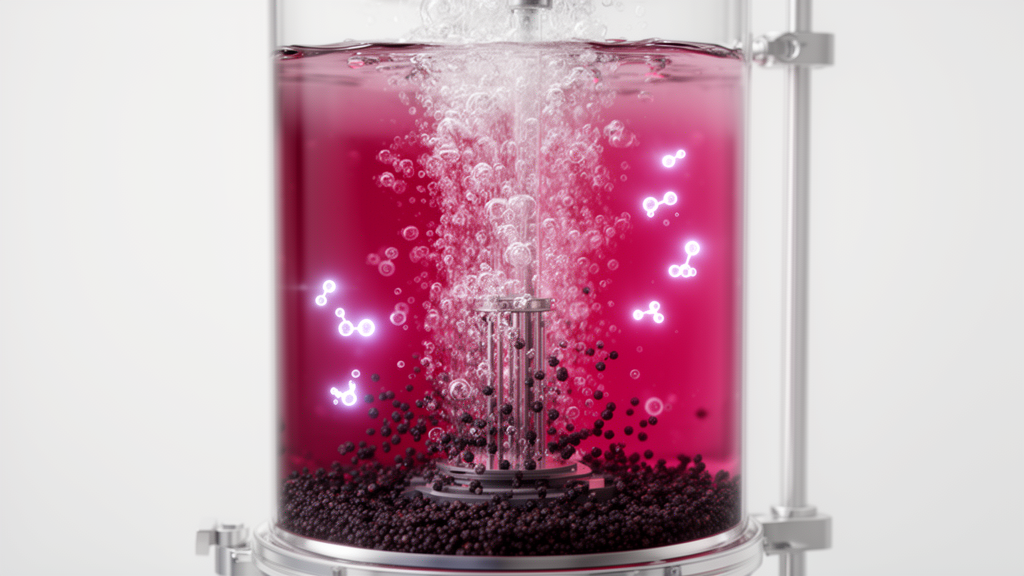
The analysis, published in Discover Chemical Engineering, compares ozonation and catalytic ozonation with the Fenton process as a representative advanced oxidation process, and uses response surface methodology to distil generalized optimization trends from the published literature.

The study was motivated by a practical problem: industrial effluents are complex mixtures of dyes, inorganic ions and organic constituents, which makes it difficult to identify the critical parameters governing treatment efficiency. Rather than running new experiments, the authors strategically analysed the available literature on ozonation and catalytic ozonation, with the Fenton process included for comparative evaluation of optimization strategies for dye-containing wastewater.

Response surface methodology, a statistical technique for evaluating the effects of multiple variables simultaneously, was applied to published optimization studies. The parameters examined included initial dye concentration, pH, temperature, ozone dose or concentration, catalyst dose, hydrogen peroxide concentration and contact time. For each parameter, the analysis identified the optimum operating ranges reported across the compiled studies.

The statistical interpretation pointed to a clear hierarchy of influence. For ozonation, the initial concentration of the pollutant and the ozone dose emerged as the governing parameters of performance. In catalytic ozonation, the catalyst dose had a significant impact on treatment outcomes. For the Fenton process, the concentration of hydrogen peroxide was the most significant operating parameter. According to the authors, the compiled literature and its statistical interpretation provide a generalized understanding of how optimization behaves in these oxidation processes and indicate which operating variables most influence pollutant removal.

The authors position the results as a reference for future laboratory and pilot-scale optimization studies, and suggest the work may support the development of more efficient and sustainable wastewater treatment processes. They are explicit about the limits of the analysis, however: the observed optimization trends should be considered preliminary guidelines, and further validation is required with real industrial wastewater under practical operating conditions.

By ranking the sensitivity of each process to its key variables, the review offers a starting point for researchers designing their own optimization experiments, helping them prioritize which factors to control and vary first when treating dye-laden effluents.

The article is published as open access and is currently shared as an accepted manuscript, citable under a permanent DOI, with the final version of record to follow after further edits. The study was authored by Snigdha Khuntia, Arunima Singh and Manisha Wakle, with Manish Kumar Sinha as a co-author.

Subject of Research: Process optimization of ozone-based advanced oxidation processes for dye-containing wastewater treatment

Article Title: A detailed analysis of process optimization for ozone-based processes for water treatment

Article References: Khuntia, S., Singh, A., Wakle, M., & Sinha, M. K. (2026). A detailed analysis of process optimization for ozone-based processes for water treatment. Discover Chemical Engineering. https://doi.org/10.1007/s43938-026-00139-7

Image Credits: AI Generated

DOI: 10.1007/s43938-026-00139-7

Keywords: ozonation, catalytic ozonation, Fenton process, advanced oxidation processes, dye wastewater, response surface methodology, process optimization, ozone dose, catalyst dose, hydrogen peroxide, industrial effluents, water treatment

News Source: Bethany Barker. (October 29, 2026). Ozone, catalysts and hydrogen peroxide: what really drives dye wastewater treatment. Scienmag.


Tags: advanced oxidation processescatalyst dosecatalytic ozonationdye wastewaterFenton processhydrogen peroxideindustrial effluentsozonationozone doseprocess optimizationresponse surface methodologywater treatment
Share12Tweet7Share2ShareShareShare1

Related Posts

Prelithiated Polymer-Ceramic Electrolyte Pushes Solid-State Batteries Toward Fast Charging

Prelithiated Polymer-Ceramic Electrolyte Pushes Solid-State Batteries Toward Fast Charging

October 29, 2026
Why Multigene Constructs Fail in Plants—and How to Design Them Better

Why Multigene Constructs Fail in Plants—and How to Design Them Better

October 29, 2026

Permanent daylight saving time would send millions of US schoolchildren to school in the dark

October 29, 2026

MOF and COF Materials Show Promise for Detecting Bisphenols in Food

October 29, 2026

POPULAR NEWS

  • One Camera, Four Sensors: AI Tracks Warehouse Packages in Real Time

    One Camera, Four Sensors: AI Tracks Warehouse Packages in Real Time

    29 shares
    Share 12 Tweet 7
  • Cellular Stress Protein JWA Emerges as Context-Dependent Redox Hub in Aging and Disease

    29 shares
    Share 12 Tweet 7
  • AI lectures fall short of human teaching in urology residency trial

    29 shares
    Share 12 Tweet 7
  • New daisy relative discovered on Mount Everest’s slopes named after Zhufeng

    29 shares
    Share 12 Tweet 7

About

We bring you the latest biotechnology news from best research centers and universities around the world. Check our website.

Follow us

Recent News

Glucocorticoids in childhood rheumatic disease: scoping review probes quality-of-life toll

Histone Lactylation Drives ALKBH5 to Worsen Cardiac Hypertrophy via ATF6 Demethylation

Sputum Proteomics Reveals Two Molecular Endotypes in COPD Exacerbations

Subscribe to Blog via Email

Enter your email address to subscribe to this blog and receive notifications of new posts by email.

Join 85 other subscribers
  • Contact Us

Bioengineer.org © Copyright 2023 All Rights Reserved.

Welcome Back!

Login to your account below

Forgotten Password?

Retrieve your password

Please enter your username or email address to reset your password.

Log In
No Result
View All Result
  • Homepages
    • Home Page 1
    • Home Page 2
  • News
  • National
  • Business
  • Health
  • Lifestyle
  • Science

Bioengineer.org © Copyright 2023 All Rights Reserved.