


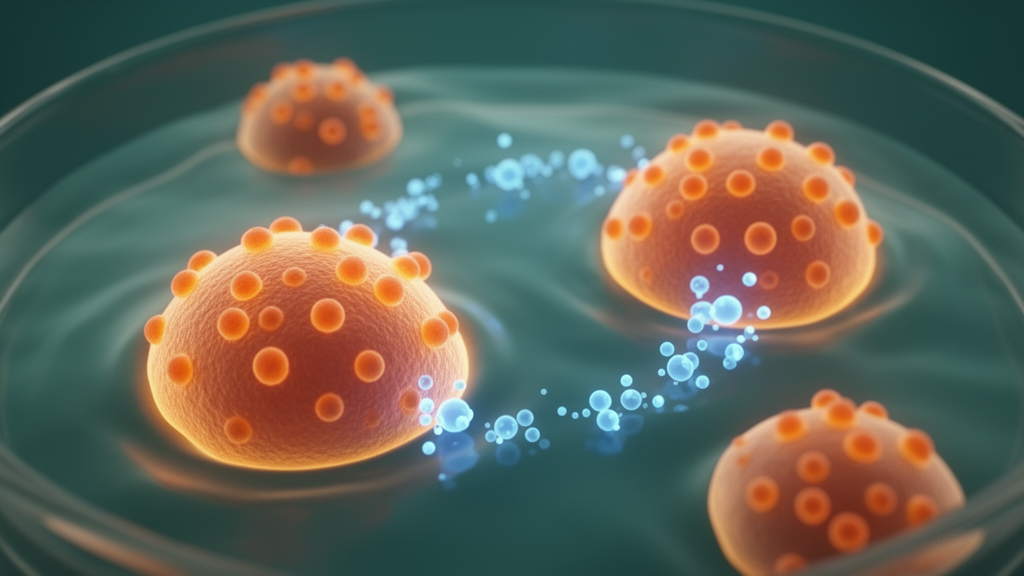
A new open-access study published in Biological Procedures Online on 13 October 2026 reports that an interplay between the EGFR signaling protein, the immune messenger interleukin-8 (IL-8), and tumor-associated macrophages may establish a self-reinforcing loop that lets HCC cells survive the drug.
To model acquired resistance, the researchers gradually exposed HCC cells to lenvatinib in the laboratory until resistant lines, designated HCC-LR, emerged. Western blot analysis of these cells showed that phosphorylated EGFR and IL-8 were overexpressed compared with drug-sensitive counterparts. When the team used pharmacological inhibition of EGFR in the resistant cells, apoptosis increased and cell proliferation was attenuated in the presence of lenvatinib, as measured by flow cytometry and colony formation assays. These results indicate that EGFR signaling contributes to the resistant phenotype in this in vitro system.
The mechanistic core of the study concerns how resistant tumor cells recruit immune support. According to the abstract, EGFR activation promoted the secretion of IL-8, a chemokine known to attract myeloid cells. In the experimental setup, this IL-8 signal recruited macrophages and enhanced lenvatinib resistance in HCC by activating the EGFR-Akt/JNK signaling axis, all demonstrated in cell culture rather than in patients. The macrophages that were recruited subsequently differentiated into tumor-associated macrophages, or TAMs, a cell type that is abundant in the HCC tumor microenvironment and is known to contribute to cancer progression.
The feedback loop closes with a second signal traveling in the opposite direction. The differentiated TAMs secreted HB-EGF, which the authors describe as a prominent ligand responsible for reactivating EGFR signaling in the HCC cells. In other words, resistant tumor cells emit IL-8 to draw in and polarize macrophages, and those macrophages return HB-EGF to keep EGFR switched on, sustaining the very pathway that allows the cells to tolerate lenvatinib. Tumor cell-TAM crosstalk of this kind, the authors argue, mediates lenvatinib resistance and offers a rational basis for designing improved combination therapies.
Methodologically, the study combined these cell biology experiments with bioinformatic analyses of relevant gene expression, pathway activation and immune cell infiltration. In the functional experiments, TAMs were generated from THP-1 cells, a human monocytic cell line, to investigate their role in mediating lenvatinib resistance in HCC. The published abstract describes the findings as in vitro throughout, and the article is currently available as an accepted manuscript that remains subject to further editorial edits before the final version of record appears.
Several caveats follow directly from that scope. The resistance mechanism was established in cultured HCC cell lines and THP-1-derived macrophages, so the results demonstrate a plausible cellular circuit rather than confirmed effects in treated patients. Whether EGFR or IL-8 blockade would reverse lenvatinib resistance in the clinic, and what toxicity such combinations might carry, are questions the present data cannot answer. The authors position their findings as revealing a key tumor cell-TAM interaction that mediates resistance, and as groundwork for future combination strategies, rather than as a validated therapeutic approach. Readers should therefore treat the EGFR-IL-8-HB-EGF loop as a laboratory-defined mechanism awaiting clinical evaluation.
Subject of Research: Mechanisms of acquired lenvatinib resistance in hepatocellular carcinoma involving EGFR, IL-8 and tumor-associated macrophages.
Article Title: The EGFR-IL-8 Signaling Axis Drives Lenvatinib Acquired Resistance in Hepatocellular Carcinoma Through Modulation of Tumor-Macrophage Interactions
Article References: Zhao, C.-W., Zhang, Y., Zheng, L., Wu, H., Xu, X.-W., Zhang, M.-T., Yu, Y., Gu, F., & Chen, Y.-Q. (2026). The EGFR-IL-8 Signaling Axis Drives Lenvatinib Acquired Resistance in Hepatocellular Carcinoma Through Modulation of Tumor-Macrophage Interactions. Biological Procedures Online. https://doi.org/10.1186/s12575-026-00370-0
Image Credits: AI Generated
DOI: 10.1186/s12575-026-00370-0
Keywords: hepatocellular carcinoma, lenvatinib, drug resistance, EGFR, interleukin-8, tumor-associated macrophages, HB-EGF, Akt/JNK signaling, tumor microenvironment, in vitro study, EGFR-IL-8, Signaling
News Source: Nathaniel Bowman. (October 28, 2026). EGFR-IL-8 Feedback Loop Drives Lenvatinib Resistance in Liver Cancer Cells. Scienmag.



