Ovarian cancer remains the most lethal gynecological malignancy, and one of its most stubborn clinical problems is therapeutic resistance, particularly in tumors with proficient homologous recombination repair that are treated with PARP inhibitors such as Niraparib. A new study published in Cell Communication and Signaling set out to uncover previously unrecognized resistance mechanisms, with a specific focus on metabolic reprogramming and autophagy, and reports that an enzyme called UGCG sits at the center of the process.
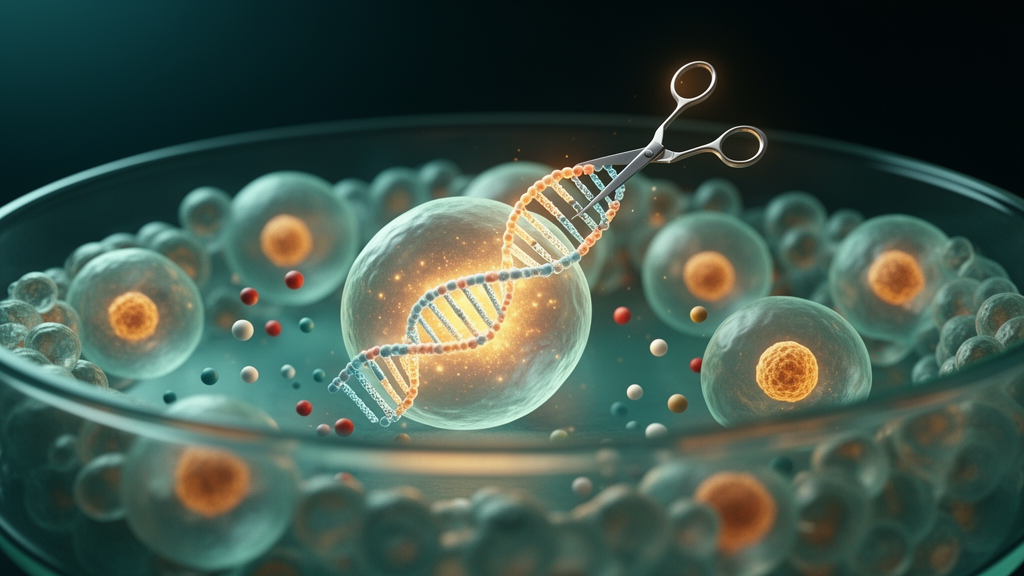
To find the responsible genes, the researchers performed a genome-wide CRISPR-Cas9 knockout screen in ovarian cancer cell lines exposed to Niraparib both in vitro and in xenograft models in mice. Resistance-associated genes were prioritized using the model-based analysis of genome-wide CRISPR-Cas9 knockout algorithm together with gene set enrichment analysis. This unbiased approach flagged UGCG, a gene involved in sphingolipid metabolism, as a key driver of Niraparib resistance, with enrichment of lipid metabolism and autophagy pathways among the hits.
Multi-omics analyses then added molecular detail. Lipidomic profiling by UPLC-MS/MS revealed increased sphingolipid accumulation in resistant cells, while RNA sequencing showed upregulation of autophagy-related genes. Both changes correlated positively with UGCG expression, suggesting that the enzyme promotes a protective, drug-tolerant state through altered lipid metabolism and heightened autophagy.
Functional validation supported this interpretation. When the team overexpressed UGCG, cells showed enhanced autophagy and greater drug resistance. Conversely, genetic knockdown or pharmacologic inhibition of UGCG with Eliglustat restored sensitivity to Niraparib. The experiments included cell viability assays, colony formation tests, autophagy marker quantification, inhibitor treatments, mouse xenograft models, and patient-derived organoids, with statistical analysis by t-tests, ANOVA, and Kaplan-Meier survival analysis.
The combination strategy extended beyond single-agent targeting. Adding Metformin or hydroxychloroquine to the regimen further suppressed autophagy and tumor growth in both in vitro and in vivo models, indicating that pairing UGCG pathway inhibition with autophagy blockade may amplify the effect of Niraparib in resistant tumors.
Clinical correlates also emerged from the study. High UGCG expression was associated with poorer overall survival and poorer progression-free survival, supporting the idea that the gene could serve not only as a mechanistic driver but also as a biomarker of outcome in ovarian cancer patients.
The authors conclude that UGCG-driven sphingolipid metabolism promotes protective autophagy and contributes to Niraparib resistance, and that targeting this pathway represents a promising therapeutic strategy, particularly for homologous recombination-proficient tumors, where PARP inhibitor options are currently limited. They emphasize that future clinical trials should validate UGCG as a biomarker and explore broader applications of the approach.
As with any preclinical study, the findings rest on cell lines, mouse xenografts, and patient-derived organoids rather than randomized clinical data, and the reported survival associations require prospective validation. The article was published as open access on 26 October 2026 and shared early as a citable, peer-reviewed accepted version subject to further edits before the final Version of Record. If the UGCG-autophagy axis holds up in trials, it could open a route to re-sensitizing resistant ovarian tumors to PARP inhibitor therapy.
Subject of Research: UGCG-mediated metabolic reprogramming and autophagy as mechanisms of Niraparib resistance in ovarian cancer
Article Title: Genome-wide CRISPR screening identifies UGCG-mediated metabolic reprogramming and autophagy as drivers of Niraparib resistance in ovarian cancer
Article References: Zhang, X., Du, B., Zhang, Q., Wan, D., Zhang, Y., Xu, L., & Zhang, W. (2026). Genome-wide CRISPR screening identifies UGCG-mediated metabolic reprogramming and autophagy as drivers of Niraparib resistance in ovarian cancer. Cell Communication and Signaling. https://doi.org/10.1186/s12964-026-03151-0
Image Credits: AI Generated
DOI: 10.1186/s12964-026-03151-0
Keywords: ovarian cancer, Niraparib, PARP inhibitor, drug resistance, CRISPR screen, UGCG, sphingolipid metabolism, autophagy, Eliglustat, homologous recombination, biomarker, organoids
News Source: Nathaniel Bowman. (October 28, 2026). CRISPR Screen Reveals How Ovarian Cancer Cells Resist Niraparib. Scienmag.