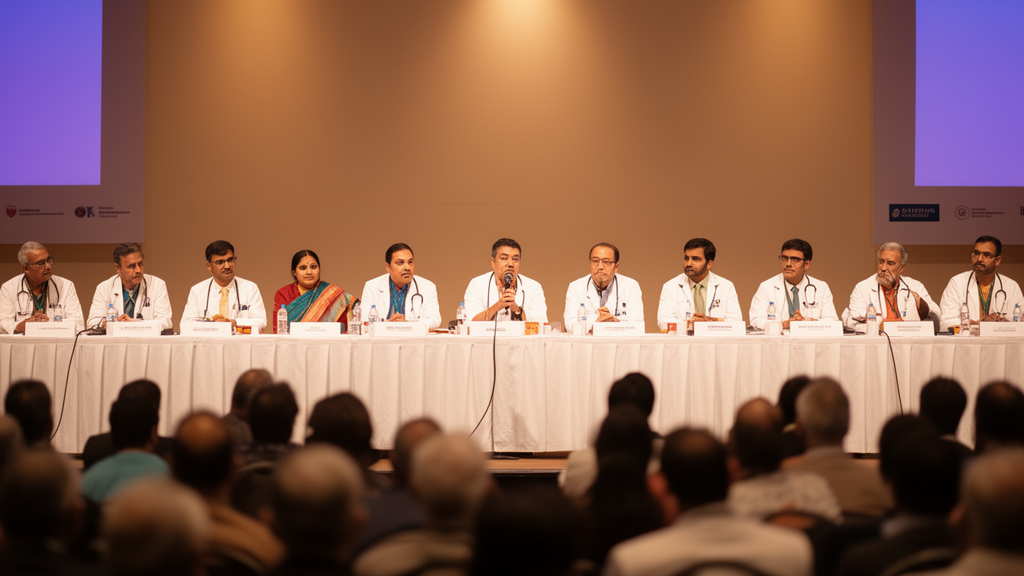
Paediatric nutrition specialists from India and abroad gathered in Bengaluru in October 2025 for a two-day symposium designed to bridge a persistent gap in child health: the divide between high-tech nutrition care in hospitals and the everyday feeding practices that shape the health of millions of children in communities. The meeting, titled “Advancing Paediatric Nutrition: Interdisciplinary Perspectives from the Clinic to the Community,” was hosted by the Division of Nutrition and the Department of Paediatric Surgery at St. John’s National Academy of Health Sciences (SJNAHS) as a flagship initiative of a Centre for Advanced Research grant from the Indian Council of Medical Research (ICMR) running from 2025 to 2030. Proceedings of the symposium were published in BMC Proceedings on 6 October 2026, as a meeting report.
The scale of the challenge framed the entire programme. Children aged 0 to 19 years are projected to represent 32 percent of India’s total population in 2026, making the country home to one of the largest paediatric populations in the world. The report notes that despite notable strides in maternal and child health, undernutrition, micronutrient deficiencies, rising childhood obesity and the double burden of malnutrition continue to strain health systems. These threats are magnified in children with complex medical and surgical conditions, for whom nutrition is described not merely as supportive care but as a genuinely lifesaving intervention. Approximately 220 participants registered for the in-person event, with additional online attendees joining from India, Qatar and the USA. Forty percent of registrations were doctors, 30 percent dietitians and public health nutritionists, and 15 percent each were nurses and clinical pharmacists. The symposium was held in hybrid mode on October 17th and 18th, 2025, and carried four Continuing Medical Education credit points from the Karnataka Medical Council.
Day 1 concentrated on intestinal failure and short bowel syndrome, a condition in which reduced absorptive capacity of the intestine leaves children dependent on specialised feeding support. Dr. Dhanasekar Kesavelu, a senior paediatric gastroenterologist at Apollo Children’s Hospital in Chennai, described how early introduction of enteral feeds promotes intestinal adaptation, while complications such as carbohydrate and fat malabsorption, bone demineralization and micronutrient deficiencies demand proactive management with non-absorbable antibiotics, early gastrostomy tube insertion and vigilant infection control. Surgical advances including the Serial Transverse Enteroplasty (STEP) and Longitudinal Intestinal Lengthening and Tailoring (LILT) procedures may enhance bowel adaptation in selected cases. The report stresses that a proactive, individualised approach significantly improves long-term outcomes for children with short bowel syndrome and intestinal failure.
International experience anchored the clinical sessions. Dr. Biren Modi, Surgical Director of the Center for Advanced Intestinal Rehabilitation at Boston Children’s Hospital, outlined how interdisciplinary rehabilitation programs integrating surgeons, dietitians and caregivers have improved patient survival outcomes from 72 percent to 87 percent. Over the decades, survival rates have risen from near-zero in the early 1900s to over 95 percent today, with the focus now shifting toward quality of life. Multicentre studies are assessing long-term psychosocial and family impacts, aiming for patient-centred outcomes. Maintaining central venous lines alongside strict aseptic home care was described as vital, since loss of vascular access is life-limiting. The report concludes that surgical excellence, nutrition science and coordinated multidisciplinary care have transformed paediatric intestinal failure from a fatal condition into a manageable, survivable disease with meaningful quality of life.
Other clinical presentations sharpened the technical picture. Dr. Christopher Duggan, Medical Director of the Center for Advanced Intestinal Rehabilitation at Boston Children’s Hospital, explained that indirect calorimetry is an optimal method for measuring resting energy expenditure in hospital, preventing both underfeeding and overfeeding when prescribing parenteral nutrition. He cited evidence from randomized controlled trials showing that unnecessary early parenteral nutrition in critically ill children increases infections and prolongs hospital stay, and that a dedicated transdisciplinary nutrition support team reduces inappropriate parenteral nutrition use and improves nutrient delivery across ward and ICU settings. Dr. Kathleen Gura of Boston Children’s Hospital, speaking online, reviewed intravenous lipid emulsions in intestinal failure-associated liver disease, noting that lipid restriction or mixed-oil emulsions protect against the condition, while fish-oil-based emulsions reduce direct bilirubin and improve hepatic function. Fish-oil lipid emulsion monotherapy at 1 g/kg/day or more can reverse intestinal failure-associated liver disease, though high Paediatric End-stage Liver Disease scores and delayed initiation reduce success.
A recurring theme was how far India lags in delivering long-term parenteral nutrition despite its widespread global use since the 1960s. The report identifies practical barriers including limited availability of standardized formulations, apprehension about infection or metabolic complications, cost considerations and lack of training. A panel discussion on long-term parenteral nutrition noted only a few anecdotal instances of children on long-term parenteral nutrition in India, citing the absence of specialized teams such as interventional radiology to insert lines, limited protocols for long-term management, non-availability of smaller-sized central catheters for infants and a lack of repair kits. Long-term central lines are currently placed mainly in paediatric haemato-oncology services and rarely for nutritional indications. On compounding, panellists observed that bespoke parenteral nutrition has not gained traction in India because of high costs and the absence of third-party reimbursement; unlike countries such as the United States and those in the Middle East, where insurance or government support covers short bowel care, Indian families usually bear expenses themselves.
Day 2 shifted to maternal and child nutrition at the population level. Dr. Pratibha Dwarakanath of SJNAHS described India’s rising double and triple burden of malnutrition and the crucial role of the first 1000 days, noting that Indian infants, though smaller than Western counterparts, carry similar body fat levels, predisposing them to metabolic obesity. She reported that rapid early-infancy weight gain, especially in small-for-gestational-age infants, increases risks of insulin resistance and cardiovascular disease under the Developmental Origins of Health and Disease framework. A panel on preemies, low birth weight infants and exclusive breastfeeding highlighted that despite institutional deliveries exceeding 90 percent, early initiation of breastfeeding remains low due to increased caesarean sections, limited rooming-in, inadequate antenatal counselling and maternal support, with working mothers in the unorganized sector facing particularly unsupportive workplaces.
Community-level evidence featured prominently. Dr. Ranadip Chowdhury of the Society of Applied Sciences, New Delhi, presented findings from the WINGS trial of multi-domain interventions spanning preconception through early childhood: combining preconception and pregnancy/childhood interventions produced the largest gains, including up to a 31 percent reduction in small-for-gestational-age births and over 50 percent reduction in stunting at two years, with children showing better cognitive, language, motor and socio-emotional development and a 35 to 70 percent lower risk of moderate to severe neurodevelopmental delay. Dr. Anura Kurpad of SJNAHS discussed feeding malnourished children, noting that catch-up requirements depend on the type of tissue regained, that average weight gain is closer to 3 than 5 g/kg/day, and that enthusiastic feeding must be scientifically tailored to avoid complications such as refeeding syndrome and fatty liver. Case discussions covered biliary atresia, stunting and cystic fibrosis, with the report noting that NFHS-5 still records 35.5 percent of Indian children as stunted, with a higher burden in rural than urban areas.
Government programs and tools received their own sessions. Dr. Tinku Thomas of SJNAHS described efforts to strengthen India’s Supplementary Nutrition Program under the Integrated Child Development Services scheme by moving from a calorie-centric approach to nutrient-dense diets, with POSHAN 2.0 aiming to reach nearly 100 million beneficiaries. Updated national guidelines specify flexible norms of 400 to 800 kcal and 15 to 30 g protein for young children, and up to 600 kcal and 22 to 25 g protein for pregnant and lactating women, with higher needs for children affected by severe acute malnutrition. A web-based linear programming tool that helps states design cost-effective Take-Home Ration and Home-Cooked Meal menus using diverse local foods has been adopted across several states, and a hands-on session of the tool was conducted at the symposium. Dr. Dakshayani B of Bangalore Medical College reviewed the government’s community management of acute malnutrition strategy, flagging persistent challenges including gaps in service delivery, weak monitoring, limited departmental convergence and deep-rooted social determinants such as poverty, illiteracy and gender inequality.
The report closes by framing the symposium as the foundation for sustained annual engagement, with plans to expand next year to include focused training workshops. Its conclusion emphasises that improving nutrition for all children requires strong community-based services, family support and empowered frontline workers, and that meaningful, sustained improvements in paediatric nutrition depend on coordinated action from the hospital ward to the household, supported by evidence, innovation and multisectoral commitment. As a meeting report, the publication documents expert presentations and panel discussions rather than new trial data, but it offers a consolidated snapshot of where India’s paediatric nutrition systems stand and what clinicians, researchers and policymakers say must come next.
Subject of Research: Symposium proceedings on paediatric nutrition spanning intestinal failure management, parenteral nutrition, and community-level maternal and child nutrition in India
Article Title: Advancing paediatric nutrition: interdisciplinary perspectives from the clinic to the community – symposium proceedings
Article References: Hegde, S. G., Mulakatte, G., Uscoicar, A., Kurpad, A. V., & Dwarkanath, P. (2026). Advancing paediatric nutrition: interdisciplinary perspectives from the clinic to the community – symposium proceedings. BMC Proceedings, 20(S34), Article 37. https://doi.org/10.1186/s12919-026-00395-z
Image Credits: AI Generated
DOI: 10.1186/s12919-026-00395-z
Keywords: paediatric nutrition, short bowel syndrome, parenteral nutrition, intestinal failure, first 1000 days, stunting, breastfeeding, malnutrition, ICDS, India, symposium proceedings, child health
News Source: Daisy Hatcher. (October 28, 2026). Indian symposium charts a path from hospital nutrition care to community health. Scienmag.