• HOME
  • NEWS
  • EXPLORE
    • CAREER
      • Companies
      • Jobs
    • EVENTS
    • iGEM
      • News
      • Team
    • PHOTOS
    • VIDEO
    • WIKI
  • BLOG
  • COMMUNITY
    • FACEBOOK
    • INSTAGRAM
    • TWITTER
Thursday, October 29, 2026
BIOENGINEER.ORG
No Result
View All Result
  • Login
  • HOME
  • NEWS
  • EXPLORE
    • CAREER
      • Companies
      • Jobs
        • Lecturer
        • PhD Studentship
        • Postdoc
        • Research Assistant
    • EVENTS
    • iGEM
      • News
      • Team
    • PHOTOS
    • VIDEO
    • WIKI
  • BLOG
  • COMMUNITY
    • FACEBOOK
    • INSTAGRAM
    • TWITTER
No Result
View All Result
Bioengineer.org
No Result
View All Result
Home NEWS Science News Chemistry

Chronic D-serine at 200 mg/kg shows kidney toxicity signs in Parkinson’s disease rats

by
October 29, 2026
in Biology, Chemistry
Reading Time: 2 mins read
0
Chronic D-serine at 200 mg/kg shows kidney toxicity signs in Parkinson's disease rats

Chronic D-serine at 200 mg/kg shows kidney toxicity signs in Parkinson's disease rats

Share on FacebookShare on TwitterShare on LinkedinShare on RedditShare on Telegram

Researchers have identified what they describe as a threshold dose for chronic D-serine administration in rats, after eight weeks of daily dosing in a Parkinson’s disease model produced signs of kidney injury.

D-serine is an endogenous co-agonist at the glycine binding site of NMDA receptor GluN1 subunits. It is increasingly studied in Parkinson’s disease, where altered levels have been detected in both patients and animal models.

Despite this growing interest, the acute nephrotoxicity of D-serine in rats is well known, and data on chronic exposure have been lacking. The new study, based on a rat model using α-synuclein overexpression, set out to address that gap by evaluating renal effects after eight weeks of daily D-serine administration, given alone or in combination with L-DOPA.

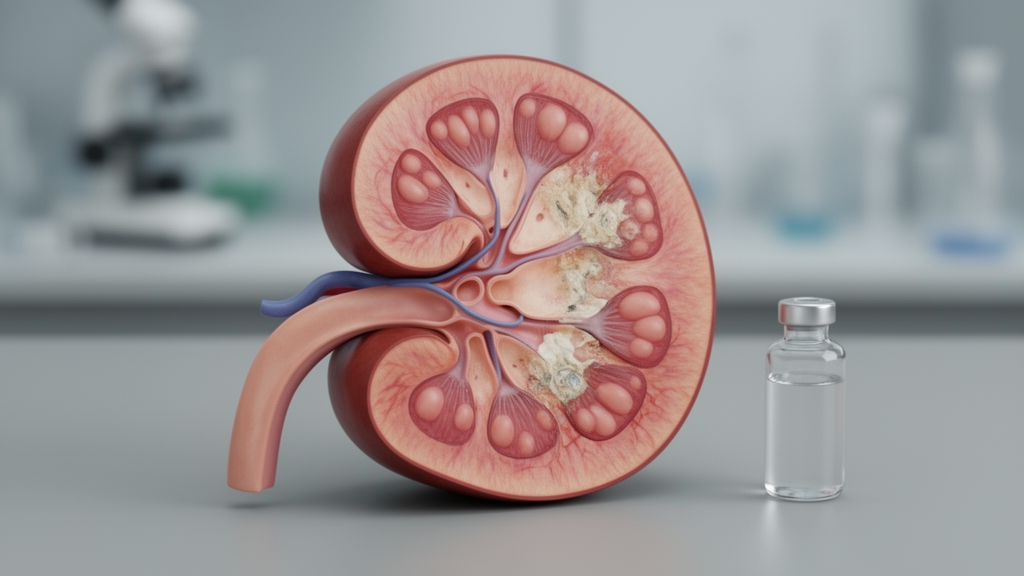
The results showed that a dose of 200 mg/kg induced biological alterations reflected in growth patterns and water consumption, as well as peritubular inflammatory infiltrates in the kidney.

According to the authors, these changes were comparable to the nephrotoxic effect reported after acute treatment, suggesting that 200 mg/kg could represent a threshold dose for chronic D-serine administration in rats.

The findings are intended to provide a useful reference for future studies involving prolonged treatment, helping researchers select doses that avoid renal toxicity when investigating D-serine in Parkinson’s disease models.

Because the work was conducted in rats with α-synuclein overexpression rather than in humans, the results speak to preclinical dosing practice and cannot be directly extrapolated to patients. The study is an original research article published open access in the journal Amino Acids, and the version shared is subject to further editorial edits before the final Version of Record.

Subject of Research: Chronic D-serine nephrotoxicity in a Parkinson's disease rat model

Article Title: Renal effects of chronic D-serine administration in a Parkinson’s disease rat model: evidence for a threshold nephrotoxic dose

Article References: Ferniani, G., Lucotti, C., Fanni, S., Bratzu, J., Lucà, S., Franco, R., Usiello, A., Carta, M., & Borriello, M. (2026). Renal effects of chronic D-serine administration in a Parkinson’s disease rat model: evidence for a threshold nephrotoxic dose. Amino Acids. https://doi.org/10.1007/s00726-026-03571-9

Image Credits: AI Generated

DOI: 10.1007/s00726-026-03571-9

Keywords: D-serine, nephrotoxicity, kidney, Parkinson's disease, rat model, alpha-synuclein, L-DOPA, NMDA receptor, chronic dosing, Amino Acids, Renal, effects

News Source: Diana Fleming. (October 29, 2026). Chronic D-serine at 200 mg/kg shows kidney toxicity signs in Parkinson’s disease rats. Scienmag.


Tags: Alpha-synucleinamino acidschronic dosingD-serineeffectskidneyL-DOPANephrotoxicityNMDA receptorParkinson’s diseaserat modelrenal
Share12Tweet7Share2ShareShareShare1

Related Posts

Viruses That Eat Bacteria Offer Livestock a Tool Against Antibiotic Resistance

Viruses That Eat Bacteria Offer Livestock a Tool Against Antibiotic Resistance

October 29, 2026
CRISPR Antivirals Target Respiratory Viruses, but Lung Delivery Remains the Hurdle

CRISPR Antivirals Target Respiratory Viruses, but Lung Delivery Remains the Hurdle

October 29, 2026

Silicon Anode Drives Calendar Aging in Lithium-Ion Cells, Study Finds

October 29, 2026

Desipramine Blocks Neuronal Ferroptosis in Ischemic Stroke Mouse Model

October 29, 2026

POPULAR NEWS

  • Springer Nature Launches Open-Access Journal Discover Pediatrics

    Springer Nature Launches Open-Access Journal Discover Pediatrics

    29 shares
    Share 12 Tweet 7
  • Combined Cataract and Glaucoma Surgery Shows Strong One-Year Pressure Control

    29 shares
    Share 12 Tweet 7
  • PBS-PBAT Blend Films Tune Strength, Moisture Barrier and UV Shielding for Biodegradable Packaging

    29 shares
    Share 12 Tweet 7
  • Fruit Fly Eggshell Gene Reveals Purifying Selection with Episodes of Positive Evolution

    29 shares
    Share 12 Tweet 7

About

We bring you the latest biotechnology news from best research centers and universities around the world. Check our website.

Follow us

Recent News

New Anhydrous Suspension Vehicle Shows Strong In Vitro Feeding Tube Performance

Low-cost teleoperated robot prototype tested for post-conflict mine inspection in Libya

Viruses That Eat Bacteria Offer Livestock a Tool Against Antibiotic Resistance

Subscribe to Blog via Email

Enter your email address to subscribe to this blog and receive notifications of new posts by email.

Join 85 other subscribers
  • Contact Us

Bioengineer.org © Copyright 2023 All Rights Reserved.

Welcome Back!

Login to your account below

Forgotten Password?

Retrieve your password

Please enter your username or email address to reset your password.

Log In
No Result
View All Result
  • Homepages
    • Home Page 1
    • Home Page 2
  • News
  • National
  • Business
  • Health
  • Lifestyle
  • Science

Bioengineer.org © Copyright 2023 All Rights Reserved.