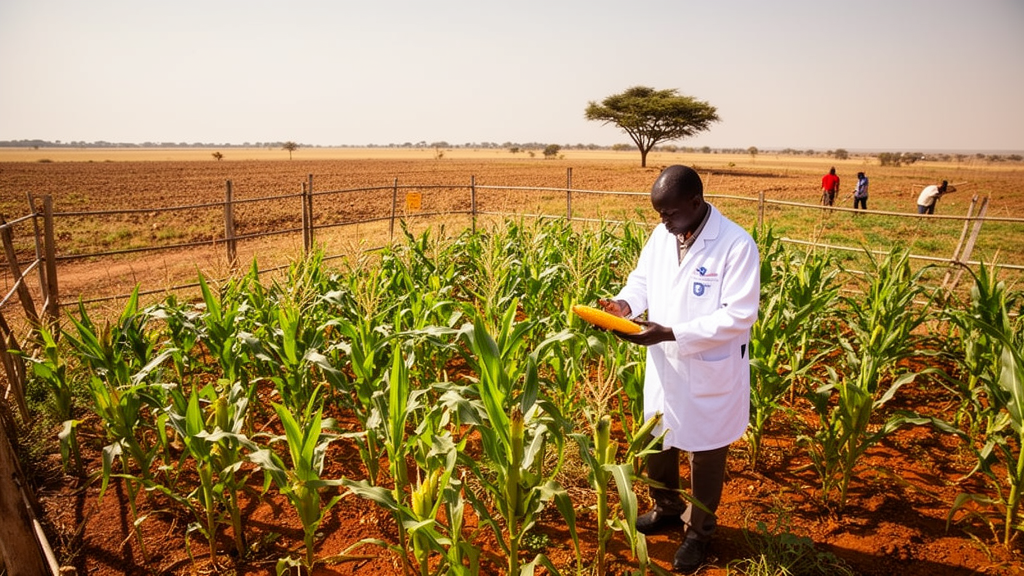
Food biotechnology could help solve many of Africa’s agricultural problems, but a new review finds that its adoption across the continent remains uneven and constrained. Of Africa’s 54 nations, only 15 — Burkina Faso, Cameroon, Ethiopia, Eswatini, Egypt, Ghana, Malawi, Mali, Mozambique, Niger, Nigeria, Kenya, South Africa, Sudan and Uganda — currently account for 28% of the use of genetic modification technology to increase crop yields, whether in confined trials or approved products. The review, published as an open-access article in Discover Biotechnology, analysed peer-reviewed journal articles, reports and other documents selected from Google Scholar, Web of Science and Scopus to map the current status of food biotechnology in Africa and the obstacles blocking its wider uptake.
The review identifies misinformation and concerns about safety, environmental impact and ethical implications of genetically modified crops as the main barriers to widespread acceptance. These concerns can translate into policy restrictions and unfavourable public perceptions. The author, Gideon Sadikiel Mmbando, also highlights a substantial lack of long-term, region-specific field data on the ecological and socio-economic impacts of genetically modified crops in different African agro-ecological zones — data the review argues is crucial for moving beyond generalised concerns and informing evidence-based policy.
The scope of food biotechnology extends well beyond genetically modified organisms. The field encompasses molecular breeding methods, marker-assisted selection, gene-editing tools such as CRISPR/Cas9, and biotechnological processes applied to food production and processing. One example cited in the review is work introducing the cyclobutane pyrimidine dimer photolyase DNA repair enzyme from the Asian rice cultivar Oryza sativa into the African rice cultivar Oryza glaberrima, rendering the latter resistant to ultraviolet-B radiation stress — a trait relevant to Africa’s tropical environments, which experience high UV-B levels.
Adoption patterns vary sharply by region and product. In North Africa, genetically modified maize cultivation has been authorised in Egypt and genetically modified cotton in Sudan. In West Africa, Ghana has authorised GM cowpeas and cotton, while Nigeria has authorised GM cotton and soybeans. Ethiopia, in East Africa, has approved GM cotton, which is now being cultivated. Southern Africa shows the highest level of authorisation: South Africa has approved GM Argentine canola, cotton, maize and soybeans, Zambia has authorised GM maize, and Eswatini has authorised GM cotton. South Africa has been growing GM crops — primarily cotton, soybeans and maize — for more than 20 years, and GM crops have also been grown commercially in Sudan, Egypt, Burkina Faso and Nigeria.
Animal applications are also emerging. Five nations — Burkina Faso, Ghana, Mali, Nigeria and Uganda — use genetic modification technology to enhance livestock performance and avert malaria through gene drive techniques, while Burkina Faso, Cameroon, Ghana and Uganda apply GM technologies in both plants and animals. Beyond transgenics, livestock programmes employ artificial insemination, embryo transfer, genetic selection and marker-assisted selection to identify trypanotolerant or heat-tolerant animals, and biobanking preserves the genetic composition of indigenous breeds for future breeding.
On crop stress resistance, the review reports that cultivating Bt cotton, which produces a protein toxic to bollworms, has increased cotton production in Burkina Faso, with higher yields, less pest damage and higher farmer incomes. Drought-resistant GM maize varieties have shown increased tolerance to water stress and stable yields in field trials and adoption initiatives in Kenya, Uganda and Tanzania. Disease-resistant cassava varieties developed through biotechnology show enhanced resistance to cassava brown streak disease and cassava mosaic disease, with field trials in Nigeria, Uganda and Kenya. Bt cowpea field tests in Nigeria, Burkina Faso and Ghana showed less pest damage and greater yield potential against the pod borer.
Nutrition-focused applications feature prominently. Biofortification programmes target staple crops such as sorghum, maize and sweet potatoes, raising levels of vitamin A, iron and zinc. Successful introductions include vitamin A-rich orange-fleshed sweet potatoes, iron- and zinc-fortified beans and vitamin A-enriched maize, with biofortified sweet potatoes adopted in Uganda, Kenya and Mozambique. Scientists have also modified cowpea and pigeonpea varieties to boost protein content, developed maize varieties with increased lysine, and created GM cassava with reduced cyanogenic compounds, which can be toxic when consumed in large amounts.
Climate resilience emerges as a major theme. The Water Efficient Maize for Africa project aimed to create and disseminate GM drought-tolerant maize varieties, and the review reports these varieties yielded 7–15%, 20–35% and 24–35% more than currently used commercial maize varieties in Africa under moderate drought conditions, according to different cited studies. Flood-tolerant rice varieties, developed through both conventional and modern biotechnology, could enable production in flood-prone regions of West and East Africa. Salt-tolerant rice varieties have likewise been developed through genetic modification for cultivation in salinity-affected areas.
Newer technologies are reaching African orphan crops. CRISPR-Cas enables precise modification of teff and finger millet to increase drought resistance, decrease anti-nutrient content such as phytates, and fortify the grains with iron and zinc without introducing foreign genes. Synthetic biology supports microbial fermentation systems producing vitamins such as vitamin A and essential amino acids that can be sprayed onto harvested crops, and digital biotechnology combines genomic selection with artificial intelligence and the Internet of Things, while blockchain improves supply chains.
The challenges, however, are substantial. Many African nations lack the infrastructure, funding, skilled personnel and laboratory facilities to develop, test and evaluate GM crops independently, and most lack facilities for biosafety monitoring and confined field trials. Regulatory frameworks are unclear or inconsistent in many countries, hindering authorisation and commercialisation. Intellectual property is a further concern: small-scale farmers may be unable to afford patented GM seeds, and the review notes that four multinational companies — Bayer CropScience, BASF, Syngenta/ChemChina and DuPont/Pioneer (Corteva) — together produce 90% of the seeds, raising dependence concerns. GM seeds are more expensive than conventional varieties, and imported Bt cotton seeds used in Kenya, Sudan, Ethiopia, Nigeria and Eswatini cost farmers more than locally produced seed would. Differing regulations across African nations and their trading partners could hinder trade, and the review observes that European and US political positions on GM crops influence African policymakers. The review recommends improving technology transfer and providing small-scale farmers with access to biotech products, arguing that harmonised biosafety regulations, technology transfer to smallholders and investment in research infrastructure are necessary for biotechnology to help transform African agriculture from climate-vulnerable to climate-resilient.
Subject of Research: Current status and challenges of food biotechnology adoption in Africa
Article Title: Current status and challenges of food biotechnology in Africa
Article References: Mmbando, G. S. (2026). Current status and challenges of food biotechnology in Africa. Discover Biotechnology, 3(1), Article 14. https://doi.org/10.1007/s44340-026-00063-0
Image Credits: AI Generated
DOI: 10.1007/s44340-026-00063-0
Keywords: food biotechnology, genetically modified crops, Africa, CRISPR, biofortification, Bt cotton, drought-tolerant maize, regulation, food security, livestock biotechnology, orphan crops, climate resilience
News Source: Gregory Coleman. (October 29, 2026). Africa’s GM Food Revolution Stalls at Just 15 of 54 Nations. Scienmag.