


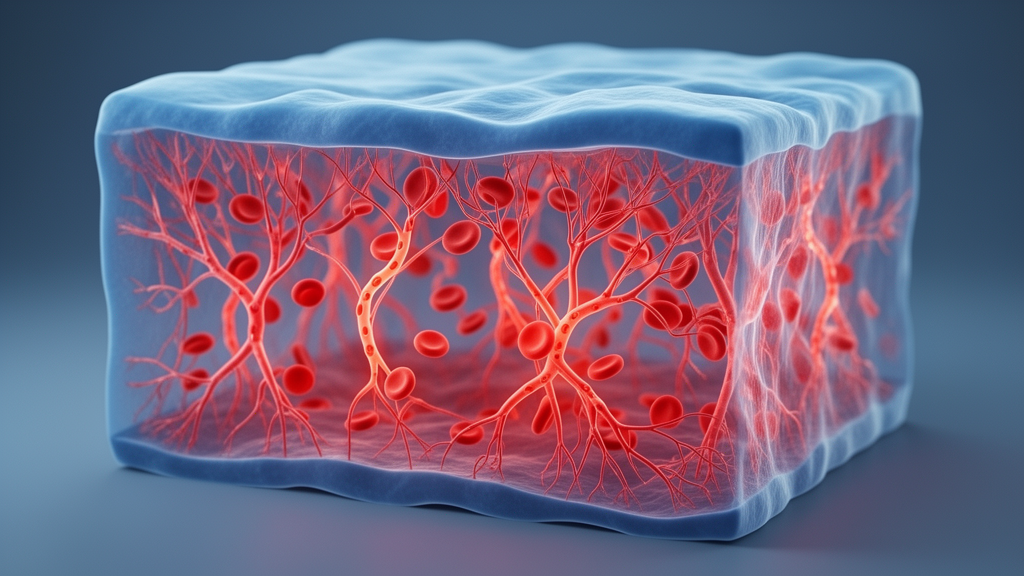
The microcirculation is an extensive network of small blood vessels responsible for transporting oxygen, nutrients and waste products to all parts of the body. Although microscopic imaging techniques allow researchers to study microcirculatory function experimentally, many aspects of microvascular function are difficult to observe directly. A new review by Timothy W. Secomb of the Department of Physiology at the University of Arizona, published in Frontiers in Network Physiology, examines how theoretical models and simulations have made valuable contributions to understanding the microcirculation, filling gaps that direct observation cannot cover.
The review, accepted on 20 October 2026 after being received on 23 June 2026, surveys theoretical approaches for investigating several key aspects of microvascular networks. These include blood flow in microvessels, the exchange of oxygen and other substances between blood and tissue, short-term local regulation of blood flow, and long-term structural adaptation and remodeling, including angiogenesis, the growth of new vessels. By bringing these approaches together, the article provides a consolidated picture of how simulation methods address processes that unfold across scales from individual vessels to entire networks.
A recurrent theme throughout the review is the impact of the heterogeneous structure of microvascular networks on the functional properties of the microvasculature. Heterogeneity, meaning the uneven distribution of vessel sizes, lengths and arrangements within a network, arises from geometrical constraints and from the stochastic nature of microvessel growth. Because vessel growth involves random elements, no two networks are identical, and this variability shapes how blood and oxygen are distributed to tissues even under normal conditions.
Theoretical simulations offer a way to investigate how active mechanisms of flow regulation and remodeling compensate for this inherent heterogeneity. Short-term regulatory mechanisms adjust vessel diameters to control local blood flow, while long-term structural adaptation and remodeling processes modify the network itself over time. According to the review, simulations can be used to examine how these mechanisms counterbalance the uneven structure of the networks, and how their failure can contribute to impaired tissue function in diseases.
The methods reviewed in the article address blood flow in microvessels as one core component of microvascular function. Modeling blood flow in networks of tiny vessels presents distinct challenges compared with large vessels, and the review positions flow simulation as a foundation for understanding how the network delivers substances to tissue. Building on that foundation, the models also treat the exchange of oxygen and other substances between blood and surrounding tissue, a process central to the microcirculation’s role in sustaining every part of the body.
Regulation of blood flow is another key aspect covered by the theoretical approaches. The review distinguishes short-term local regulation, which operates on rapid timescales to match flow to local tissue needs, from long-term structural adaptation and remodeling, including angiogenesis, which reshapes the vascular network over longer periods. Simulating both timescales allows researchers to explore how the microvasculature maintains function dynamically rather than as a static plumbing system.
The work sits within the field of network physiology, specifically the section on networks in the cardiovascular system, and is published as a methods article. Rather than reporting a single experiment, it reviews the theoretical toolkit available for microvascular research, making it a resource for scientists who model the microcirculation or interpret experimental imaging data. The author notes that the final, formatted version of the article will be published soon, with the current text available under an open-access Creative Commons Attribution License.
The significance of this modeling perspective lies in what direct observation cannot easily capture. Many aspects of microvascular function remain difficult to observe experimentally, and the review argues that theoretical models and simulations have made valuable contributions precisely because they can represent processes hidden from microscopes. By simulating how heterogeneous network structure interacts with regulatory and remodeling mechanisms, researchers can test hypotheses about microvascular behavior that would be impractical to isolate in living tissue.
The review ultimately frames the microcirculation as a system whose function emerges from the interplay between irregular structure and active compensation. Its heterogeneity is inherent, arising from geometry and the randomness of vessel growth, yet flow regulation and structural remodeling work to offset that unevenness. When these compensatory mechanisms fail, the models suggest, the result can be impaired tissue function in disease, underscoring why theoretical simulation has become an essential complement to experimental study of the body’s smallest blood vessels.
Subject of Research: Theoretical simulation methods for microvascular networks
Article Title: Methods for theoretical simulation of microvascular networks
Article References: Secomb, T. W. (2026). Methods for theoretical simulation of microvascular networks. Frontiers in Network Physiology, 6, 1916707. https://doi.org/10.3389/fnetp.2026.1916707
Image Credits: AI Generated
DOI: 10.3389/fnetp.2026.1916707
Keywords: microcirculation, theoretical models, blood flow, oxygen transport, angiogenesis, flow regulation, structural adaptation, network physiology, simulation, microvascular networks, Methods, theoretical
News Source: Denise Maddox. (October 30, 2026). Simulating the Microcirculation: How Models Reveal Hidden Blood Vessel Networks. Scienmag.



