Flowers of the medicinal shrub Capparis zeylanica, a plant long used in Ayurvedic medicine but rarely studied in its flowering form, have yielded a methanolic extract rich in phenolic compounds that scavenges free radicals and halts the growth of two pathogenic Vibrio species in laboratory assays. A research team led by Koppisetti Gayathri and L. Pradeepthi Pemmaraju at Adikavi Nannaya University reports that the flower extract achieved a half-maximal inhibitory concentration of 57.87 micrograms per millilitre in the DPPH radical-scavenging assay and a minimum inhibitory concentration of 62.5 micrograms per millilitre against both Vibrio parahaemolyticus and Vibrio harveyi. The findings, published in Discover Molecules on 20 June 2026, mark the first systematic phytochemical characterisation of this plant’s flower.
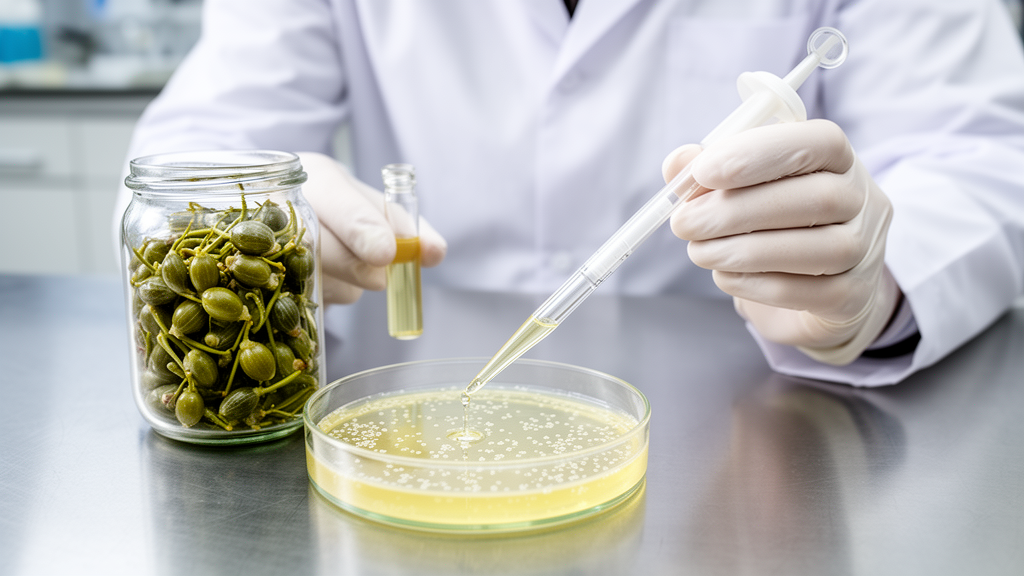
The researchers collected flowers from the university campus, shade-dried them for seven days, and extracted 25 grams of pulverised flower powder with 300 millilitres of methanol in a Soxhlet apparatus over seven cycles. The resulting crude extract, filtered and concentrated by rotary evaporation, represented an extraction yield of 11.2 percent of the starting plant material. This methanolic flower extract, abbreviated CZFME in the study, then underwent a battery of analytical tests: qualitative phytochemical screening, total polyphenol content estimation, Fourier-transform infrared spectroscopy, gas chromatography tandem mass spectrometry, and liquid chromatography coupled with electrospray ionisation quadrupole time-of-flight mass spectrometry.
Qualitative screening confirmed the presence of several secondary metabolite classes in the extract, including flavonoids, saponins, terpenoids, anthraquinones, steroids, phlobatannins, tannins, and carbohydrates. Quantification of total polyphenol content using the Folin-Ciocalteu reagent method, with gallic acid as the standard, gave a value of 79.70 milligrams of gallic acid equivalents per gram of dry extract. This measurement reflects the total reducing capacity of phenolic compounds in the sample but cannot distinguish individual phenolic species, which is why the team layered additional analytical techniques on top of this initial screen.
Fourier-transform infrared spectroscopy, performed over a wavenumber range of 400 to 4000 inverse centimetres on potassium bromide pellets of the extract, revealed functional group signatures across the spectrum. Peaks at 3893 and 3860 inverse centimetres pointed to organic acids bearing carboxyl groups, while absorptions at 3522 and 3421 inverse centimetres indicated hydroxyl and phenolic compounds. A peak at 3138 inverse centimetres corresponded to aliphatic carbon-hydrogen bending, and one at 1632 inverse centimetres suggested esters. Further peaks between 1343 and 1074 inverse centimetres indicated amides, ketones, aldehydes, aromatic ring stretches, and aliphatic amines. The authors note that peaks in the 988 to 608 inverse centimetre region, typically associated with halogenated compounds, arose here from overlapping signals rather than true halogen content.
Gas chromatography tandem mass spectrometry, run on an Agilent 8890 system with a 5977 detector in electron ionisation mode at 70 electronvolts, separated and identified 27 volatile and semi-volatile compounds by matching spectra against the NIST library. The list includes cycloheptane derivatives, epoxidised hydrocarbons such as 1,2-epoxyundecane and trans-2,3-epoxynonane, hydroxylated dodecanoic acid, methyl ester derivatives of hexadecanoic and octadecadienoic acids, cis-vaccenic acid, and several heptadecanoic acid methyl esters. One compound, heptadecanoic acid 16-methyl methyl ester, appeared at two distinct retention times because structural or conformational isomers with similar mass spectra separate differently on the chromatographic column, a recognised phenomenon in gas chromatography-mass spectrometry analysis.
The more comprehensive metabolite survey came from liquid chromatography coupled with electrospray ionisation quadrupole time-of-flight mass spectrometry, operated in both positive and negative ionisation modes at SAIF IIT Bombay. This untargeted screen tentatively identified 61 metabolites spanning flavonoids, coumarins, carboxylic acids, glycosides, alkaloids, terpenoids, fatty acids, amino acids, phenols, aldehydes, and esters. Among the 11 flavonoids detected were dihydromyricetin, quercetin, kaempferol, hyperin, and myricitrin, distributed across flavanols, flavonols, isoflavones, methoxyflavones, and flavanone glycosides. Quercetin appeared in both ionisation modes, consistent with its known ability to produce detectable precursor and fragment ions under either polarity. Alkaloid detections included tropane, nortropane, quinolizidine, lentiginosine, and annosquamosin B, while coumarins comprised isoscopoletin and 8-hydroxy-7-methoxy-2H-benzopyran-2-one. Terpenoid findings ranged from monoterpenoids to sesquiterpenoids such as bisabolene derivatives, alpha-corocalene, and 11-copaen-4-ol, alongside the diterpenoid annosquamosin.
The LC-MS screen also flagged several non-natural compounds, including the herbicide oxadiazon, the antibiotic G418, metharbital, diaziquone, and sodium tetradecyl sulphate. The authors attribute these detections to environmental exposure, laboratory contamination, instrumental carryover, or database misidentification rather than genuine plant metabolism, an important caveat when interpreting untargeted metabolomic data from crude plant extracts.
Antioxidant capacity was assessed with the DPPH assay, in which the stable purple radical 2,2-diphenyl-1-picrylhydrazyl turns pale yellow upon reduction by antioxidant molecules. The flower extract inhibited DPPH by 54.05 percent at 20 micrograms per millilitre, rising dose-dependently to 85.92 percent at 100 micrograms per millilitre, with all measurements performed in triplicate and ascorbic acid as the reference standard. The purified standard outperformed the crude extract at equivalent concentrations, as expected for a single known compound versus a complex mixture. The calculated IC50 of 57.87 micrograms per millilitre for the flower extract sits somewhat above values previously reported for leaf extracts of the same species, where ethanolic leaf extract showed an IC50 of 38.01 micrograms per millilitre and aqueous leaf extract 40.2 micrograms per millilitre, suggesting the flower is a moderately potent but not the strongest antioxidant tissue within this plant.
Antimicrobial testing targeted two members of the Vibrionaceae family, gram-negative bacteria abundant in aquatic environments worldwide. Vibrio parahaemolyticus gained notoriety from a 1950 outbreak in Osaka, Japan, that caused gastroenteritis in 272 individuals with roughly 10 percent mortality, while Vibrio harveyi, though primarily a pathogen of fish and a spoiler of seafood, has been implicated in rare human infections. Both species have shown emerging resistance to multiple antibiotic classes, including sulfisoxazole, erythromycin, tetracycline, and cephalosporins, motivating the search for alternative inhibitors. In the well diffusion assay, the flower extract produced zones of inhibition ranging from 11.45 to 18.66 millimetres against V. parahaemolyticus and 10.62 to 18 millimetres against V. harveyi at concentrations of 500 to 2000 micrograms per millilitre. The dilution microbroth assay, using two-fold serial dilutions from 2000 down to 3.9 micrograms per millilitre in 96-well plates with azithromycin as the positive control, gave a minimum inhibitory concentration of 62.5 micrograms per millilitre against both species. This value compares favourably with other plant extracts reported in the literature, such as a 5 milligram per millilitre MIC for Dialium guineense leaf methanolic extract against V. parahaemolyticus, and matches the 62.5 micrograms per millilitre MIC of Mirabilis jalapa leaf extract against the same organisms.
The authors attribute the relatively low MIC to the combined presence of phytochemicals detected by the two mass spectrometry platforms, though they did not test individual compounds in isolation. Statistical analysis by one-way ANOVA with Tukey’s post-hoc test confirmed significant dose-dependent differences across the tested concentrations at p below 0.05. The team acknowledges that the study remains qualitative in its phytochemical approach and covers only a few pharmacological properties, leaving open the isolation of pure compounds, quantitative profiling, toxicity evaluation, and testing of individual metabolites as directions for future work. All findings reported here derive from in vitro assays on crude methanolic extract and do not establish clinical efficacy in humans or animals.
Subject of Research: Phytochemical profiling and antioxidant and antivibriocidal activities of Capparis zeylanica flower methanolic extract
Article Title: Evaluation of Capparis zeylanica flower phytochemistry using FTIR, GC-MS/MS and LC-ESI-QTOF-MS/MS and antivibriocidal and antioxidant activities
Article References: Gayathri, K., Shariff, S., Marukurti, A., Nirmala, P. V., Reddy, A. M., Kadimi, A., Babu, K., Mallikarjuna, B., & Pemmaraju, L. P. (2026). Evaluation of Capparis zeylanica flower phytochemistry using FTIR, GC-MS/MS and LC-ESI-QTOF-MS/MS and antivibriocidal and antioxidant activities. Discover Molecules, 3(1), Article 16. https://doi.org/10.1007/s44345-026-00052-0
Image Credits: AI Generated
DOI: 10.1007/s44345-026-00052-0
Keywords: Capparis zeylanica, phytochemistry, GC-MS/MS, LC-ESI-QTOF-MS/MS, FTIR, antioxidant, DPPH, antivibriocidal, Vibrio parahaemolyticus, Vibrio harveyi, minimum inhibitory concentration, medicinal plants
News Source: Bethany Barker. (October 30, 2026). Caper Flower Extract Shows Antioxidant and Vibrio-Killing Power in Lab Tests. Scienmag.