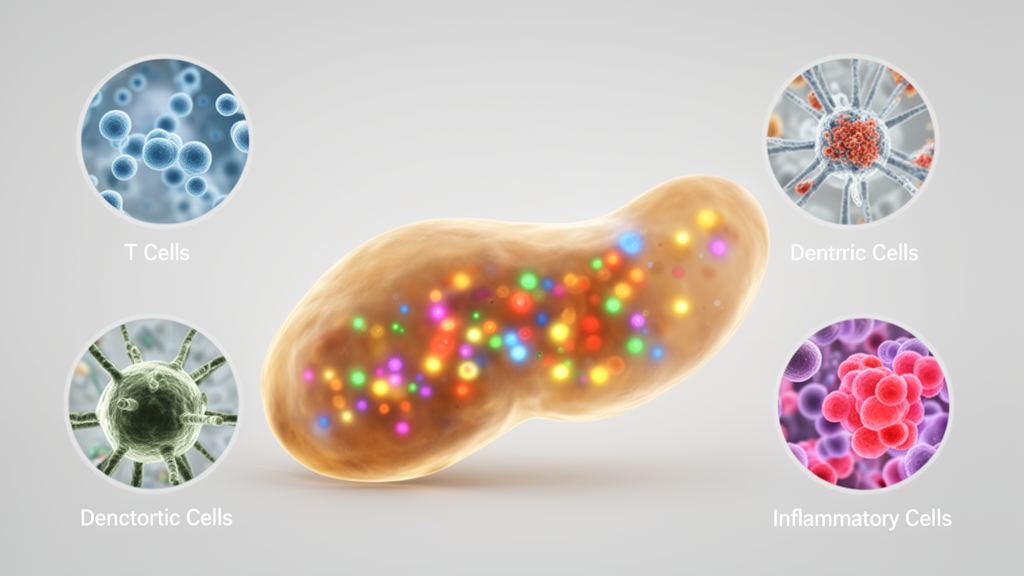
Researchers have built a single-cell atlas of the spleen in a widely used mouse model of lupus, revealing in unprecedented detail how a topical immune-stimulating drug reorganizes the organ’s immune cell landscape.
Systemic lupus erythematosus is a heterogeneous autoimmune disease in which both innate and adaptive immunity become dysregulated. Although topical imiquimod induction is a widely used TLR7-driven lupus-like model, the immune landscape of the model at single-cell resolution had remained incompletely defined, a gap the new study set out to fill.
To establish the model, the team applied imiquimod topically to mice and then evaluated systemic autoimmunity and kidney involvement using serologic, histopathologic, and immunofluorescence analyses. The treatment produced characteristic lupus-like features, including splenomegaly, increased levels of autoantibodies, hypercellularity in the glomeruli of the kidneys, and enhanced deposition of IgG and the complement component C3 in the glomeruli.
The researchers then performed single-cell RNA sequencing on splenic immune cells from imiquimod-treated and wild-type mice. The integrated analysis covered 33,091 cells and resolved eight major immune compartments, followed by subset-specific re-clustering, differential expression and functional enrichment analyses, RNA velocity and PAGA trajectory inference, cell–cell communication analysis, and regulon activity profiling.
The sequencing revealed marked compositional remodeling of the spleen after imiquimod induction. Neutrophils, macrophages, and plasma cells expanded, while lymphocyte compartments shrank in relative terms.
Within the B cell compartment, re-clustering showed that the cells underwent activation reprogramming and plasma cell-skewed differentiation, with dynamic progression along trajectories running from marginal zone states to follicular and plasma-cell states. T cells, meanwhile, showed a redistribution away from naïve and central memory states toward effector, proliferative, T follicular helper, and tissue-resident–associated states.
In the myeloid compartment, dendritic cells were selectively remodeled toward interferon- and inflammation-associated subsets, and neutrophils displayed enrichment of distinct inflammatory states along with continuous trajectory progression. Regulon activity analysis identified profound transcriptional reprogramming centered on the myeloid compartments, particularly neutrophils, indicating that these cells act as a major transcriptional hub in the model.
Cell–cell communication analysis added another dimension to the findings. In imiquimod-induced mice, the immune interaction network was denser and more extensive than in controls, and it was dominated by monocytes, macrophages, and dendritic cells signaling through inflammatory axes including IL6, TNF, and CCL. Together with the trajectory and regulon results, this points to a coordinated, myeloid-centered intensification of immune communication under TLR7 and interferon drive.
The authors conclude that the study provides a single-cell atlas of the splenic immune landscape in the imiquimod-induced lupus-like model and shows that the drug drives coordinated remodeling across both lymphoid and myeloid compartments, accompanied by intensified intercellular communication and transcriptional regulatory reprogramming. They note that the findings highlight the central role of the TLR7/interferon-driven myeloid axis in lupus-like immune pathology and offer a high-resolution framework for future mechanistic studies of immune dysregulation relevant to systemic lupus erythematosus. As a mouse model study, the work characterizes disease mechanisms in animals rather than demonstrating effects in human patients, but the atlas is intended as a resource for dissecting the immune pathways implicated in SLE-related pathology.
Subject of Research: Single-cell RNA sequencing of the splenic immune landscape in an imiquimod-induced lupus-like mouse model
Article Title: Investigating cellular dynamics and molecular pathways through single-cell RNA sequencing in an imiquimod-induced lupus-like model
Article References: Zhao, X., Xiang, X., Liu, X., Li, Z., Cao, S., Zhang, J., Deng, J., Tan, X., Li, C., & Sun, X. (2026). Investigating cellular dynamics and molecular pathways through single-cell RNA sequencing in an imiquimod-induced lupus-like model. Arthritis Research & Therapy. https://doi.org/10.1186/s13075-026-03939-y
Image Credits: AI Generated
DOI: 10.1186/s13075-026-03939-y
Keywords: systemic lupus erythematosus, single-cell RNA sequencing, imiquimod, TLR7, splenomegaly, neutrophils, macrophages, plasma cells, dendritic cells, interferon, cell-cell communication, mouse model
News Source: Ophelia Keating. (October 29, 2026). Single-cell atlas maps how topical imiquimod reshapes the spleen in a lupus-like mouse model. Scienmag.