


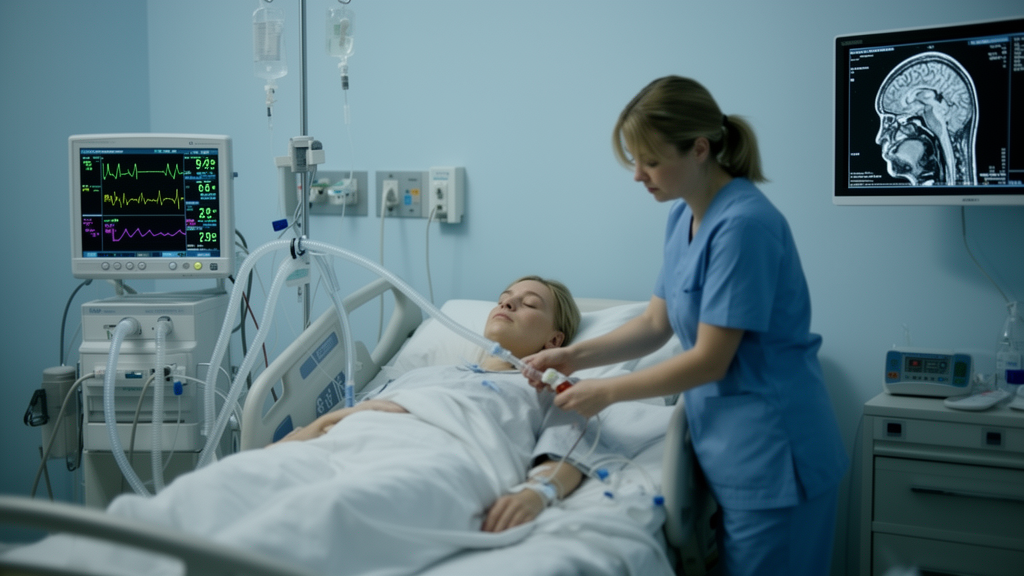
A 37-year-old man who developed encephalopathy and rigidity after extensive arterial thrombosis, thrombectomy, and suspected postoperative sepsis experienced recurrent episodes of simultaneous tachycardia, elevated blood pressure, rapid breathing, fever, sweating, and abnormal posturing, according to a case report published in Frontiers in Neuroscience.
The episodes were documented during January 2025 observations and were transient and recurrent, occurring in parallel bursts rather than as isolated vital-sign changes. This clustering of features is what makes the condition difficult to identify in intensive care settings, where infection and seizures can produce overlapping signs such as fever, tachycardia, and hypertension.
The diagnosis of paroxysmal sympathetic hyperactivity remained among the patient’s transfer diagnoses when he moved to inpatient rehabilitation on February 12. The score recorded was 24 points. A conservative reassessment that retained the recorded severity grades yielded 20 points, which still placed the case in the category of probable paroxysmal sympathetic hyperactivity.
Brain magnetic resonance imaging performed on February 20, 2025, showed symmetric bilateral abnormalities in the periventricular and deep white matter, without definite diffusion restriction. Targeted antibody testing of both serum and cerebrospinal fluid came back negative. Despite these findings, the cerebral cause of the episodes remained uncertain, and seizures could not be excluded because electroencephalographic event capture was unavailable during the paroxysms.
The clinical course offered some clues about the nature of the episodes. The paroxysms persisted even as documented infection improved, which argues against infection alone as the driver. They decreased during multimodal treatment and then recurred when medications were reduced in combination, a pattern the authors note as consistent with the episodic, treatment-responsive behavior described in this condition.
At the February 12 rehabilitation transfer, the patient’s communication and muscle tone had improved, but contractures and severe limb motor impairment persisted. The report emphasizes that even as the acute autonomic episodes were being recognized and managed, lasting rehabilitation needs remained a central part of the clinical picture.
The authors frame the case as an illustration of serial clinical recognition rather than a definitive answer to the underlying etiology. Because electroencephalographic capture of the events was not available, the possibility that some episodes were seizures could not be ruled out, and the white matter abnormalities on imaging did not point to a single cause. The report therefore presents a probable diagnosis supported by a standardized assessment score and the temporal pattern of the episodes, alongside explicitly unresolved questions.
The case highlights how recognition of paroxysmal sympathetic hyperactivity during vascular and postoperative critical illness must proceed alongside careful infection assessment, given the overlapping features, and how persistent rehabilitation needs deserve attention even after the acute episodes begin to respond to treatment.
Subject of Research: A case report of probable paroxysmal sympathetic hyperactivity during vascular and postoperative critical illness.
Article Title: Case Report: Probable paroxysmal sympathetic hyperactivity during vascular and postoperative critical illness with bilateral white matter abnormalities
Article References: Li, M., Wei, Y., Cai, Z., Wang, L., Guo, S., Cao, J., Tang, H., & Wang, L. (2026). Case Report: Probable paroxysmal sympathetic hyperactivity during vascular and postoperative critical illness with bilateral white matter abnormalities. Frontiers in Neuroscience, 20, Article 1935805. https://doi.org/10.3389/fnins.2026.1935805
Image Credits: AI Generated
DOI: 10.3389/fnins.2026.1935805
Keywords: paroxysmal sympathetic hyperactivity, case report, critical illness, white matter abnormalities, encephalopathy, arterial thrombosis, sepsis, rehabilitation, autonomic nervous system, PSH-AM, Case, Report
News Source: Ophelia Keating. (October 29, 2026). Research report: Case Report: Probable paroxysmal sympathetic hyperactivity during vascular and postoperative critical illness with bilateral white matter abnormalities. Scienmag.



