


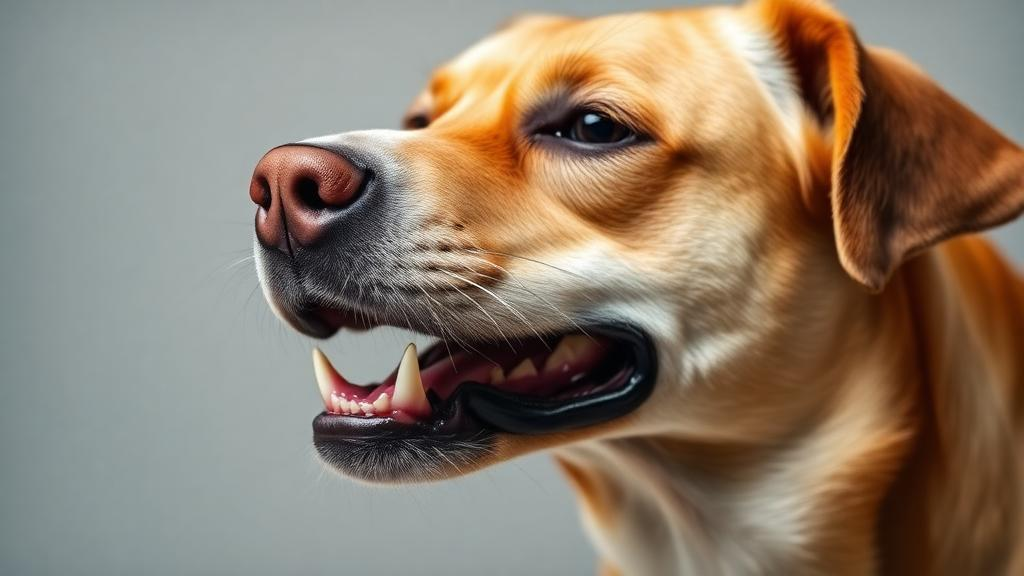
A seven-month-old dog that could not open its mouth at all has made a full functional recovery after surgery for a rare condition called temporomandibular joint pseudo-ankylosis, according to a case report published in BMC Veterinary Research. At a six-month follow-up, the dog had a stable jaw opening of 32 millimetres, and the surgical team credits the outcome to a wide surgical gap combined with rehabilitation that began almost immediately after the operation.
Canine temporomandibular joint pseudo-ankylosis is a rare condition in which extra-articular bone fusion locks the jaw. Unlike true ankylosis, which involves fusion inside the joint itself, pseudo-ankylosis is caused by bony bridges that form outside the joint. Standard treatment usually involves simply removing the bone bridge, but severe cases can require more aggressive procedures such as gap ostectomy and condylectomy, which are typically reserved for true intra-articular ankylosis.
In this case, the young dog presented with a completely locked jaw caused by bilateral osseous bridging between the mandibular angular processes and the tympanic bullae. The severity of the restriction was such that the mouth could not be opened at all, so the surgical team had to secure the airway using retrograde intubation. The authors note that this need for retrograde intubation highlighted just how extreme the case was.
Using a ventral approach adapted from a Ventral Bulla Osteotomy, the surgeons performed a bilateral gap ostectomy between the right mandibular angular process and the ventrolateral aspect of the tympanic bulla. Notably, they did this without the use of any inter-positional material, which is often placed to keep the bone surfaces apart and prevent them from fusing again. The procedure was followed by a condylectomy.
Rehabilitation began on the second day after surgery and was intensive. It included passive range-of-motion exercises, in which the jaw is moved through its range of motion without the animal actively participating. According to the report, this early postoperative rehabilitation is considered a more critical factor for preventing re-fusion than the inter-positional barrier itself.
The combination proved effective. The patient achieved a full functional recovery, reaching a stable 32 millimetre jaw opening at the six-month follow-up, with no re-ankylosis reported. The authors conclude that creating a wide surgical gap followed immediately by structured rehabilitation can prevent re-fusion and restore normal function, even in severe cases where complex grafting might otherwise be considered.
As a single case report, the findings describe one dog’s outcome and cannot by themselves establish how well this approach would work across a wider population of affected animals. Nevertheless, the report offers a detailed account of the surgical technique and the rehabilitation timeline for veterinarians encountering similarly severe jaw-locking cases.
The report also underscores a practical point for postoperative care: rehabilitation was not deferred until healing was advanced but started within forty-eight hours of surgery. In this patient, that early start, together with the wide surgical gap created by the ostectomy, was associated with a return to normal jaw function without the need for inter-positional grafting material.
Subject of Research: Surgical treatment and early rehabilitation of temporomandibular joint pseudo-ankylosis in a juvenile dog
Article Title: Case report: early rehabilitation as a key determinant of successful functional recovery after temporomandibular joint surgery in a juvenile dog with pseudo-ankylosis
Article References: Park, C., Jang, S.-K., Lee, S., Lee, J.-K., Kim, J.-M., & Kim, H.-Y. (2026). Case report: early rehabilitation as a key determinant of successful functional recovery after temporomandibular joint surgery in a juvenile dog with pseudo-ankylosis. BMC Veterinary Research. https://doi.org/10.1186/s12917-026-06067-6
Image Credits: AI Generated
DOI: 10.1186/s12917-026-06067-6
Keywords: temporomandibular joint, pseudo-ankylosis, dog, veterinary surgery, gap ostectomy, condylectomy, retrograde intubation, rehabilitation, passive range-of-motion, case report, Case, report
News Source: Ophelia Keating. (October 29, 2026). Early rehabilitation restored jaw function in a dog after severe TMJ surgery. Scienmag.



