Glioblastoma remains one of the most lethal brain tumors, and a new study points to an epigenetic enzyme as a central player in its aggressive behavior. Researchers report that histone acetyltransferase 1, known as HAT1, is significantly upregulated in glioblastoma and may serve as both a diagnostic and prognostic biomarker for the disease, which carries an extremely poor prognosis.
The study, published in Clinical Epigenetics, combined multi-omics analysis with laboratory and animal experiments to characterize HAT1’s expression, biological functions, and clinical significance in glioblastoma. According to the authors, the work was motivated by the urgent need to identify novel diagnostic and therapeutic targets for this highly malignant brain tumor.
Functionally, the researchers found that HAT1 maintains genomic stability through several interconnected mechanisms. The enzyme facilitates DNA damage repair, supports cell cycle progression, and contributes to metabolic reprogramming, all of which promote the malignant progression of glioblastoma. The study also indicates that HAT1 participates in remodeling the tumor immune microenvironment, adding an immunological dimension to its role in tumor biology.
The experimental evidence came from both genetic and pharmacological approaches. In vitro, genetic knockdown of HAT1 or pharmacological inhibition of the enzyme markedly suppressed glioblastoma cell proliferation and induced tumor DNA damage. These findings suggest that glioblastoma cells rely on HAT1 activity to manage the genomic stress that accompanies their rapid division.
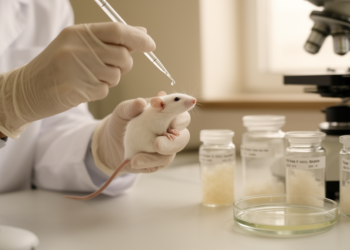
In vivo experiments further validated the therapeutic relevance of targeting HAT1. When the enzyme was inhibited in animal models, the treatment effectively impeded glioblastoma tumor growth, providing preclinical support for HAT1 as a viable therapeutic target rather than merely a molecular correlate of disease severity.
One of the most notable findings concerns combination therapy. Pharmacological inhibition of HAT1 enhanced the antitumor efficacy of temozolomide, the standard chemotherapy agent used against glioblastoma, as well as niraparib, a PARP inhibitor, in glioblastoma cells. This suggests that HAT1 inhibition could sensitize tumor cells to existing treatments, potentially opening the door to combined treatment strategies.
The mechanistic link is plausible given HAT1’s role in DNA damage repair. The study’s data on combination treatment in glioblastoma cells are consistent with this interpretation.
The authors conclude that HAT1 is a key epigenetic regulator driving glioblastoma progression and can serve as a novel prognostic biomarker and a viable therapeutic target for combined treatment strategies, providing new insights for the precise treatment of the disease. Because the findings derive from cell culture and animal models, clinical validation in patients will be an essential next step before any therapeutic application.
Its dual role as a biomarker associated with prognosis and as a target whose inhibition sensitizes cells to established drugs makes it a candidate worth watching as the research moves from bench toward potential clinical evaluation.
Subject of Research: The role of the histone acetyltransferase HAT1 in glioblastoma progression and therapeutic sensitivity
Article Title: Multi-omics characterization identifies HAT1 as a key regulator of proliferation and therapeutic sensitivity in glioblastoma
Article References: Yang, J., Liu, H., Luo, Q., Liu, B., Liang, Y., Zhao, H., Tian, H., Guo, B., & Zhang, L. (2026). Multi-omics characterization identifies HAT1 as a key regulator of proliferation and therapeutic sensitivity in glioblastoma. Clinical Epigenetics. https://doi.org/10.1186/s13148-026-02253-3
Image Credits: AI Generated
DOI: 10.1186/s13148-026-02253-3
Keywords: glioblastoma, HAT1, epigenetics, histone acetyltransferase, temozolomide, niraparib, DNA damage repair, tumor microenvironment, biomarker, multi-omics, prognosis, targeted therapy
News Source: Ophelia Keating. (October 28, 2026). HAT1 Emerges as a Driver of Glioblastoma Growth and Drug Sensitivity. Scienmag.