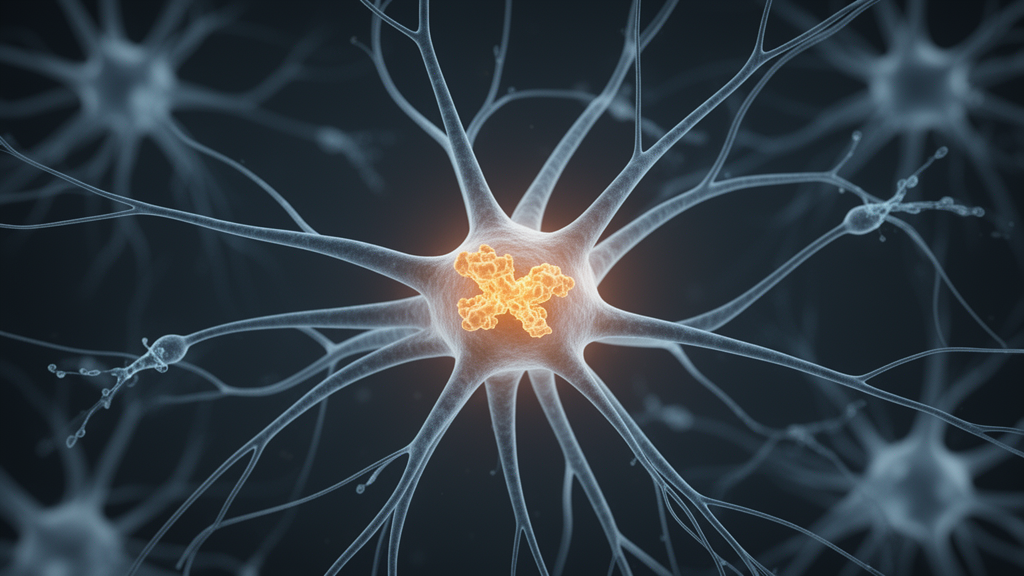
Depression remains one of the most common mood disorders, yet current treatments show limited efficacy for many patients. A new review published in Cellular and Molecular Neurobiology argues that a stress-responsive molecule called N-myc downstream-regulated gene 2, or NDRG2, may offer a way to understand the disorder through a single coordinating node rather than many disconnected pathways.
The review, authored by Zhijuan Yang, Min Zhang, Jingyun Wang, Zonghong Long and You-Liang Deng, was published on 11 October 2026 as an open-access paper. It positions NDRG2, a molecule expressed in astrocytes, as a key regulator in depression whose underlying mechanisms have remained largely unclear until now.
The authors’ central claim is that NDRG2 integrates multiple well-established depression-related pathways into a coordinated regulatory network.
Those pathways include astrocyte apoptosis, neuroinflammation, dysfunction of the hypothalamic-pituitary-adrenal axis, synaptic plasticity, glutamate homeostasis, neurogenesis, mitochondrial dysfunction and blood-brain barrier dysfunction. Rather than treating each as a separate thread of depression biology, the review proposes an NDRG2-centered network model in which these processes are linked.
A second key point of the review is that NDRG2 exhibits dual effects depending on the pathological context. This context-dependence, the authors argue, suggests that targeting NDRG2 may offer a more precise therapeutic strategy than approaches that modulate only a single pathway.
The review explicitly frames NDRG2 as a promising yet challenging therapeutic target. The authors note that further studies are needed to clarify its precise molecular mechanisms and to evaluate its translational potential, meaning that no clinical application is established by this work.
As a review paper, the article summarizes and synthesizes existing evidence rather than reporting new experimental results. Its contribution is conceptual: a framework that could guide future research into how astrocytic stress signaling connects inflammation, stress-axis dysfunction and synaptic changes in depression.
The paper appears in Cellular and Molecular Neurobiology and is currently available as an open-access, peer-reviewed accepted manuscript, with a final version of record to follow. Readers should treat the NDRG2-centered model as a hypothesis-generating framework for future mechanistic and translational studies, not as a validated treatment approach.
Subject of Research: The role of the astrocytic protein NDRG2 as a proposed therapeutic target in depression
Article Title: NDRG2 as a Promising Therapeutic Target in Depression: A Review of its Multifaceted Mechanisms
Article References: Yang, Z., Zhang, M., Wang, J., Long, Z., & Deng, Y.-L. (2026). NDRG2 as a Promising Therapeutic Target in Depression: A Review of its Multifaceted Mechanisms. Cellular and Molecular Neurobiology. https://doi.org/10.1007/s10571-026-01844-1
Image Credits: AI Generated
DOI: 10.1007/s10571-026-01844-1
Keywords: NDRG2, depression, astrocytes, neuroinflammation, HPA axis, synaptic plasticity, glutamate homeostasis, neurogenesis, mitochondrial dysfunction, blood-brain barrier, review, therapeutic target
News Source: Glenn Wilkins. (October 27, 2026). Astrocyte Stress Protein NDRG2 Emerges as a Candidate Target in Depression Review. Scienmag.