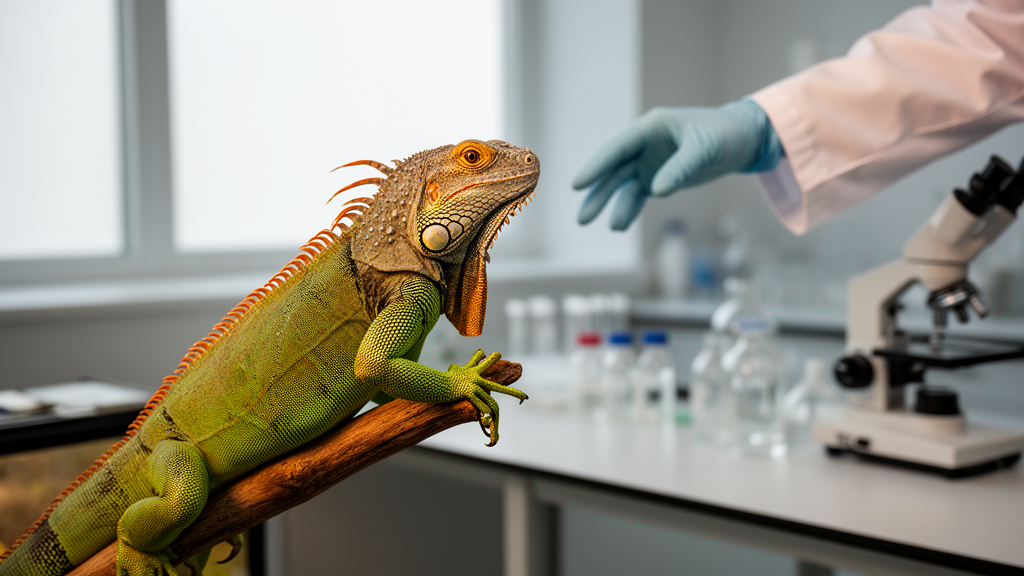
Reptiles around the world carry Salmonella and Escherichia coli far more often than many owners and clinicians might expect, according to a new systematic review and meta-analysis published in Frontiers in Microbiology. Pooling data from 189 peer-reviewed studies covering 24,152 reptilian specimens, an international team of researchers estimated that the global pooled prevalence of Salmonella spp. in reptiles is 33.3% (95% confidence interval: 29.3–37.5%), while Escherichia coli was detected in 25.1% of samples (95% CI: 18.9–32.5%). In total, the reviewed studies yielded 5,046 isolates of the two bacterial groups, making this the first meta-analysis to jointly estimate the worldwide prevalence of both organisms across reptile taxa.
The work was led by Lungile N. Mlangeni and Che Weldon of North-West University in South Africa, together with Cormac Price of University College Dublin, and Jane Nkhebenyane and Tsepo Ramatla of the Central University of Technology, Bloemfontein. The team followed the Preferred Reporting Items for Systematic Reviews and Meta-Analyses (PRISMA) guidelines, searching five databases—PubMed, Scopus, ScienceDirect, Google Scholar and Medline—for studies published up to December 2025, with the final search conducted on 3 March 2026. Prevalence data were pooled with a random-effects model, heterogeneity was quantified with the I² statistic, and publication bias was assessed using Egger’s linear regression and Begg’s rank correlation tests in Comprehensive Meta-Analysis software.
The literature search initially returned 2,124 records. After removing 547 duplicates and screening 1,577 unique citations, 328 full-text articles were assessed for eligibility and 139 were excluded, leaving 189 studies for the final analysis. All included studies met a minimum quality benchmark on the Joanna Briggs Institute Critical Appraisal Checklist for prevalence studies, scoring above five of a possible eight points. To be eligible, studies had to be peer-reviewed primary research reporting quantitative data on Salmonella spp. or E. coli detection from cloacal, fecal or intestinal samples of reptiles, with explicit methodology and sample sizes of at least ten animals.
The geographic reach of the evidence was broad but uneven. Europe contributed the largest number of studies (n = 59), followed by Asia and North America (38 each), South America (23), Africa (15) and Oceania (14), with two multi-region studies. Europe also supplied the most sampled reptiles (7,091), followed by Asia (6,091) and North America (3,906). Most studies examined captive animals (46%) or wild-caught individuals (37%), and cloacal or fecal samples were the dominant specimen type, used in 126 studies. Chelonians were the most frequently investigated group, representing 35% of sampled reptiles, followed by lizards (32%), snakes (28%) and crocodilians (5%).
Prevalence differed sharply between bacterial species and reptile groups. Salmonella spp. was most common in snakes, with a pooled prevalence of 49.4% (95% CI: 40.1–58.9%), compared with 34.5% in lizards and 23.2% in chelonians. The pattern reversed for E. coli: lizards showed the highest pooled prevalence at 36.8% (95% CI: 21.5–55.4%), followed by crocodilians at 25.3%, chelonians at 21.9% and snakes at the lowest, 16.8% (95% CI: 8.7–29.9%). Within subgroups, iguanas had the highest E. coli estimate at 56.5% (95% CI: 31.7–78.5%), which the authors link to their herbivorous diets and the fermenting gut communities that favor facultative anaerobes, whereas insectivorous geckos showed only 15.1%. Among chelonians, terrapins reached 41.1% for E. coli while turtles were lowest at 14.2%.
Geography produced striking contrasts. Indonesia recorded the highest country-level pooled prevalence for both bacteria at 98.7% (95% CI: 88.1–99.9%), while Trinidad (14.4%) and New Zealand (4.4%) reported the lowest Salmonella estimates, and Bulgaria (3.6%), Italy (4.8%) and Malaysia (10.5%) the lowest E. coli figures. At the continental level, Asia had the highest Salmonella prevalence (40.6%) and Oceania the lowest (19.9%), yet Oceania simultaneously showed the highest E. coli estimate at 57.4%—though with an extremely wide confidence interval of 15.4–90.9% and the largest between-study variance, reflecting only three pooled studies. Europe had the lowest E. coli prevalence at 13.2%.
Diagnostic methodology strongly shaped the estimates. For Salmonella spp., the combination of culture and serotyping produced the highest pooled prevalence at 48.1% (95% CI: 35.6–60.9%), while culture with MALDI-TOF mass spectrometry yielded only 8.9%. For E. coli, studies combining culture, biochemical testing and serotyping reported the highest estimate at 50.3% (95% CI: 32.2–68.3%), whereas culture combined with MALDI-TOF MS gave the lowest at 3.9%, notably with zero statistical heterogeneity. Culture followed by biochemical identification alone—the second most common approach, used in 24% of studies—produced intermediate estimates of 26.9% for Salmonella and 23.1% for E. coli. Molecular methods such as PCR were used in relatively few studies, and the authors attribute the higher estimates from multi-step diagnostic pipelines to their ability to detect a broader range of phenotypes.
Sample type also mattered. Composite fecal samples gave the highest Salmonella estimate at 45.8% (95% CI: 32.5–59.8%), while combined oral and cloacal swabs yielded only 13.4%. For E. coli, isolated fecal samples produced the highest estimate at 40.5% (95% CI: 7.6–84.9%), a very imprecise range reflecting high between-study variance. The authors note that combining direct animal shedding with environmental sampling substantially raises pooled estimates compared with testing individual animal sites alone.
Serovar analysis added a public health dimension. Salmonella enterica accounted for 99.96% of identified infections, with S. enterica subsp. enterica (I) the most common subspecies at a global pooled prevalence of 35.1%, highest in snakes (45.3%) and lizards (38.5%). More than 500 serovars were identified, and captive animals carried a greater diversity of serovars than wild counterparts. Host-generalist zoonotic strains—including S. Typhimurium, S. Enteritidis, S. Newport and S. Agona—had an overall pooled prevalence of 18.4% (95% CI: 14.1–23.6%), whereas the so-called cold-blooded subspecies (salamae, arizonae, diarizonae and houtenae) showed a lower pooled prevalence of 5.9% but displayed notable host-specific clustering in snakes and turtles. Salmonella bongori was entirely absent from the pooled datasets, which the authors attribute to its limited geographic endemicity and competition from S. enterica strains in captive settings.
Meta-regression revealed a significant positive trend over time: reported Salmonella prevalence increased by an estimated 1.64% per year across the examined timeframe (R² = 0.391), and E. coli by 0.88% per year (R² = 0.171), with the Salmonella slope significantly steeper. The authors caution, however, that the evidence base carries important limitations. Heterogeneity was extremely high across nearly all analyses (I² above 91% in most subgroups), meaning almost all observed variance reflects real differences between studies rather than sampling error, and stratification did not resolve it. Publication bias tests flagged significant asymmetry for E. coli cloacal-sample studies and for African Salmonella studies. The search was restricted to English-language peer-reviewed articles, some regions had few or no studies, and the minimum sample size of ten reptiles per study may have excluded rare taxa. The authors also note that the specimen, rather than the individual animal, served as the analytical denominator because primary studies rarely tracked individual animals. Despite these caveats, the findings underscore that reptiles—particularly captive snakes and lizards—frequently harbor bacteria of zoonotic concern, and the authors position the results as a reference for veterinarians, environmental scientists and public health professionals conducting risk assessments and planning surveillance of reptile-associated infections.
Subject of Research: Global pooled prevalence of Salmonella spp. and Escherichia coli in reptiles
Article Title: Global prevalence of Salmonella spp. and Escherichia coli in reptile taxa: a systematic review and meta-analysis
Article References: Mlangeni, L. N., Price, C., Nkhebenyane, J., Ramatla, T., & Weldon, C. (2026). Global prevalence of Salmonella spp. and Escherichia coli in reptile taxa: a systematic review and meta-analysis. Frontiers in Microbiology, 17, 1940090. https://doi.org/10.3389/fmicb.2026.1940090
Image Credits: AI Generated
DOI: 10.3389/fmicb.2026.1940090
Keywords: Salmonella, Escherichia coli, reptiles, meta-analysis, systematic review, zoonotic reservoirs, prevalence, public health, snakes, lizards, diagnostic methods, Global
News Source: Phoebe Ingram. (October 28, 2026). Reptiles worldwide carry Salmonella and E. coli at high rates, meta-analysis finds. Scienmag.