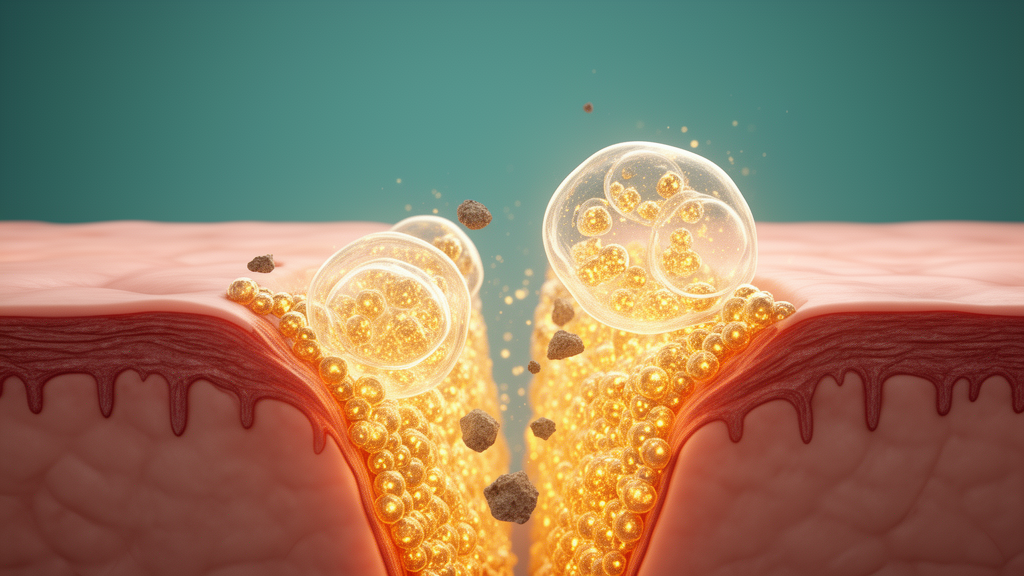
Deep inside every cell in the human body, a microscopic demolition and recycling crew works around the clock, shredding damaged organelles, breaking down misfolded proteins, and converting the debris into raw materials the cell can reuse. This process, known as autophagy, has long been regarded as little more than cellular housekeeping. But a comprehensive new review published in Molecular Biology Reports argues that autophagy is nothing less than a master regulator of skin wound healing, orchestrating inflammation, metabolism, blood vessel growth, and tissue remodeling across every stage of repair. The findings could reshape how scientists approach one of medicine’s most stubborn problems: chronic wounds that refuse to heal.
The scale of the problem is staggering. An estimated 2.21 in every 1,000 people worldwide live with chronic wounds, which typically persist for twelve to thirteen months and recur in as many as 60 to 70 percent of patients. Diabetic ulcers are among the worst offenders, and their origins lie in a fundamental breakdown of coordination. Normal wound healing unfolds in four precisely choreographed phases—hemostasis, inflammation, proliferation, and remodeling—and when any phase falls out of step, the entire repair program can stall. The new review, led by Keerthan Nayak and colleagues at Manipal Academy of Higher Education, maps how autophagy governs this choreography and where it goes wrong in diabetic and non-healing wounds.
At the molecular level, autophagy is a lysosome-dependent degradation pathway conserved across virtually all eukaryotic life. In its best-studied form, macroautophagy, a membrane structure called a phagophore expands to engulf cytoplasmic cargo, sealing it inside a double-membrane vesicle known as an autophagosome. This vesicle then fuses with a lysosome to form an autolysosome, where hydrolytic enzymes dismantle the contents. The process runs through a defined molecular assembly line: the ULK1 complex initiates the cascade, a class III PI3K complex containing Beclin-1 generates phosphatidylinositol-3-phosphate at the assembly site, and the ATG5-ATG12-ATG16L1 conjugation system drives lipidation of the protein LC3, expanding the autophagosome membrane. Final fusion with lysosomes depends on the small GTPase RAB7 and SNARE proteins.
What makes autophagy so relevant to wounds is the way it is switched on and off. Under nutrient-rich conditions, the pathway is suppressed by mTORC1, the mammalian target of rapamycin complex 1, acting through the PI3K-AKT signaling axis. When cells face the opposite conditions—hypoxia, oxidative stress, ATP depletion, nutrient scarcity, precisely the conditions inside an open wound—AMP-activated protein kinase, or AMPK, takes command. AMPK inhibits mTORC1 and directly phosphorylates ULK1 and Beclin-1 to ignite autophagy. In other words, the wound microenvironment is almost purpose-built to activate the very pathway that helps cells survive it.
The review details autophagy’s role in each phase of healing. During inflammation, pattern recognition receptors such as toll-like receptors and the NOD-like receptors NOD1 and NOD2 stimulate autophagy after sensing microbial invasion, promoting the engulfment and destruction of pathogens in a process called xenophagy. Autophagy also shapes the inflammatory signal itself: in macrophages, secretory autophagy promotes the release of the inflammatory messengers IL-1β and HMGB1, while the pathway helps steer macrophages from their pro-inflammatory M1 state toward the pro-repair M2 state. That switch, however, is context-dependent. In diabetic settings, advanced glycation end-products can drive autophagy toward harmful M1 polarization via IRF8, actually impairing wound closure.
In the proliferative phase, autophagy keeps the repair machinery moving. Hypoxia in the wound bed raises reactive oxygen species, which activate p38 and JNK MAPK signaling and trigger BNIP3-mediated autophagy in keratinocytes, facilitating their migration across the wound and accelerating re-epithelialization. Experiments comparing keratinocytes lacking the essential autophagy gene Atg7 with normal cells showed that autophagy-deficient cells are far more vulnerable to oxidative stress, accumulating DNA damage and slipping into premature senescence. Hypoxia-driven autophagy also preserves endothelial cell function and promotes angiogenesis, ensuring new blood vessels reach the healing tissue. During the final remodeling stage, autophagy regulates fibroblast differentiation into myofibroblasts, collagen maturation, and even the clearance of cells that would otherwise drive hypertrophic scarring.
The translational implications are where the review becomes genuinely provocative, because a growing arsenal of drugs and materials can now manipulate the pathway. Rapamycin, the classic mTORC1 inhibitor, accelerates healing and reduces scarring in rodent models, and mesenchymal stem cells primed with rapamycin release exosomes that enhance diabetic wound repair by promoting VEGF-driven angiogenesis and shifting macrophages toward the M2 phenotype. Metformin, the world’s most widely prescribed diabetes drug, activates AMPK; topical metformin gels raised markers of autophagy such as LC3B and Beclin-1 and improved collagen deposition and re-epithelialization in diabetic rats. Plant-derived compounds add to the list: resveratrol protects diabetic wounds by modulating PI3K/AKT/Nrf2 signaling and blocking ferroptosis, green tea’s epigallocatechin gallate restores impaired autophagic flux in high-glucose-treated keratinocytes through AMPK/ULK1, and curcumin’s protective effects in stressed fibroblasts vanish entirely when autophagy is blocked.
Biomaterials are emerging as perhaps the most elegant delivery solution. Zwitterionic sulfobetaine methacrylate hydrogels promote near-complete skin regeneration by dampening PI3K/AKT/mTOR signaling, while thermosensitive injectable hydrogels pairing zinc with metformin raised LC3 expression at the wound site and sped full-thickness skin repair. Electrospun chitosan nanofibers loaded with the antioxidant dihydromyricetin boosted autophagy-associated proteins including LC3-II, ATG5, and ATG7 while suppressing inflammation. Even strategies that inhibit autophagy have a place: PLGA microspheres releasing platelet-derived growth factor can suppress excessive autophagy in endothelial cells and fibroblasts, unleashing angiogenesis and granulation tissue formation. The common thread is localization—delivering the right modulator to the right cells at the right time, with minimal systemic exposure.
Yet the authors are candid about the obstacles standing between the laboratory and the clinic. Most autophagy-modulating compounds suffer from poor solubility, limited skin penetration, instability, and off-target effects that ripple through inflammation, cell proliferation, and angiogenesis. Rapamycin’s immunosuppression and metabolic side effects, for instance, mean even topical use demands caution. More fundamentally, much of the preclinical evidence rests on static marker readouts such as LC3 puncta or Beclin-1 levels, which cannot distinguish genuine autophagic flux from a blocked degradation step. The review calls for rigorous flux assays, including bafilomycin A1 inhibition and tandem fluorescent LC3 reporters, alongside well-controlled human trials that remain scarce. There are also open biological questions: whether chronic wounds fail at autophagy initiation or lysosomal clearance, which cell types to target at each phase, and whether selective pathways such as mitophagy and ER-phagy outperform general autophagy manipulation.
The bigger picture emerging from this synthesis is that autophagy is neither uniformly good nor bad for healing—it is a dial that must be tuned. Too little autophagy leaves cells unable to adapt to the hostile wound environment; too much, particularly in chronic diabetic wounds, can feed pathological inflammation and fibrosis. The authors argue the therapeutic goal should be restoring normal autophagic flux in the correct cells, wound type, and healing stage, ideally using smart biomaterials capable of controlled, sequential drug release. If that precision can be achieved, the humble cellular recycling system may finally deliver what millions of patients with non-healing wounds have been waiting for: a way to turn stalled, inflamed wound beds back into regenerating tissue.
Subject of Research: The role of autophagy in cutaneous wound healing and therapeutic strategies targeting it
Article Title: Rewiring autophagy to target cutaneous wound healing: investigation of molecular mechanisms to therapeutic interventions
Article References: Nayak, K., Banerjee, I., Nazerulla, F., Valame, A., Paul, M. K., Bhutia, S. K., Basu, D., & Mukhopadhyay, S. (2026). Rewiring autophagy to target cutaneous wound healing: investigation of molecular mechanisms to therapeutic interventions. Molecular Biology Reports, 53(1), Article 1751. https://doi.org/10.1007/s11033-026-12938-w
Image Credits: AI Generated
DOI: 10.1007/s11033-026-12938-w
Keywords: autophagy, wound healing, chronic wounds, diabetic ulcers, mTOR, AMPK, macrophage polarization, keratinocytes, angiogenesis, phytochemicals, biomaterials, exosomes
News Source: Drew Townsend. (October 18, 2026). Cellular Recycling System Emerges as Master Switch for Healing Chronic Wounds. Scienmag.