• HOME
  • NEWS
  • EXPLORE
    • CAREER
      • Companies
      • Jobs
    • EVENTS
    • iGEM
      • News
      • Team
    • PHOTOS
    • VIDEO
    • WIKI
  • BLOG
  • COMMUNITY
    • FACEBOOK
    • INSTAGRAM
    • TWITTER
Friday, April 17, 2026
BIOENGINEER.ORG
No Result
View All Result
  • Login
  • HOME
  • NEWS
  • EXPLORE
    • CAREER
      • Companies
      • Jobs
        • Lecturer
        • PhD Studentship
        • Postdoc
        • Research Assistant
    • EVENTS
    • iGEM
      • News
      • Team
    • PHOTOS
    • VIDEO
    • WIKI
  • BLOG
  • COMMUNITY
    • FACEBOOK
    • INSTAGRAM
    • TWITTER
  • HOME
  • NEWS
  • EXPLORE
    • CAREER
      • Companies
      • Jobs
        • Lecturer
        • PhD Studentship
        • Postdoc
        • Research Assistant
    • EVENTS
    • iGEM
      • News
      • Team
    • PHOTOS
    • VIDEO
    • WIKI
  • BLOG
  • COMMUNITY
    • FACEBOOK
    • INSTAGRAM
    • TWITTER
No Result
View All Result
Bioengineer.org
No Result
View All Result
Home NEWS Science News Biology

Wood sponge soaks up oil from water (video)

Bioengineer by Bioengineer
October 24, 2018
in Biology
Reading Time: 2 mins read
0
Share on FacebookShare on TwitterShare on LinkedinShare on RedditShare on Telegram
IMAGE

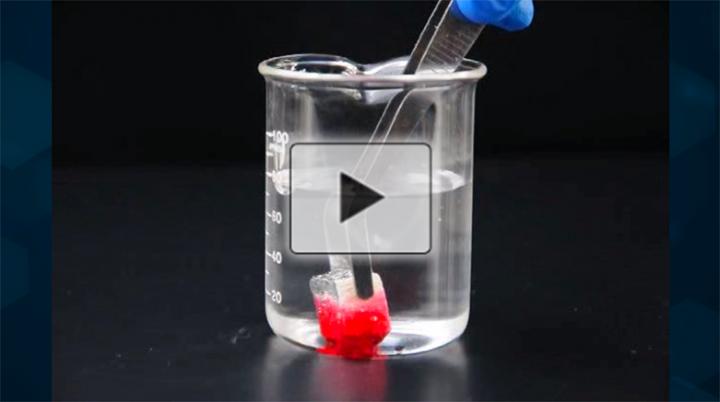
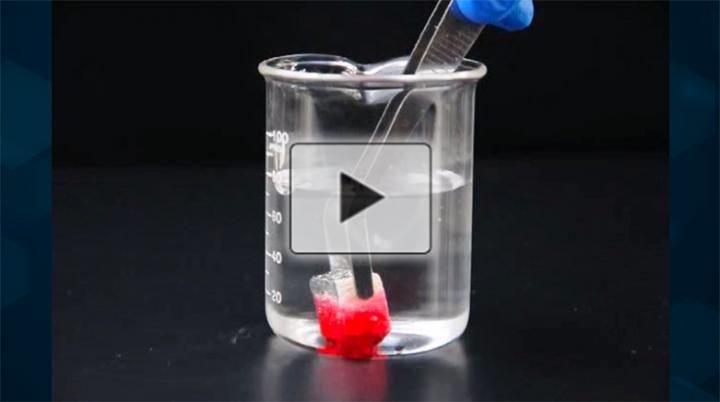
Sponges made from wood can selectively absorb oil, and then be squeezed out for reuse. Watch this Headline Science video here…. view more

Credit: American Chemical Society

Oil spills and industrial discharge can contaminate water with greasy substances. Although it's true that oil and water don't mix, separating and recovering each component can still be challenging. Now, researchers have created sponges made from wood that selectively absorb oil, and then can be squeezed out and used again. They report their results in ACS Nano. A video of the sponges in action is here.

Over the years, scientists have developed numerous techniques to clean up oily water, from gravity separation to burning to bioremediation. But many of these methods suffer from limitations, such as low efficiency, secondary pollution and high cost. More recently, researchers have explored 3D porous materials, such as aerogels or sponges, based on various building blocks including synthetic polymers, silica or cellulose nanofibers. However, these are often difficult to fabricate, lack mechanical robustness or are made from nonrenewable, nondegradable materials. Xiaoqing Wang and colleagues wanted to develop a sponge made from wood — a renewable resource — that would absorb oil and tolerate repeated squeezing without structural failure.

The team made the wood sponge by treating natural balsa wood with chemicals that removed lignin and hemicellulose, leaving behind a cellulose skeleton. They then modified this highly porous structure with a hydrophobic coating that attracted oil, but not water. When placed in a mixture of water and silicone oil, the wood sponge removed all of the red-dyed oil, leaving clean water behind. Depending on the oil tested, the sponge absorbed 16 to 41 times its own weight, which is comparable to or better than many other reported absorbents. In addition, the sponge could endure at least 10 cycles of absorption and squeezing. The researchers incorporated the wood sponge into an oil-collecting device in the lab that continuously separated oils from the water surface.

###

The authors acknowledge funding from the National Key Research and Development Program of China and the National Natural Science Foundation of China.

The abstract that accompanies this study is available here.

The American Chemical Society, the world's largest scientific society, is a not-for-profit organization chartered by the U.S. Congress. ACS is a global leader in providing access to chemistry-related information and research through its multiple databases, peer-reviewed journals and scientific conferences. ACS does not conduct research, but publishes and publicizes peer-reviewed scientific studies. Its main offices are in Washington, D.C., and Columbus, Ohio.

To automatically receive news releases from the American Chemical Society, contact [email protected].

Follow us on Twitter | Facebook

Media Contact

Katie Cottingham
[email protected]
301-775-8455
@ACSpressroom

http://www.acs.org

Related Journal Article

http://dx.doi.org/10.1021/acsnano.8b05763

Share12Tweet8Share2ShareShareShare2

Related Posts

Conserved DNA Architect Links Chloroplasts to Cell Cycle

Conserved DNA Architect Links Chloroplasts to Cell Cycle

April 17, 2026
UTS Study Reveals Toxic Metal Exposure from E-Cigarette Devices

UTS Study Reveals Toxic Metal Exposure from E-Cigarette Devices

April 17, 2026

Can Exercise Help You Beat Stress Hormones? New Insights from a Clinical Trial

April 17, 2026

Regulatory Waves Govern a Key Developmental Gene

April 17, 2026
Please login to join discussion

POPULAR NEWS

  • Scientists Investigate Possible Connection Between COVID-19 and Increased Lung Cancer Risk

    62 shares
    Share 25 Tweet 16
  • NSF funds machine-learning research at UNO and UNL to study energy requirements of walking in older adults

    100 shares
    Share 40 Tweet 25
  • Boosting Breast Cancer Risk Prediction with Genetics

    47 shares
    Share 19 Tweet 12
  • Popular Anti-Aging Compound Linked to Damage in Corpus Callosum, Study Finds

    46 shares
    Share 18 Tweet 12

About

We bring you the latest biotechnology news from best research centers and universities around the world. Check our website.

Follow us

Recent News

TLR2, TLR8, TLR3 in Dengue Virus Enhancement

Emulating Vaccine Effectiveness in Previously Infected Kids

Mayo Clinic Researchers Pioneer Personalized Treatment Era for Meningioma Patients

Subscribe to Blog via Email

Enter your email address to subscribe to this blog and receive notifications of new posts by email.

Join 79 other subscribers
  • Contact Us

Bioengineer.org © Copyright 2023 All Rights Reserved.

Welcome Back!

Login to your account below

Forgotten Password?

Retrieve your password

Please enter your username or email address to reset your password.

Log In
No Result
View All Result
  • Homepages
    • Home Page 1
    • Home Page 2
  • News
  • National
  • Business
  • Health
  • Lifestyle
  • Science

Bioengineer.org © Copyright 2023 All Rights Reserved.