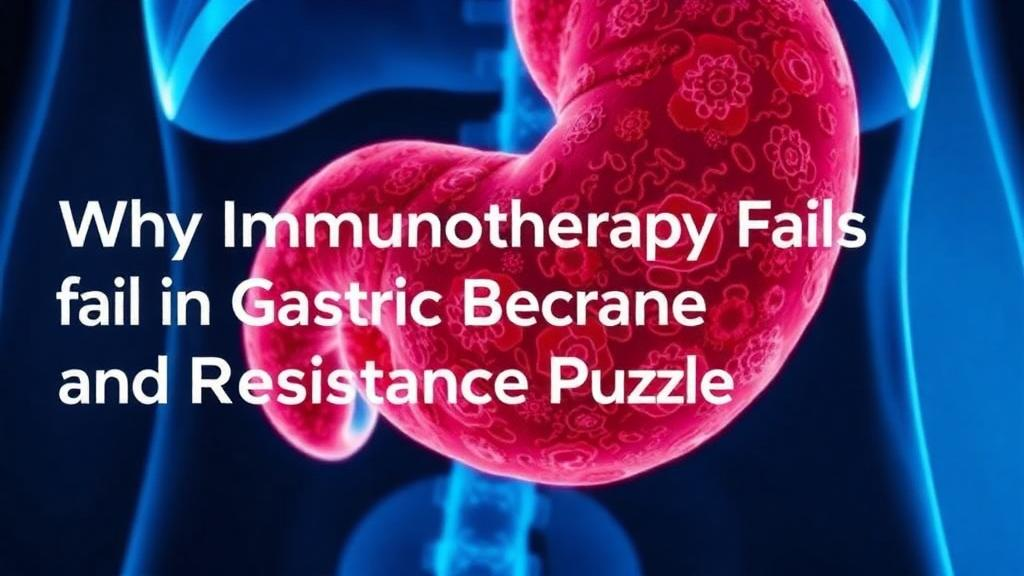
Immune checkpoint inhibitors have transformed the treatment landscape for advanced gastric and gastroesophageal junction cancer, offering durable responses in a disease that long defied systemic therapy. Landmark phase 3 trials such as CheckMate 649, ATTRACTION-4 and KEYNOTE-859 established that adding agents like nivolumab or pembrolizumab to chemotherapy improves outcomes for many patients. Yet the uncomfortable truth is that a majority of gastric cancer patients either never respond to these drugs or lose their response over time. A new narrative review published in Medical Oncology by Tamotsu Sagawa and colleagues at the National Hospital Organization Hokkaido Cancer Center and Sapporo Medical University argues that the answer to this resistance problem lies not in a single biomarker, but in the dynamic interplay between the tumor microenvironment, host immunity and the trillions of microbes inhabiting the gut.
The review, which synthesized gastric cancer-specific clinical and translational evidence from a structured PubMed search through late August 2026, arrives at a deliberately sobering conclusion. While the tumor microenvironment and gut microbiome together form a biologically plausible framework for understanding why checkpoint inhibitors fail, the authors caution that current evidence does not justify empiric microbiome-directed anticancer therapy in gastric cancer. In an era when probiotic supplements and fecal transplants are frequently touted as immune-boosting hacks, the paper is a reminder that rigorous clinical evidence lags far behind biological enthusiasm.
At the heart of the resistance problem is the tumor microenvironment itself, the cellular and molecular ecosystem surrounding cancer cells. The review details how cancer-associated fibroblasts, a heterogeneous population of stromal cells, can physically and immunologically wall off tumors from attacking T cells. Single-cell analyses have identified fibroblast clusters specifically linked to immunotherapy resistance across cancer types, and in gastric cancer, recent work has shown that fibroblast-macrophage crosstalk governs the response to immune checkpoint blockade in peritoneal metastases, one of the most aggressive manifestations of the disease. FAP-positive fibroblasts have also been implicated in skewing CD4-positive T cell polarization in ways that blunt anti-PD-1 therapy.
Myeloid cells add another layer of immunosuppression. Tumor-associated macrophages and other myeloid populations can secrete suppressive cytokines, present antigen poorly and recruit regulatory T cells that actively dampen antitumor immunity. The extracellular matrix they help remodel, together with tumor hypoxia and abnormal angiogenesis, creates physical barriers that prevent cytotoxic T cells from reaching cancer cells. Compounding all of this is T cell exhaustion, a state of progressive dysfunction in which chronically stimulated T cells lose their effector function and become unresponsive even to checkpoint blockade. The review emphasizes that these mechanisms are not independent; they converge to produce immune exclusion, where T cells remain stranded outside the tumor, or immune dysfunction, where T cells inside the tumor are simply paralyzed.
Gastric cancer presents a particularly complex version of this problem because of its molecular heterogeneity and its inflammatory origins. The Cancer Genome Atlas has defined distinct molecular subtypes of gastric adenocarcinoma, and decades of research into the precancerous cascade, from chronic gastritis through atrophy and intestinal metaplasia, show how inflammation shapes the immune landscape long before immunotherapy begins. Distinct immunosuppressive microenvironments have been documented in gastric cancers with peritoneal metastasis, helping explain why patients with this pattern of spread respond particularly poorly to checkpoint inhibitors.
Into this already hostile environment enters the gut microbiome, the collection of microbes whose influence on cancer immunotherapy burst into mainstream oncology in 2018. That year, three landmark papers in Science showed that the composition of gut bacteria predicted responses to anti-PD-1 therapy in melanoma and epithelial tumors, and that fecal microbiota transplantation could reverse resistance in mice. Subsequent studies identified specific organisms, such as Akkermansia muciniphila, associated with better outcomes in lung cancer patients treated with PD-1 blockade. The proposed mechanisms are diverse: microbial metabolites like short-chain fatty acids can modulate T cell activity, microbial antigens can cross-react with tumor antigens, and the overall diversity of the gut ecosystem appears to shape systemic immune tone.
But translating these findings to gastric cancer is fraught with difficulty, and the review is explicit about the evidentiary gaps. Most human data linking the microbiome to immunotherapy outcomes are retrospective, cross-sectional, or derived from non-gastric cancers such as melanoma, renal cell carcinoma and lung cancer. The stomach itself is a microbial habitat altered by acid suppression, Helicobacter pylori infection and prior gastric surgery, making the gut-stomach axis in these patients uniquely complicated. Cross-cohort studies in melanoma have already shown that microbiome signatures associated with immunotherapy response often fail to replicate across patient populations, a cautionary tale for any attempt to define a universal resistance-associated microbiome in gastric cancer.
Two classes of commonly used medications have emerged as potential modulators of the microbiome-immunotherapy axis: antibiotics and proton pump inhibitors. Multiple studies and meta-analyses have reported negative associations between antibiotic exposure and checkpoint inhibitor efficacy in renal cell carcinoma, lung cancer and gastrointestinal tumors, plausibly reflecting antibiotic-induced depletion of beneficial commensal bacteria. Proton pump inhibitors, which raise gastric pH and alter the gut microbial composition, have likewise been linked in several analyses to reduced immunotherapy benefit, including a 2025 study specifically showing reduced nivolumab efficacy in unresectable advanced gastric cancer. The review concludes that antibiotic stewardship and reassessment of unnecessary acid suppression are reasonable supportive measures for patients on checkpoint inhibitors, while stopping short of claiming causation, since confounding by indication and disease severity remains a persistent problem in observational data.
What about actively manipulating the microbiome to sensitize tumors to immunotherapy? The review examines the evidence and finds it promising but immature for gastric cancer. Defined live biotherapeutics have shown early signals, including a randomized phase 1 trial in metastatic renal cell carcinoma that tested nivolumab and ipilimumab with or without bacterial supplementation, and retrospective data suggesting a prognostic benefit of Clostridium butyricum MIYAIRI 588 combined with pembrolizumab in urothelial carcinoma. Preclinical work has even shown antitumor effects of this strain through enhanced release of TRAIL from neutrophils. Fecal microbiota transplantation, meanwhile, has produced striking case series in immunotherapy-refractory melanoma, with two 2021 Science papers documenting responses after transplant from responding donors, and a 2025 meta-analysis has begun to synthesize this literature. Yet none of these interventions has been validated in gastric cancer, and the review classifies routine probiotic supplementation, Clostridium butyricum MIYAIRI 588 for ICI sensitization and fecal microbiota transplantation as investigational in this disease. Diet adds yet another variable: a study in melanoma patients found that dietary fiber and probiotic use influenced the gut microbiome and immunotherapy response, suggesting that nutritional optimization may matter, though again the evidence in gastric cancer is indirect.
The authors close with a roadmap for future research that is as much about methodology as biology. They call for studies that integrate longitudinal exposures, serial profiling of the tumor microenvironment, stool metagenomics, medication use, nutritional status and clinical outcomes, rather than the single-timepoint snapshots that dominate the current literature. Only such integrated designs, they argue, can disentangle whether the microbiome genuinely drives resistance or merely correlates with it. For now, the practical takeaways for clinicians are modest but concrete: use antibiotics judiciously, question unnecessary proton pump inhibitor prescriptions, and optimize nutrition, while resisting the temptation to prescribe probiotics or fecal transplants outside of clinical trials. The tumor microenvironment-gut microbiome axis may well hold the key to overcoming immunotherapy resistance in gastric cancer, but as this review makes clear, the field must first prove that the key actually turns the lock.
Subject of Research: Tumor microenvironment and gut microbiome mechanisms of immune checkpoint inhibitor resistance in gastric cancer
Article Title: Tumor microenvironment and gut microbiome in immunotherapy resistance in gastric cancer: clinical questions, biological mechanisms, and evidence-based therapeutic perspectives
Article References: Sagawa, T., Hirakawa, M., Nagashima, H., & Fujikawa, K. (2026). Tumor microenvironment and gut microbiome in immunotherapy resistance in gastric cancer: clinical questions, biological mechanisms, and evidence-based therapeutic perspectives. Medical Oncology, 43(11), Article 308. https://doi.org/10.1007/s12032-026-03434-z
Image Credits: AI Generated
DOI: 10.1007/s12032-026-03434-z
Keywords: gastric cancer, immune checkpoint inhibitors, immunotherapy resistance, tumor microenvironment, gut microbiome, cancer-associated fibroblasts, T cell exhaustion, antibiotics, proton pump inhibitors, fecal microbiota transplantation, probiotics, microbiome modulation
News Source: Nathaniel Bowman. (October 8, 2026). Why Immunotherapy Fails in Gastric Cancer: Tumors, Gut Microbes and the Resistance Puzzle. Scienmag.