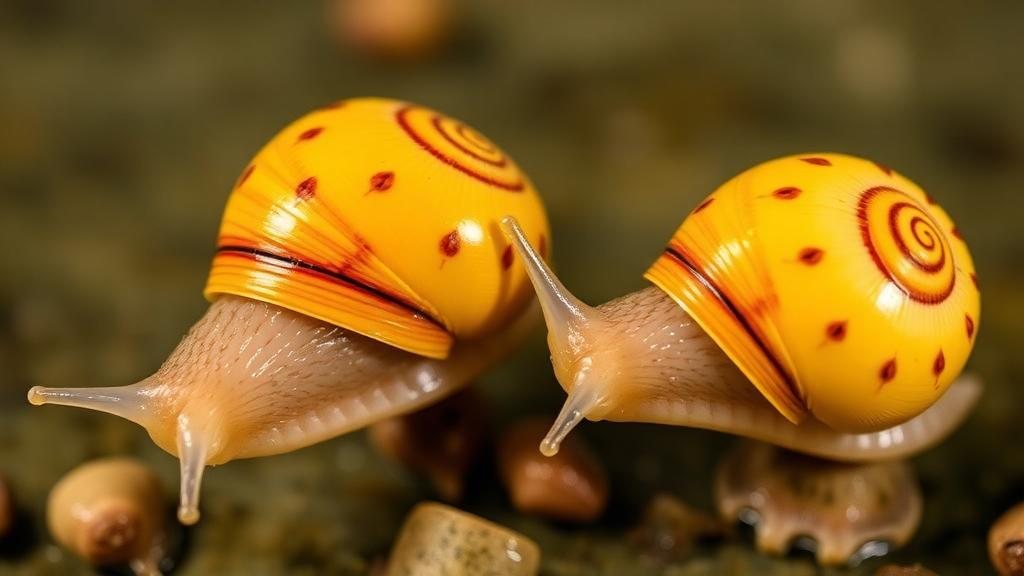
Laboratory snails carrying the parasite Schistosoma mansoni fared differently depending on which other snail species had recently shared their water, according to a study published in Acta Parasitologica. Researchers exposed Biomphalaria alexandrina snails infected with S. mansoni to snail conditioned water (SCW), water in which other snails had been kept, from four species: B. alexandrina itself, Bulinus truncatus, Helisoma duryi, and the land snail Eobania vermiculata. The aim was to test whether chemical cues released by non-target snail species, possibly host-associated kairomones, alter the biological course of the infection in the intermediate host.
The timing of parasite development shifted measurably across treatments. The prepatent period, the interval between infection and the first release of infective cercariae, remained 30 days in groups exposed to SCW from B. alexandrina or B. truncatus and in unexposed controls. In contrast, exposure to SCW from H. duryi and E. vermiculata extended this period, delaying the point at which infected snails became sources of human-infectious larvae.
Cercarial shedding also changed. Shedding lasted 22 days in groups exposed to SCW from B. alexandrina, B. truncatus, and E. vermiculata, and 26 days with H. duryi SCW, compared with 37 days in control groups. Lifespan of infected snails was shorter in the mixed-species treatments, and total cercarial production was significantly lower across these groups. Infection rates were highest in the B. alexandrina and B. truncatus SCW groups, suggesting that cues from closely related or sympatric species affect the parasite differently from cues of more distantly related snails.
The study also reported that SCW significantly affected the survival of S. mansoni larvae, with the effect varying by snail species. The authors conclude that SCW, particularly from H. duryi, shows potential for developing natural antiparasitic agents, with notable variation in larvicidal efficacy among the species tested. Because schistosomiasis control depends heavily on reducing transmission by freshwater snails, chemically mediated interference of this kind could, if confirmed, inform environmentally sustainable control strategies.
Several caveats apply. The findings come from laboratory experiments on snails, not from field trials or human studies, and the abstract does not identify the specific kairomones involved or quantify doses. The larvicidal effects described are observations of parasite and snail biology under controlled exposure, so any practical use of snail-derived chemical cues against schistosomiasis would require further research into the active compounds, their specificity, and their safety and effectiveness in real water bodies.
Subject of Research: Effects of snail conditioned water from non-target snail species on Schistosoma mansoni infection biology in Biomphalaria alexandrina.
Article Title: Influence of Non-target Snail Species on the Biological Characteristics of Schistosoma mansoni Infection in Biomphalaria alexandrina: Implications for Parasite Transmission and a Possible Role for Host-associated Kairomones
Article References: Ibrahim, A. M. (2026). Influence of Non-target Snail Species on the Biological Characteristics of Schistosoma mansoni Infection in Biomphalaria alexandrina: Implications for Parasite Transmission and a Possible Role for Host-associated Kairomones. Acta Parasitologica, 71(6), Article 251. https://doi.org/10.1007/s11686-026-01432-9
Image Credits: AI Generated
DOI: 10.1007/s11686-026-01432-9
Keywords: Schistosoma mansoni, Biomphalaria alexandrina, snail conditioned water, kairomones, cercarial shedding, schistosomiasis, prepatent period, Helisoma duryi, parasite transmission, larvicidal activity, Influence, Non-target
News Source: Kristina Jarvis. (October 29, 2026). Water Cues from Rival Snails Curb Schistosome Infections in Host Snails. Scienmag.