Thailand’s freshwater copepods, the tiny crustaceans that drift and crawl through the country’s ponds, caves, rice fields and rivers, are far more diverse than any previous count suggested, yet the national inventory is still far from complete. A new synthesis, compiled from 115 publications spanning decades of taxonomic work, documents 187 species in 60 genera and warns that the true total may be nearly twice as high.
The scale of the hidden diversity emerges from species accumulation analysis. The curve relating cumulative species to the number of published records rose steeply at first and then levelled gradually, but it never reached an asymptote. Non-parametric estimators applied to the dataset predicted a national fauna of between 220 and 346 species, against the 187 actually recorded. Depending on which estimator is used, the current checklist represents only about 54 to 85 percent of the copepod diversity expected to occur in Thailand. In other words, even after decades of intensive description work, somewhere between roughly 30 and 160 species likely remain undocumented.
The taxonomic composition of the fauna is strongly uneven. Cyclopidae, the cyclopoid family that includes many free-swimming planktonic species, dominates with 82 species, or 43.9 percent of the total. Diaptomidae, a family of calanoid copepods, follows with 47 species, 25.1 percent, and Canthocamptidae, the largest harpacticoid family, contributes 28 species, 15.0 percent. The remaining families are much smaller: Laophontidae has six species, Ameiridae five, Phyllognathopodidae four and Parastenocarididae three, while several families, including Centropagidae, Cyclopettidae and Tegastidae, are each represented by a single species. In total, the records span three orders, Calanoida with five families, Cyclopoida with three and Harpacticoida with eight.
A striking feature of the Thai fauna is its endemism. Of the 187 recorded species, 67, or 35.8 percent, were originally described from Thailand, including 23 calanoids, 19 cyclopoids and 25 harpacticoids. A further 58 species, 31.0 percent of the total, are currently known only from Thailand based on published records. At the zoogeographical level, 94 species, 50.3 percent of the fauna, are restricted to the Oriental Region, while 18 taxa, 9.6 percent, qualify as cosmopolitan. The remaining species spread across two or more zoogeographical regions: 39 species occur in two regions, 15 in three and four in four regions, and 17 species could not be assigned to any region because their taxonomic status remains unresolved.
Habitat associations reveal where this diversity is concentrated. The authors classified records into 19 habitat categories, from surface waters such as canals, dams, lakes, reservoirs, rivers and rice fields to subterranean habitats including cave pools, cave streams and groundwater wells. Ponds supported the highest recorded richness, 75 species, closely followed by cave pools with 70, canals with 66, rivers with 59, swamps with 58 and rice fields with 52. At the other extreme, cave habitats of undetermined hydrological type yielded only three species, with groundwater wells at ten, dams at nine, and mines and large persistent cave waterbodies at seven each. The authors caution that these figures represent cumulative documented richness and may partly reflect differences in sampling intensity and the number of studies available per habitat.
Cave pools stand out as a biological hotspot in miniature. Not only did they rank second overall in species richness, but they also contained by far the largest number of habitat-restricted species: 36 species, amounting to 19.2 percent of the entire national fauna and 51.4 percent of all species recorded from cave pools. Nationwide, 89 species, 47.6 percent of the total, were recorded from only one habitat type. By contrast, no species were restricted exclusively to mines, dams, check dams or floodplain wetlands. The authors note that recent investigations of subterranean habitats, particularly cave pools fed by dripping, seeping or percolating water, have repeatedly produced previously undocumented species, and that the low richness recorded from groundwater and less accessible cave habitats may reflect limited sampling rather than genuinely low diversity.
Geographically, the fauna is highly unevenly distributed across Thailand’s six regions. North-eastern Thailand leads with 103 species, followed by the south with 84, the centre with 69, the north with 61, the west with 49 and the east with just 38. Most species show restricted ranges within the country: only 11 species, 5.9 percent, were recorded from all six regions, among them the widespread cyclopoids Eucyclops serrulatus, Mesocyclops affinis, M. aspericornis, M. ogunnus, M. thermocyclopoides and Microcyclops varicans, while 102 species, 54.5 percent, are confined to a single region. North-eastern Thailand also holds the largest share of these regional endemics, 38 species, followed by the south with 31. The authors attribute the north-east’s prominence to a combination of habitat diversity, including ponds, reservoirs, wetlands, rice fields and temporary waterbodies, and a longer history of taxonomic surveying, while acknowledging that the relative contributions of habitat diversity and sampling effort cannot be clearly separated from the available data.
Pairwise comparisons of species composition using the Jaccard similarity index showed that rice fields and rivers share the most similar copepod assemblages, at 65.7 percent, followed by canals and rice fields at 61.6 percent, ponds and rivers at 61.4 percent and canals and ponds at 58.4 percent. The strong Oriental affinity of the Thai copepod fauna also contrasts sharply with other freshwater zooplankton: whereas Thai rotifer assemblages are dominated by cosmopolitan species with few regional endemics, nearly half of the copepod species are confined to the Oriental Region, a difference the authors link to copepods’ more limited dispersal ability and their dependence on drainage connectivity and habitat specialisation.
The synthesis also required substantial taxonomic housekeeping. Species names and synonyms reported in earlier publications were checked against the World of Copepods Database through the World Register of Marine Species, the Copepod Web Portal and recent taxonomic revisions, and nomenclature was updated where necessary. The authors emphasise that their estimates rest on secondary data compiled from studies with different sampling designs and efforts, so the richness figures and completeness estimates should be interpreted with caution. Even so, the picture is consistent with parallel assessments of Thai cladocerans and rotifers, whose national checklists likewise indicate incomplete documentation. The study concludes that continued surveys, particularly in underexplored regions such as eastern and western Thailand and in poorly sampled habitats such as groundwater, cave streams and other subterranean waters, together with integrative taxonomy combining morphological and molecular evidence, will be essential for closing the gap between the 187 species now on record and the several hundred that likely share Thailand’s freshwaters.
Subject of Research: Diversity and distribution of freshwater copepods in Thailand based on a compiled national checklist and richness analysis
Article Title: Diversity and distribution of freshwater copepods ( Calanoida , Cyclopoida , Harpacticoida ) in Thailand
Article References: Saetang, T., & Maiphae, S. (2026). Diversity and distribution of freshwater copepods (Calanoida, Cyclopoida, Harpacticoida) in Thailand. Biodiversity Data Journal, 14, Article e212289. https://doi.org/10.3897/BDJ.14.e212289
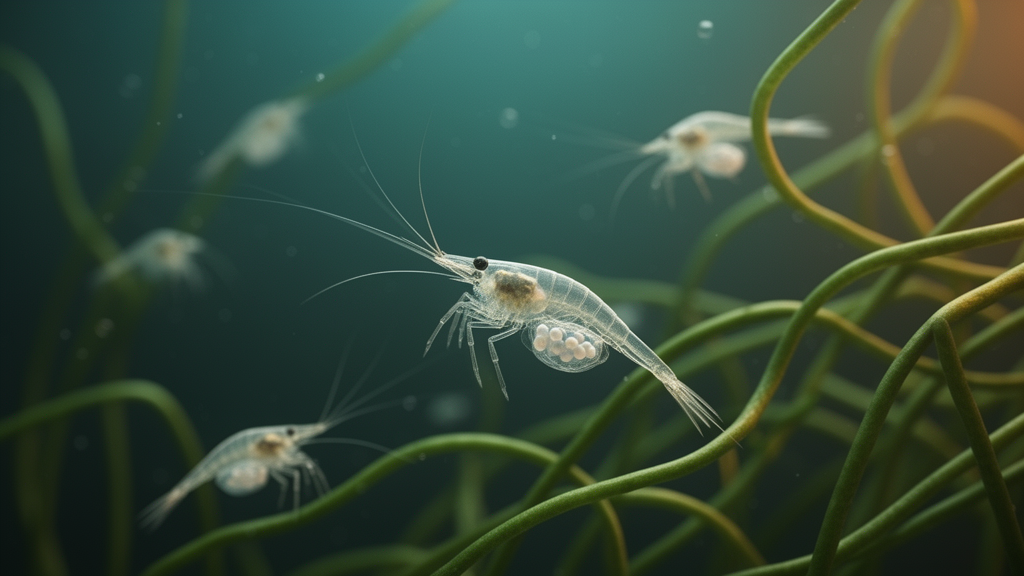
Image Credits: AI Generated
Keywords: copepods, Thailand, freshwater biodiversity, species richness, cave pools, endemism, Oriental Region, zoogeography, species accumulation curve, inventory completeness, taxonomy, habitat associations
News Source: Margaret Porter. (October 29, 2026). Thailand’s freshwater copepods are far more diverse than records show. Scienmag.