Molybdenum Interlayer Cuts Residual Stress and Boosts Strength in Brazed B4C-TC4 Joints
A target-oriented screening framework selected molybdenum as an optimal interlayer, reducing residual stress and increasing B4C/TC4 brazed joint shear strength.
A target-oriented screening framework selected molybdenum as an optimal interlayer, reducing residual stress and increasing B4C/TC4 brazed joint shear strength.
Ultrathin MXene nanoflakes assembled within polyamide 6 create robust composite films with enhanced tensile strength, high toughness, and reduced gas ...

Simulations demonstrate that geosynthetic-encased stone columns reduce earthquake-induced lateral ground deformation by 73 percent while lowering excess pore water pressures ...
A comparative analysis reveals that non-intrusive convolutional autoencoders capture nonlinear mechanical strains in metal additive manufacturing more accurately than traditional ...

A finite element simulation demonstrates that a curved frog-arm MEMS capacitive pressure sensor significantly improves sensitivity and linearity for intracranial ...
Mechanical roll hardening of 30CrMoA gear journal shafts creates an intense subsurface compressive stress field that peaks at a depth ...
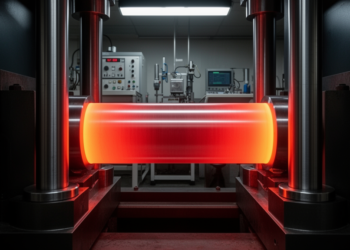
A study in the Journal of Materials Science demonstrates that artificial neural network models outperform modified constitutive models in predicting ...
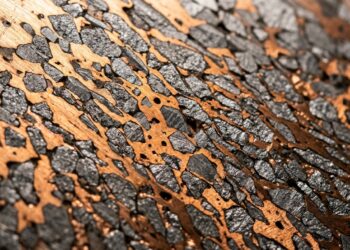
A two-stage statistical reconstruction method combining Cellular Automata and Monte Carlo techniques converts 2D microscopy data of anisotropic copper–tungsten composites ...

Field tests and LS-DYNA simulations show valley topography, not just charge weight and distance, controls how quarry blasting vibrations reach ...
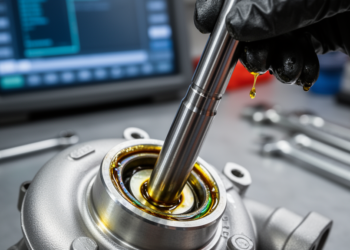
Simulations and tests show that widening a turbocharger floating ring bearing's outer oil film clearance from 0.030 mm to 0.036 ...

A combined modelling and experimental study of organic electrochemical transistors identifies interface effects, gate geometry and channel thickness as the ...
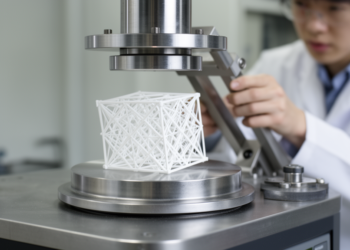
A new study reports that Diamond lattice structures absorb the most energy at a 30-degree loading angle, while porosity gradients ...
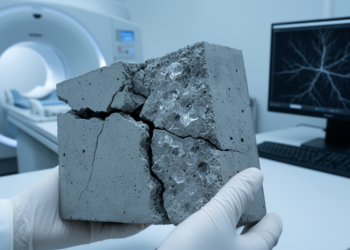
Researchers combined rapid freeze–thaw testing, CT scanning and finite element simulation to track mesoscale damage in concrete, finding pore surface ...
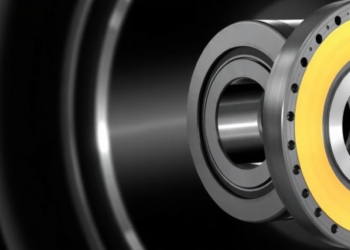
Finite element simulations and full-scale tests on a 5 m three-row roller blade bearing show ring deformations stay well within ...
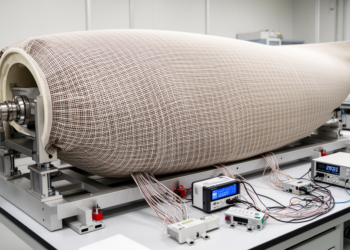
A flexible 5 × 5 textile sensor array reconstructed ship hull stress distributions with R² = 0.96 against finite element ...

Mechanical testing showed that 3D-printed SEBS aortic valve leaflets were substantially stiffer than TPU, while TPU tolerated greater deformation before ...
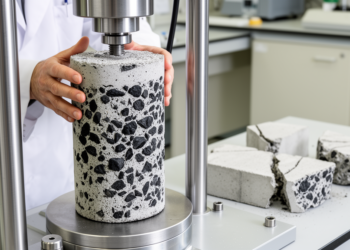
Laboratory tests and simulations found that cement- and lithium-based consolidation allowed weathered coal gangue to replace part of the aggregate ...

Chinese researchers used a face-centered cubic FeCoNiAlCuTi high-entropy alloy filler to suppress continuous brittle carbide layers in carbon-carbon composite brazed ...

A new iScience study establishes a calibration-to-validation workflow that converts a standard AFM cantilever into a quantitative nanogram-scale mass sensor, ...

Researchers combined finite element simulation, statistical optimization, and PID and model predictive control to keep weld temperatures stable during friction ...