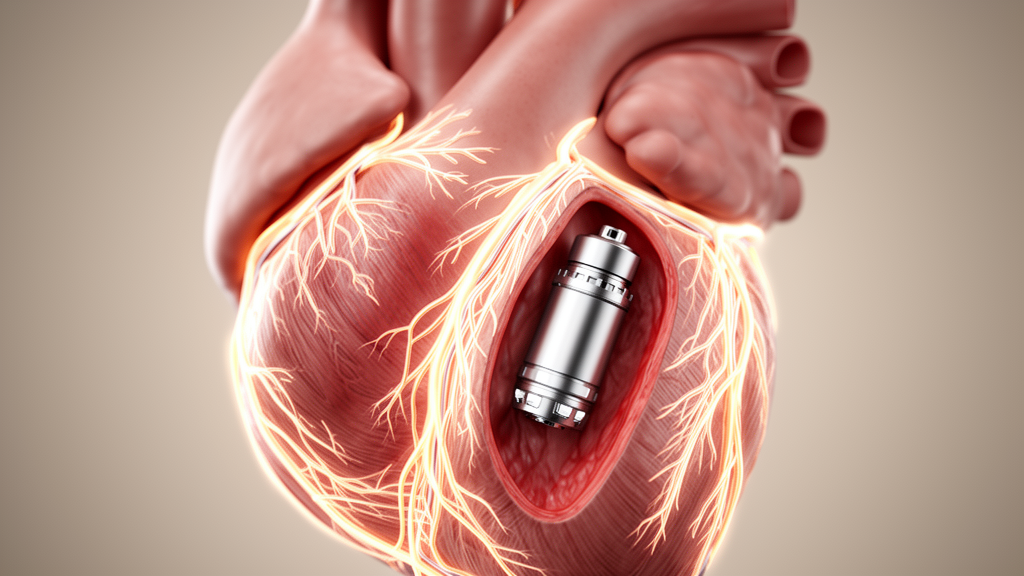
A newly published narrative review in Frontiers in Bioengineering and Biotechnology by Bartosz M. Uchmanowicz and colleagues synthesizes the rapid technological diversification transforming contemporary cardiac rhythm management. Cardiac implantable electronic devices have evolved from isolated therapeutic tools into complex, interconnected diagnostic and therapeutic platforms operating continuously within patients. Across cardiovascular medicine, the treated population continues to grow as indications broaden and recipients age, with over 300,000 devices implanted annually in the United States alone. However, this expanding reliance on permanent hardware carries cumulative exposure to device-related complications, including lead failures, pocket infections, inappropriate electrical shocks, and pacing-induced remodeling. To address these vulnerabilities, modern device engineering has shifted away from the traditional single-generator, transvenous-lead model toward physiological conduction pacing, extravascular defibrillators, leadless capsules, continuous remote sensing, and algorithmic data triage.
Conventional right ventricular apical pacing imposes an unnatural electrical sequence across the ventricles, frequently inducing adverse left ventricular remodeling and pacing-induced cardiomyopathy. As evaluated by Kiehl and colleagues in 823 patients with complete atrioventricular block and preserved systolic function, pacing-induced cardiomyopathy occurred in 12.3 percent of recipients across a mean follow-up of 4.3 years. Their analysis confirmed that higher right ventricular pacing burden and lower baseline ejection fraction independently heightened this cardiomyopathy risk. Although biventricular pacing was introduced to correct dyssynchrony in heart failure, roughly one-third of recipients derive limited benefit, often due to coronary sinus anatomical constraints.
Conduction system pacing directly captures the native His-Purkinje network to preserve coordinated ventricular contraction. While His bundle pacing established early physiological pacing proof of concept, clinical adoption remains restricted by high capture thresholds, sensing difficulties, and lead dislodgement risks. In an observational cohort of 294 patients examined by Beer and colleagues, 15 percent experienced a threshold rise of at least one volt, and 6 percent required lead revisions. In the randomized LBBP-RESYNC trial, Wang and colleagues demonstrated greater left ventricular ejection fraction improvement with left bundle branch area pacing over biventricular pacing in nonischemic cardiomyopathy with left bundle branch block. Subsequent meta-analyses confirmed narrower paced QRS durations and reverse remodeling, though the randomized LEFT-BUNDLE-CRT trial did not establish non-inferiority to biventricular pacing.
Evidence for physiological pacing in bradycardia advanced substantially with the multicenter LEAP-Block randomized clinical trial reported by Li and co-workers. Evaluating 482 patients with atrioventricular block, preserved ejection fraction of at least 50 percent, and an anticipated ventricular pacing burden exceeding 40 percent, the trial compared left bundle branch area pacing against standard right ventricular pacing. At 24 months, left bundle branch area pacing significantly reduced the primary composite outcome of all-cause mortality, heart failure events, or upgrade to biventricular pacing to 5.0 percent compared with 13.2 percent in the right ventricular cohort. These therapeutic advantages must be weighed against procedure-specific risks, as deep transseptal lead fixation introduces potential hazards of septal perforation and coronary septal arterial injury.
To eliminate lead and pocket morbidities entirely, self-contained leadless pacemakers have been deployed directly into the right ventricular myocardium. In a comparative observational study, Piccini and colleagues found a higher 30-day rate of pericardial effusion or perforation with leadless systems at 0.8 percent versus 0.4 percent, yet leadless pacing achieved a 23 percent reduction in overall complications at six months. Technical innovations have resolved earlier pacing limitations. Accelerometer-equipped ventricular devices track mechanical atrial contractions via the A4 signal to coordinate pacing, while novel dual-chamber leadless systems utilize independent atrial and ventricular units. Evaluated by Knops and colleagues, these dual-chamber capsules communicate bidirectionally using subthreshold electrical pulses conducted across blood and myocardium. Nevertheless, unresolved questions regarding battery longevity, end-of-service retrieval, and multiple device management require ongoing evaluation.
Defibrillator engineering has similarly progressed toward extravascular configurations to bypass the chronic vulnerability of transvenous shock leads. In the randomized PRAETORIAN trial, Knops and colleagues established that subcutaneous defibrillators were non-inferior to transvenous systems regarding device-related complications and inappropriate therapies, while significantly reducing lead complications from 6.6 percent to 1.4 percent over four years. The PRAETORIAN-XL trial confirmed sustained lead-sparing safety across a median follow-up of 87.5 months. Because purely subcutaneous systems cannot deliver anti-bradycardia pacing, antitachycardia pacing, or resynchronization, the extravascular defibrillator was developed with a single substernal lead.
Long-term diagnostic rhythm surveillance has evolved through insertable cardiac monitors, which provide continuous subcutaneous single-lead electrocardiographic recording for up to several years. In the landmark CRYSTAL AF trial, insertable monitors detected occult paroxysmal atrial fibrillation significantly more often than standard follow-up after cryptogenic stroke. Because identifying atrial fibrillation prompts a pivotal shift from antiplatelet therapy to oral anticoagulation, this heightened diagnostic yield carries immediate consequences for secondary stroke prevention. However, uninterrupted recording creates profound workflow challenges, generating high transmission volumes dominated by noise artifacts and false-positive arrhythmia warnings. Device clinics experience substantial review fatigue, driving the development of automated filtering algorithms. Validation studies by Crespin, Sarkar, and colleagues demonstrate that artificial intelligence and machine learning algorithms effectively filter erroneous atrial fibrillation alerts, confirming that advanced software is essential to preserve the clinical utility of prolonged diagnostic monitoring.
Complementing electrical rhythm monitoring, implantable hemodynamic sensors track intracardiac pressures to anticipate heart failure decompensation before overt clinical congestion appears. In the pivotal CHAMPION trial, pressure-guided therapeutic adjustments significantly reduced heart failure hospitalizations among patients with symptomatic New York Heart Association Class III heart failure. Although the subsequent GUIDE-HF study missed its prespecified primary efficacy endpoint amid the disruption of the coronavirus pandemic, pre-pandemic analyses suggested clinical benefit. Furthermore, the European MONITOR-HF trial confirmed that pressure-guided management substantially reduced heart failure hospitalizations and improved quality of life in patients receiving guideline-directed medical therapy. Device experts emphasize that hemodynamic sensors are diagnostic enablers whose benefits depend entirely on structured clinical workflows capable of adjusting medical therapy promptly.
Remote monitoring has restructured device follow-up by replacing episodic clinic visits with continuous telemonitoring, a strategy now endorsed by major professional rhythm societies. Clinical benefits include earlier detection of lead failure, battery depletion, and asymptomatic arrhythmias. The randomized TRUST trial established that automated remote monitoring safely reduces in-person evaluations without compromising patient safety, while the IN-TIME trial demonstrated reduced morbidity and mortality in heart failure patients managed through rapid alert escalation. However, a pooled meta-analysis of nine randomized clinical trials by Parthiban and colleagues showed no statistically significant reduction in overall mortality or hospitalization across general device recipients. This divergence indicates that monitoring alone does not alter clinical trajectory unless clinics enforce timely therapeutic responses. Furthermore, device diagnostics such as intrathoracic impedance fluid tracking demonstrate limited specificity, exhibiting a positive predictive value of only 4.7 percent for heart failure hospitalizations in the SENSE-HF study.
Rhythm surveillance has expanded beyond clinical populations into consumer wearables incorporating photoplethysmography and single-lead electrocardiography. Optical pulse-wave analysis detects irregular volumetric fluctuations indicative of atrial fibrillation, as demonstrated in the large-scale Apple Heart Study. However, validation studies by Nonoguchi, Barrera, and colleagues emphasize that while smartwatches achieve high sensitivity and specificity in curated datasets, their positive predictive value drops considerably when applied across low-prevalence general populations. False-positive alerts generate patient anxiety and drive unnecessary downstream clinical testing. Concurrently, artificial intelligence is expanding from commercial noise reduction into predictive analytics. Investigational machine learning models by Cha and colleagues predict ventricular arrhythmia episodes from stored electrograms, while deep learning models validated by van de Leur forecast cardiac resynchronization therapy response. However, researchers caution that improved algorithmic accuracy remains distinct from demonstrated clinical improvements in patient outcomes, leaving these predictive models predominantly at the validation stage.
Minimizing physical hardware vulnerability remains the overarching priority guiding contemporary cardiac rhythm engineering and clinical management. In the Worldwide Randomized Antibiotic Envelope Infection Prevention trial, Tarakji and colleagues demonstrated that an absorbable antibacterial envelope reduced major device infections by approximately 40 percent and pocket infections by 61 percent over three years. For chronic lead complications, data from the prospective ELECTRa registry of 3,510 patients demonstrate that transvenous lead extraction achieves a 96.7 percent complete clinical success rate in specialized centers, with major complications occurring in 1.7 percent and procedural mortality in 0.5 percent. The successful integration of these diversified technologies will ultimately depend on rigorous clinical trials and robust health system infrastructures.
Subject of Research: Technological evolution and clinical evidence for contemporary cardiac electronic devices
Article Title: Electronic devices in contemporary cardiology: a narrative review
Article References: Uchmanowicz, B. M., Czapla, M., Kwaśny, A., Vellone, E., Lee, C. S., Magdziarz, M., & Uchmanowicz, I. (2026). Electronic devices in contemporary cardiology: a narrative review. Frontiers in Bioengineering and Biotechnology, 14, 1985668. https://doi.org/10.3389/fbioe.2026.1985668
Image Credits: AI Generated
DOI: 10.3389/fbioe.2026.1985668
Keywords: cardiac implantable electronic devices, conduction system pacing, left bundle branch area pacing, leadless pacemakers, subcutaneous implantable cardioverter-defibrillators, extravascular defibrillators, insertable cardiac monitors, implantable hemodynamic monitoring, remote monitoring, biventricular pacing, pacing-induced cardiomyopathy, LEAP-Block trial, PRAETORIAN trial, CRYSTAL AF study, photoplethysmography, transvenous lead extraction, antibacterial envelope
News Source: Gregory Coleman. (November 23, 2026). Conduction System Pacing and Leadless Implants Transform Modern Cardiovascular Care. Scienmag.