• HOME
  • NEWS
  • EXPLORE
    • CAREER
      • Companies
      • Jobs
    • EVENTS
    • iGEM
      • News
      • Team
    • PHOTOS
    • VIDEO
    • WIKI
  • BLOG
  • COMMUNITY
    • FACEBOOK
    • INSTAGRAM
    • TWITTER
Friday, November 6, 2026
BIOENGINEER.ORG
No Result
View All Result
  • Login
  • HOME
  • NEWS
  • EXPLORE
    • CAREER
      • Companies
      • Jobs
        • Lecturer
        • PhD Studentship
        • Postdoc
        • Research Assistant
    • EVENTS
    • iGEM
      • News
      • Team
    • PHOTOS
    • VIDEO
    • WIKI
  • BLOG
  • COMMUNITY
    • FACEBOOK
    • INSTAGRAM
    • TWITTER
No Result
View All Result
Bioengineer.org
No Result
View All Result
Home NEWS Science News Technology

Quarry blasting vibrations reach transmission towers shaped by valley terrain

by
November 5, 2026
in Technology
Reading Time: 2 mins read
0
Quarry blasting vibrations reach transmission towers shaped by valley terrain

Quarry blasting vibrations reach transmission towers shaped by valley terrain

Share on FacebookShare on TwitterShare on LinkedinShare on RedditShare on Telegram

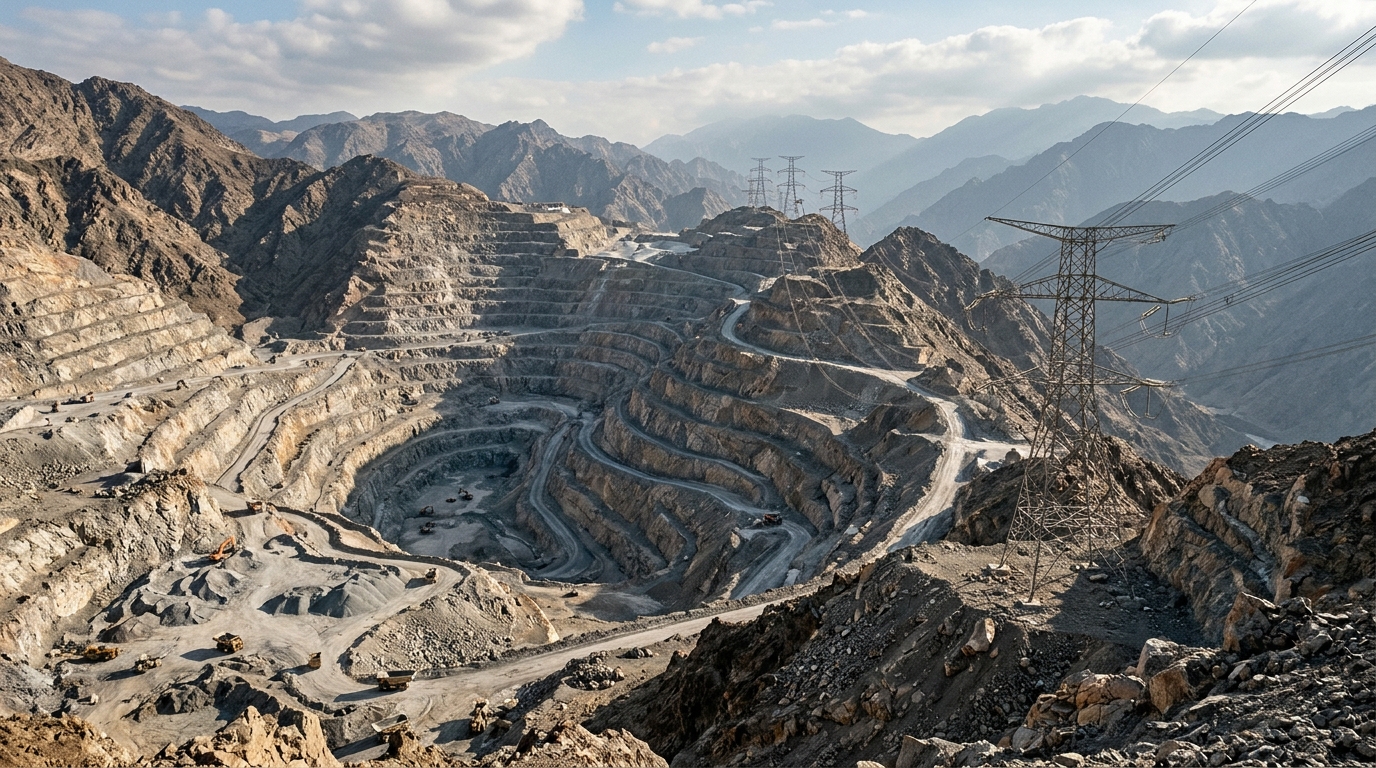
Blast-induced ground vibration can threaten ultra-high-voltage transmission towers standing near large-scale quarry excavation, yet the way those vibrations travel through strongly undulating valley terrain has remained poorly understood. A new study at a pumped-storage power station combined field blasting tests with finite-element simulations to track vibration propagation and tower responses, and its results point to an unexpected dominant factor: the shape of the land itself.

Researchers led by Ying Wang and Xiaohu Fu conducted three types of blasting tests—single-charge, presplit, and production blasting—and monitored vibrations at three distinct locations: within the rock mass, on the ground surface, and at the foundations of the transmission towers. This layered monitoring approach allowed the team to capture how seismic waves change character as they move from deep rock to the surface and into engineered structures.

To extend the field measurements, the team built a three-dimensional LS-DYNA model using an equivalent blast-load approach. The model was calibrated against field measurements and reproduced the measured peak particle velocity, or PPV, at the near-field monitoring point with an error below 10 percent. Once validated, the model was applied to different excavation elevations and bench-excavation stages to explore scenarios that field tests alone could not cover.

The findings show that vibration propagation is controlled not only by charge weight and source distance—the two variables most often used in blast design—but also by elevation difference, monitoring depth, and topography. In other words, two blasts with identical charges and distances can produce markedly different vibrations at a tower depending on where the blast sits relative to the valley walls and floor.

The elevation effect proved substantial: simulated blasting at the lower excavation elevation of 660 m induced stronger tower responses than blasting at 720 and 840 m, with a maximum simulated tower-foundation PPV of 0.678 cm/s. This depth dependence was strongly profile-specific: nonlinear exponential trends appeared along the valley-dominated northern and middle profiles, while an approximately linear trend emerged along the gentler southern profile.

The researchers attribute these differences to terrain-induced changes in wave propagation, including reflection, scattering, diffraction, and path-length effects.

The study highlights the dominant role of valley topography in blast-vibration attenuation and offers a practical basis for elevation-dependent blast design near UHV transmission infrastructure. For quarry operators working near critical power lines, the message is that blast plans should account for excavation height and terrain, not charge and distance alone.

Subject of Research: Vibration response of ultra-high-voltage transmission towers to quarry blasting in valley terrain

Article Title: Experimental and numerical investigation on vibration response of transmission towers under quarry blasting

Article References: Wang, Y., Hong, Z., Tao, M., Wu, W., Wang, M., Li, X., Zhao, H., & Fu, X. (2026). Experimental and numerical investigation on vibration response of transmission towers under quarry blasting. Geomechanics and Geophysics for Geo-Energy and Geo-Resources. https://doi.org/10.1007/s40948-026-01269-6

Image Credits: AI Generated

DOI: 10.1007/s40948-026-01269-6

Keywords: blasting vibration, transmission towers, valley topography, LS-DYNA, peak particle velocity, quarry excavation, pumped-storage power station, finite-element simulation, wave propagation, blast design, Experimental, numerical

News Source: Denise Maddox. (November 5, 2026). Quarry blasting vibrations reach transmission towers shaped by valley terrain. Scienmag.


Tags: blast designblasting vibrationexperimentalfinite-element simulationLS-DYNANumericalpeak particle velocitypumped-storage power stationquarry excavationtransmission towersvalley topographywave propagation
Share12Tweet7Share2ShareShareShare1

Related Posts

High-temperature heat pumps emerge as a key route to carbon-neutral industrial heat

High-temperature heat pumps emerge as a key route to carbon-neutral industrial heat

November 6, 2026
Swallowable magnetic particles stimulate the vagus nerve to ease Parkinson's symptoms in mice

Swallowable magnetic particles stimulate the vagus nerve to ease Parkinson’s symptoms in mice

November 6, 2026

Microbial fuel cells promise clean water and power but scaling remains a hurdle

November 6, 2026

Emergency department records score 88.8% on weighted data quality index

November 6, 2026

POPULAR NEWS

  • Sex May Modify Obesity-Related Heart Failure Physiology but Not Treatment Eligibility

    Sex May Modify Obesity-Related Heart Failure Physiology but Not Treatment Eligibility

    29 shares
    Share 12 Tweet 7
  • ADHD Medication Dispensing in Norway Rose Significantly Between 2005 and 2025

    29 shares
    Share 12 Tweet 7
  • Survey Finds Gap Between Geriatric Prescribing Knowledge and Practice in Indian Dentists

    29 shares
    Share 12 Tweet 7
  • Isoflurane Anaesthesia Leaves Rabbit Gut Transit and Appetite Largely Unchanged

    29 shares
    Share 12 Tweet 7

About

We bring you the latest biotechnology news from best research centers and universities around the world. Check our website.

Follow us

Recent News

High-temperature heat pumps emerge as a key route to carbon-neutral industrial heat

Gut microbes’ fatty acids may steer kidney immune defenses, review finds

Advanced diffusion MRI reveals mismatch repair status of endometrial cancer before surgery

Subscribe to Blog via Email

Enter your email address to subscribe to this blog and receive notifications of new posts by email.

Join 86 other subscribers
  • Contact Us

Bioengineer.org © Copyright 2023 All Rights Reserved.

Welcome Back!

Login to your account below

Forgotten Password?

Retrieve your password

Please enter your username or email address to reset your password.

Log In
No Result
View All Result
  • Homepages
    • Home Page 1
    • Home Page 2
  • News
  • National
  • Business
  • Health
  • Lifestyle
  • Science

Bioengineer.org © Copyright 2023 All Rights Reserved.