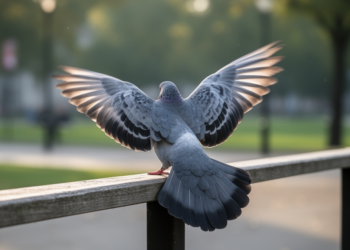
Mathematical Modelling Explains Why Flapping Helps Birds Land in Limited Spaces
Mathematical modelling reveals that birds flap while landing because unpowered stops require excessive approach speeds and space.
Mathematical modelling reveals that birds flap while landing because unpowered stops require excessive approach speeds and space.
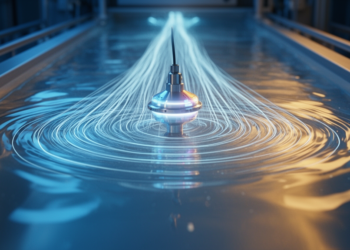
Aerodynamicists have derived an exact analytical solution demonstrating that a downstream-moving dipole above a boundary layer triggers an upstream-propagating disturbance ...
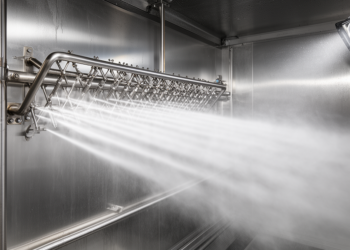
Numerical simulations of a large-scale icing wind tunnel show that central spray rake plates reduce water droplet uniformity while leaving ...
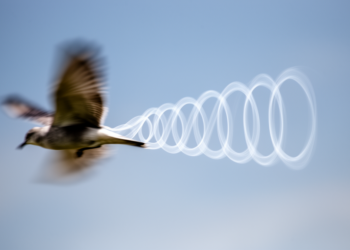
A new automated three-dimensional tracking algorithm quantitatively captures how leading edge vortices evolve, split, and govern aerodynamic lift generation on ...
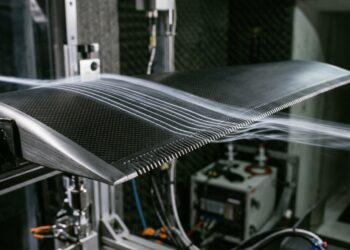
Large eddy simulations show that owl-inspired trailing edge serrations enhance boundary layer stability and reduce noise during flow acceleration in ...
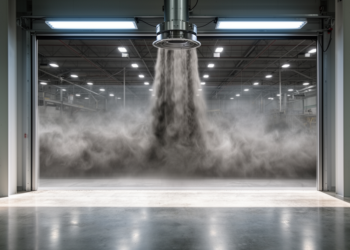
A computational study reveals that industrial air curtains achieve ninety-eight percent dust containment at specific jet velocities but can worsen ...
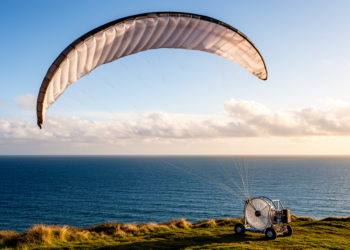
A research team at Delft University of Technology has developed a computationally efficient aerodynamic framework that accelerates leading-edge inflatable kite ...
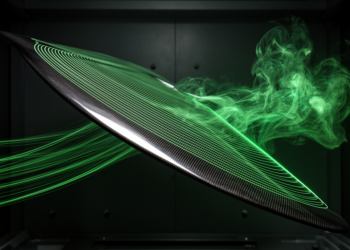
Computational fluid dynamics researchers show that modeling point sources at domain boundaries resolves artificial blockage and improves aerodynamic force predictions ...
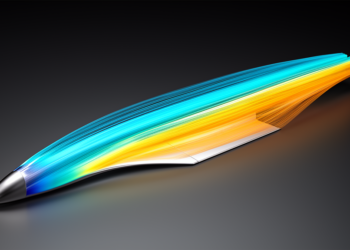
Researchers demonstrated that replacing discontinuous source terms in transitional aerodynamic models with smooth mathematical surrogates reduced the computational time required ...
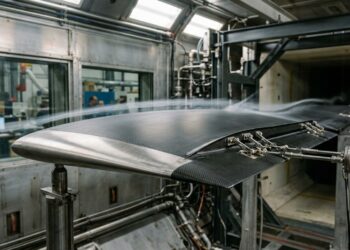
Aerospace researchers have demonstrated a time-varying-delay active disturbance rejection controller that stabilizes airfoil flutter across transonic speeds despite fluctuating control-loop ...
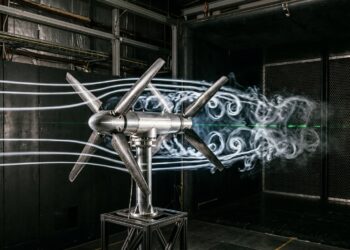
Wind tunnel experiments reveal how pairing counter-rotating rotors with symmetrical yaw steering can reshape turbine wakes and accelerate downstream wind ...
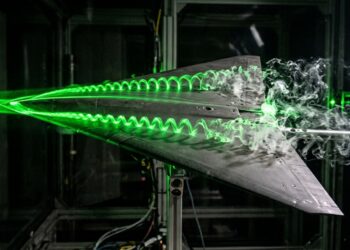
Experiments and numerical simulations identify critical Mach and Reynolds number thresholds that govern vortex bursting over an ogive-cylinder body-delta wing ...
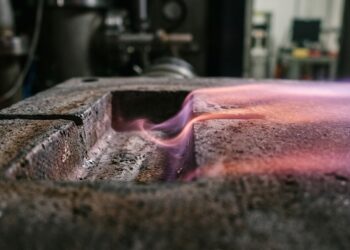
A computational investigation reveals how angle of attack, Mach number, and rarefaction govern shock wave detachment, recirculation, and particle flux ...
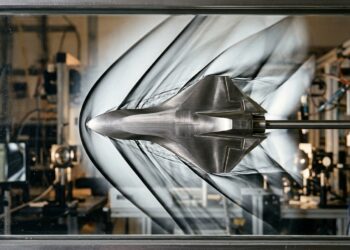
Researchers have developed a third-order weighted compact nonlinear scheme paired with a constrained weighted least squares immersed boundary method that ...
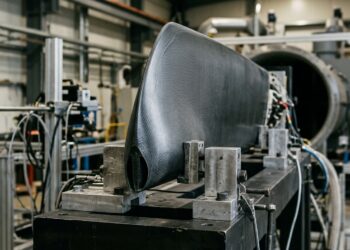
A deep learning-based optimization scheme redesigned the tip and root airfoils of the Helishape-7A helicopter rotor, raising hover thrust coefficient ...
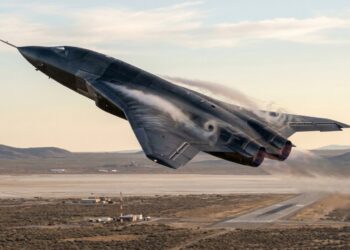
A comprehensive review examines how active flow control technologies are transforming aircraft design by replacing mechanical rudders and drastically shortening ...

A systematic review of 347 studies finds that combined aerodynamic devices on heavy-duty trucks can cut drag by up to ...
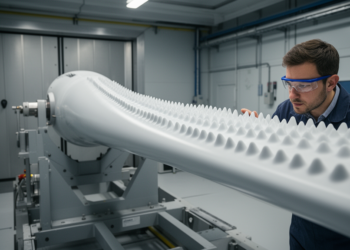
Laboratory tests of humpback whale-inspired serrated wind turbine blades show they spin up to 142 percent faster and generate about ...
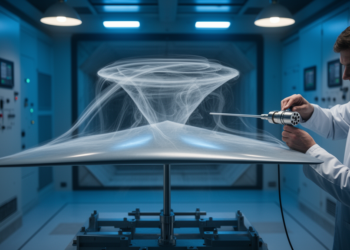
Combined pressure-sensitive paint and particle image velocimetry measurements on a 70-degree slender delta wing show that the suction peak does ...
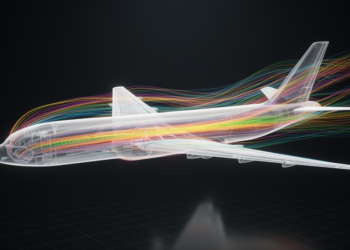
Researchers built regressor chain surrogate models that predict pressure and stress fields across varied wing planforms with modest prediction errors ...