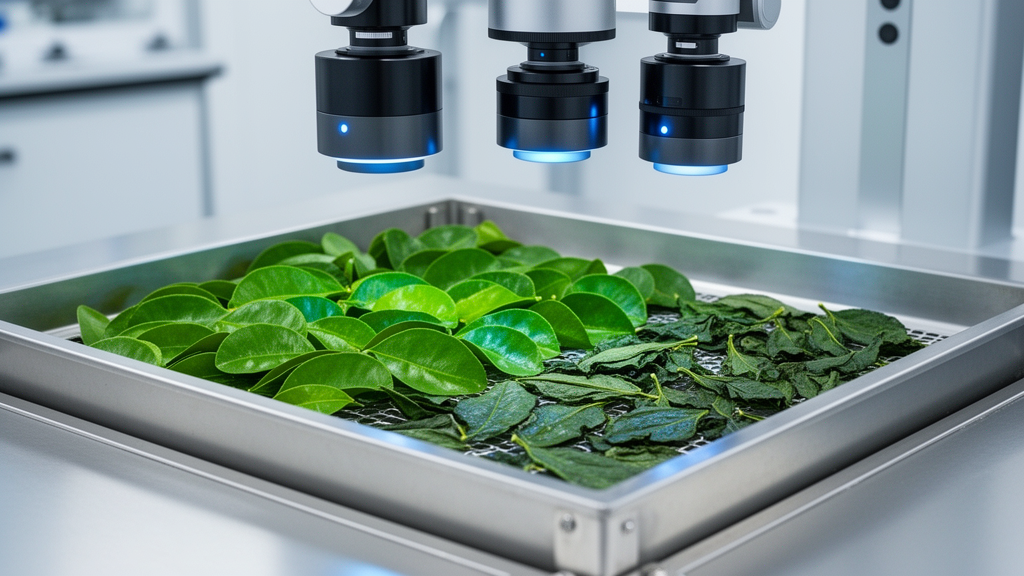
A scientific review published in Food Science and Biotechnology highlights advanced drying technologies and computational tools designed to preserve kaffir lime (Citrus hystrix) leaves while extending their postharvest storage life. Kaffir lime leaves are widely sought after for their characteristic aroma and recognized medicinal attributes, yet their inherently high moisture content frequently causes rapid postharvest deterioration. Dehydrating the foliage presents a reliable means of arresting spoilage, maintaining essential microbial safety, and prolonging commercial shelf-life.
The preservation of specific marker and bioactive compounds—most notably citronellal, citronellol, and sabinene—serves as a primary benchmark for processing efficacy. Evidence synthesized across experimental investigations demonstrates that dehydration protocols exert a profound influence on compound retention and visual presentation. In particular, operational environments featuring low temperatures and reduced humidity demonstrate superior capability in preserving marker compounds compared to conventional high-temperature methods.
Researchers evaluated an array of advanced drying methodologies applied to kaffir lime foliage, encompassing ambient and convective hot-air systems, solar-assisted drying, microwave-based processing, and far-infrared dehydration. Far-infrared drying delivers rapid moisture extraction while securing high retention rates of sensitive bioactive compounds.
Implementing advanced drying technologies on a commercial scale requires balancing energy consumption, drying durations, and industrial throughput. To overcome these technological hurdles, the review identifies the integration of artificial intelligence as a novel and transformative strategy. Advanced computational frameworks, including machine learning architectures, deep learning models, and artificial neural networks, are being deployed to monitor leaf quality and dynamically optimize operational drying parameters. These algorithmic optimization models support the production of premium dried botanical products while advancing energy efficiency and sustainable food production objectives aligned with global development targets.
Subject of Research: Advanced drying strategies and artificial intelligence optimization for kaffir lime leaf preservation
Article Title: Sustainable drying solutions for kaffir lime leaves: addressing technological challenges and artificial intelligence assistance
Article References: Safie, N. N., Adam, F., Ramli, N. H., Abu Bakar, M. R., & Abu Bakar, N. F. (2026). Sustainable drying solutions for kaffir lime leaves: addressing technological challenges and artificial intelligence assistance. Food Science and Biotechnology. https://doi.org/10.1007/s10068-026-02322-6
Image Credits: AI Generated
DOI: 10.1007/s10068-026-02322-6
Keywords: Citrus hystrix, kaffir lime leaves, drying strategies, postharvest preservation, citronellal, citronellol, sabinene, far-infrared drying, microwave drying, solar-assisted drying, hot-air drying, artificial intelligence, machine learning, deep learning, artificial neural networks, bioactive compounds, shelf-life extension, energy efficiency
News Source: Blake Davidson. (November 22, 2026). Review Outlines Advanced Drying Methods and Artificial Intelligence for Kaffir Lime Leaves. Scienmag.