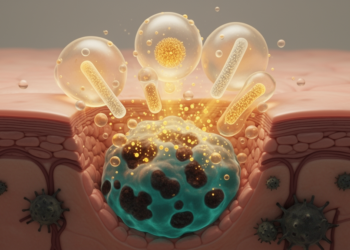
A synthetic double-stranded RNA molecule that mimics viral infection durably suppressed tumor growth in two mouse models of neurofibromatosis type 1-associated optic pathway glioma, according to a study published in Acta Neuropathologica Communications. The compound, poly(I:C), achieved sustained glioma suppression, with normalized retinal nerve fiber thickness measured 16 weeks after treatment ended, and its effects traced to two distinct innate immune sensing pathways that converge on ERK signaling within tumor-associated microglia.
Poly(I:C) is currently under clinical investigation as an immunomodulatory cancer therapy for its ability to control myeloid cell function and T cell infiltration. Although it is known to activate Toll-like receptor 3 (TLR3), the receptor that recognizes viral double-stranded RNA, its exact mechanism of action in cancer has remained unclear. The new findings identify specific innate immune mechanisms by which the drug regulates immune cell behavior inside low-grade gliomas.
The research team, led by Jit Chatterjee and senior author David H. Gutmann, first surveyed multiple human tumors and found that TLR3 is enriched in gliomas, particularly in low-grade gliomas such as pilocytic astrocytoma arising in individuals with the NF1 cancer predisposition syndrome. This observation motivated the use of two independently generated murine models of NF1 low-grade glioma to test whether poly(I:C) could restrain tumor growth in vivo.
In both Nf1 optic pathway glioma strains, poly(I:C) treatment durably suppressed tumor growth. The suppression persisted after therapy stopped: glioma volume remained controlled and retinal nerve fiber thickness, a measure relevant to optic pathway glioma burden, was normalized 16 weeks following treatment cessation. The authors evaluated tumor-associated myeloid cell function, chemokine expression, and signaling pathway activation both in vivo and in vitro.
Mechanistically, poly(I:C) induced production of the chemokine Ccl3 by tumor-associated myeloid cells through both TLR3-dependent and MDA5-dependent routes. Ccl3, in turn, controlled the trafficking of CD8+ T cells into the tumor, linking RNA sensing to immune cell recruitment within the glioma microenvironment.
Because Ccl3 was found to be enriched in microglia from both human pilocytic astrocytoma and mouse Nf1 optic pathway glioma tumor-associated myeloid cells, the team used freshly isolated murine Nf1+/− microglia to dissect the downstream signaling cascades. These experiments showed that the two pathways activate distinct intracellular routes: a TLR3/MEK cascade and an MDA5/NFκB cascade, both of which converge on ERK activation.
The significance statement accompanying the paper summarizes the result: the immunomodulatory therapy suppresses brain tumor growth by reducing tumor-associated monocyte T cell chemoattraction through two distinct pathways that converge on MEK/ERK signaling. Notably, the study highlights the role of innate immune sensors in regulating non-neoplastic cells within the brain tumor microenvironment, rather than acting directly on the tumor cells themselves.
The findings carry several caveats inherent to the study design. The efficacy data come from two murine models of NF1-associated optic pathway glioma, and the signaling dissection relied on in vitro experiments with fresh murine microglia. While the human evidence establishes TLR3 and Ccl3 enrichment in relevant tumor samples, the therapeutic results themselves have not yet been demonstrated in patients, and the article notes that its exact mechanism of action in cancer broadly remains an open question that this work addresses for this tumor type.
Within those limits, the study offers a mechanistic account of how a viral-mimic RNA drug can reshape the immune landscape of a brain tumor: engaging both a membrane Toll-like receptor and a cytosolic RNA sensor in myeloid cells, driving Ccl3-mediated CD8+ T cell recruitment, and funneling through ERK signaling to produce lasting control of NF1-driven low-grade glioma growth.
Subject of Research: Poly(I:C) suppression of NF1-associated optic pathway glioma through microglial ERK signaling
Article Title: Poly(I:C) suppresses NF1-associated optic pathway glioma growth through TLR3-dependent and TLR3-independent modulation of microglial ERK signaling
Article References: Chatterjee, J., Subasic, E., Ouyang, M., Yamada, S., Kirchner, A., Arroyo, V., Dahiya, S., & Gutmann, D. H. (2026). Poly(I:C) suppresses NF1-associated optic pathway glioma growth through TLR3-dependent and TLR3-independent modulation of microglial ERK signaling. Acta Neuropathologica Communications. https://doi.org/10.1186/s40478-026-02460-2
Image Credits: AI Generated
DOI: 10.1186/s40478-026-02460-2
Keywords: poly(I:C), NF1, optic pathway glioma, TLR3, MDA5, microglia, ERK signaling, Ccl3, CD8+ T cells, low-grade glioma, tumor-associated myeloid cells, immunotherapy
News Source: Kristina Jarvis. (October 29, 2026). Synthetic Viral RNA Shrinks NF1 Brain Tumors by Reprogramming Immune Cell Signaling. Scienmag.