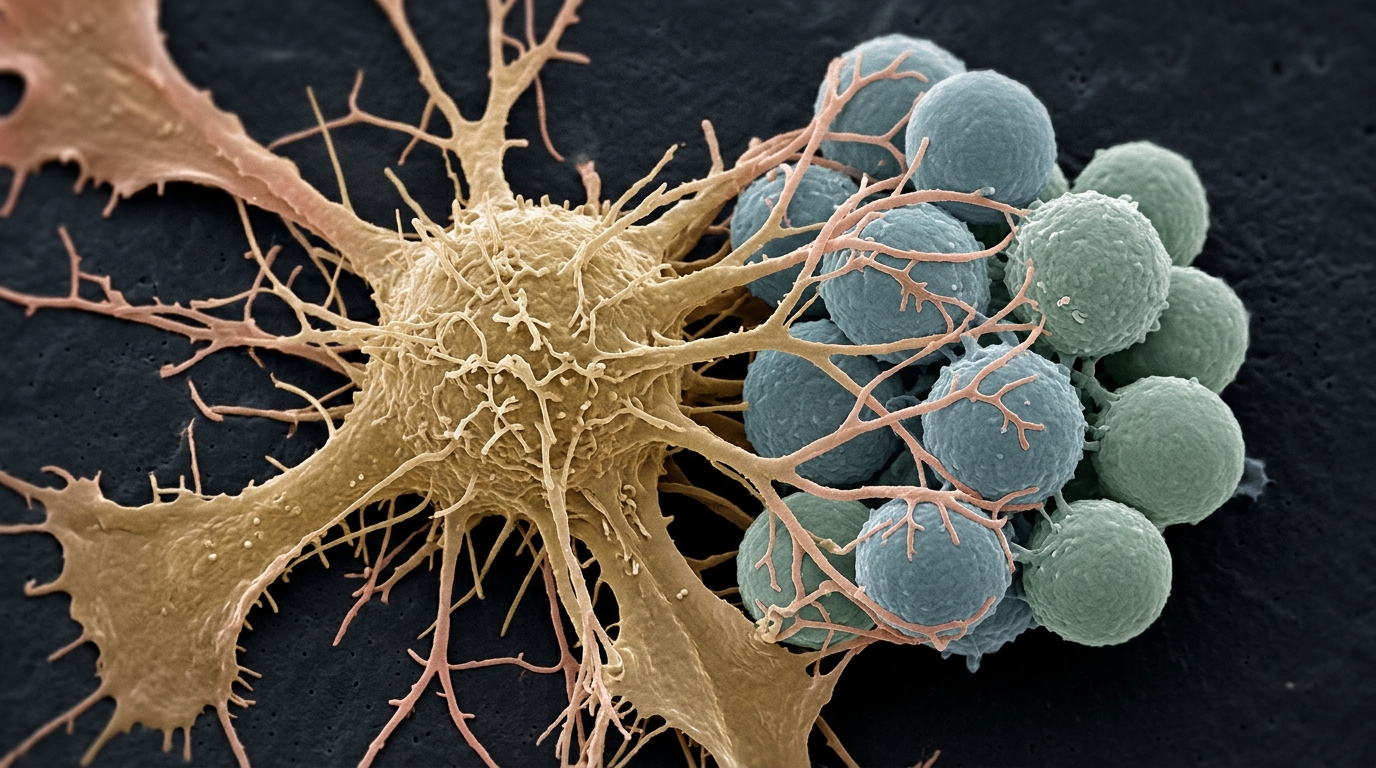
In an international experimental study led by Lund University in Sweden, researchers have discovered that reprogramming cancer cells into dendritic cells can orchestrate an antitumor immune response by promoting the development of specialized immune-cell clusters within tumors. The basic research investigation, published in the journal Immunity, utilized in vitro and mouse models to reveal how immune cells are recruited and organized inside tumor tissue, offering potential pathways to improve the responsiveness of difficult-to-treat cancers to immunotherapy.
Immunotherapy relies on activating the body’s natural immune defenses to combat malignancies, fundamentally altering modern oncology, yet it fails to benefit a substantial portion of patients. A decisive factor governing therapeutic success is the degree to which immune cells successfully organize their attack within the tumor microenvironment. In certain tumors, small aggregates of immune cells known as tertiary lymphoid structures, or TLSs, form to coordinate targeted immune activity, and patients whose tumors feature these structures typically respond more favorably to immunotherapy and experience higher survival rates.
Despite the recognized value of tertiary lymphoid structures, engineering and analyzing them in laboratory models has historically presented significant hurdles. The spontaneous assembly of TLSs requires a precise confluence of inflammatory signaling cues, diverse immune cell types, and a permissive tumor environment. Because dependable techniques for generating and tracking these structures across varied tumor models were previously lacking, deciphering their assembly and therapeutic potential remained challenging.
To overcome this barrier, the research group built upon previous work demonstrating that cancer cells within tumors can be reprogrammed into dendritic cells, an immune cell lineage critical for launching antitumor responses. In the new study, lead author Filipe Pereira, a professor of molecular medicine at Lund University, and his colleagues confirmed that these reprogrammed cells actively drive the formation of tertiary lymphoid structures. Using this cellular reprogramming platform, the team tracked the tissue-level events that occur as TLSs emerge and documented how the converted cells help coordinate immune infiltration against the tumor.
In laboratory experiments conducted in mice, the investigators demonstrated that this reprogramming strategy stimulated immune activation across multiple distinct cancer models, including melanoma, breast, colorectal, bladder, and pancreatic cancers. The findings indicate that the mechanism functions even in tumor varieties that are conventionally unresponsive or resistant to standard immunotherapies, suggesting that cell reprogramming could eventually serve as an approach to render refractory tumors more susceptible to immune-mediated clearance.
The study authors note that the experimental findings represent preclinical basic research in animal and cell models. Future work will focus on identifying the specific biochemical signals that initiate TLS formation and maintain these structures over time, evaluating how to integrate cell reprogramming alongside current clinical immunotherapies, and determining how diverse immune cell populations collaborate to establish durable antitumor defense.
Highlighting the methodological advance, lead investigator Filipe Pereira emphasized that overcoming previous experimental barriers was essential to moving the field forward. “Until now, it has been complicated to induce the formation of TLSs, because there have been no good methods for studying and engineering these structures in different types of tumours in the laboratory. We have now developed a new strategy to address this challenge,” Pereira explained. He noted that establishing the platform across multiple laboratory models addresses a long-standing therapeutic hurdle: “Our study shows that this is possible in several cancer types, including tumours that are usually resistant to immunotherapy. It could pave the way for new immunotherapies that make it easier to treat tumours the immune system has previously found difficult to attack.”
The researcher-initiated investigation represents fundamental basic science conducted in vitro and in vivo rather than an immediate clinical intervention. Because spontaneous cluster assembly requires an intricate combination of inflammatory signals, specific immune cells, and a permissive microenvironment, creating these conditions experimentally provides a systematic way to observe cellular recruitment. The investigators demonstrated that reprogramming cancer cells directly into dendritic cells, which are specialized immune cells that orchestrate antitumor defenses, supplies the necessary biological drivers to organize and sustain tertiary lymphoid structures inside malignant tissue.
Beyond academic laboratory findings, the research carries significant commercial ties and intellectual property development. According to conflict-of-interest disclosures published with the study, key investigators hold equity stakes and executive leadership roles, while several co-authors are employed by Asgard Therapeutics AB, a biotechnology venture developing cancer immunotherapies based on dendritic cell reprogramming technologies. Furthermore, inventors on the research team hold granted patents and pending patent applications assigned to Asgard Therapeutics covering the in vivo cell reprogramming approach, highlighting ongoing efforts to translate these preclinical discoveries into therapeutic applications.
Subject of Research: Tumor-to-dendritic cell reprogramming to induce tertiary lymphoid structures in cancer models
Article Title: Making tumors more responsive to immunotherapy
Article References: Making tumors more responsive to immunotherapy. Original publication (Bibliographic details unavailable.)
Image Credits: AI Generated
DOI: Not provided
Keywords: cancer research, immunotherapy, cellular reprogramming, dendritic cells, tertiary lymphoid structures, tumor microenvironment, Lund University, oncology, Making, tumors, responsive, scientific research
News Source: Nathaniel Bowman. (November 7, 2026). Reprogramming Tumor Cells into Dendritic Cells Promotes Antitumor Immune Structures. Scienmag.