Profiling the viruses that live in the upper respiratory tract of cattle has long been hampered by a simple problem: there is not much material to work with. Deep nasopharyngeal swabs, the standard sampling tool for bovine respiratory studies, carry low microbial biomass and a heavy background of host DNA, making viral genomes difficult to preserve, extract and classify. A new methodological study published in Animal Microbiome reports an optimized workflow that substantially improves the recovery of both DNA and RNA viruses from these low-biomass samples, offering a practical framework for future virome research in cattle and other farm animals.
Their goal was not to describe a new viral ecosystem but to refine the tools needed to see one accurately. The work addresses a recognized gap, since virome research in cattle has lagged behind the well-studied bacterial communities of the upper respiratory tract.
The samples came from a commercial feedlot in southern Alberta, Canada. Twenty-four winter-replaced heifer calves, with an average arrival body weight of 334.8 kilograms, were enrolled under an approved animal care protocol. The animals received an intranasal modified-live vaccine against bovine respiratory syncytial virus, bovine alphaherpesvirus 1 and bovine parainfluenza virus type 3 on arrival. Calves were monitored daily for signs of bovine respiratory disease, and deep nasopharyngeal swabs were collected from heifers diagnosed with the condition using a guarded rayon-tipped swab rubbed against the nasopharyngeal mucosa. In total, 48 swabs were collected from the 24 diagnosed calves, two per animal, transported on ice within two hours and frozen at minus 80 degrees Celsius. Samples from one calf were excluded because their DNA and RNA yields were inadequate for extraction.
To compare preservation strategies, 18 of the newly collected swabs were allocated equally to three conditions: storage in RNAlater, storage in brain heart infusion medium with glycerol at minus 80 degrees Celsius, and a hybrid approach in which BHI medium with glycerol was followed by RNAlater before freezing. Six banked swabs from a previous study, stored for one year in RNAlater, were included to compare newly collected and long-stored material. The remaining new samples were held briefly as dry swabs and processed later with the finalized optimal method, so they would not bias the storage comparison.
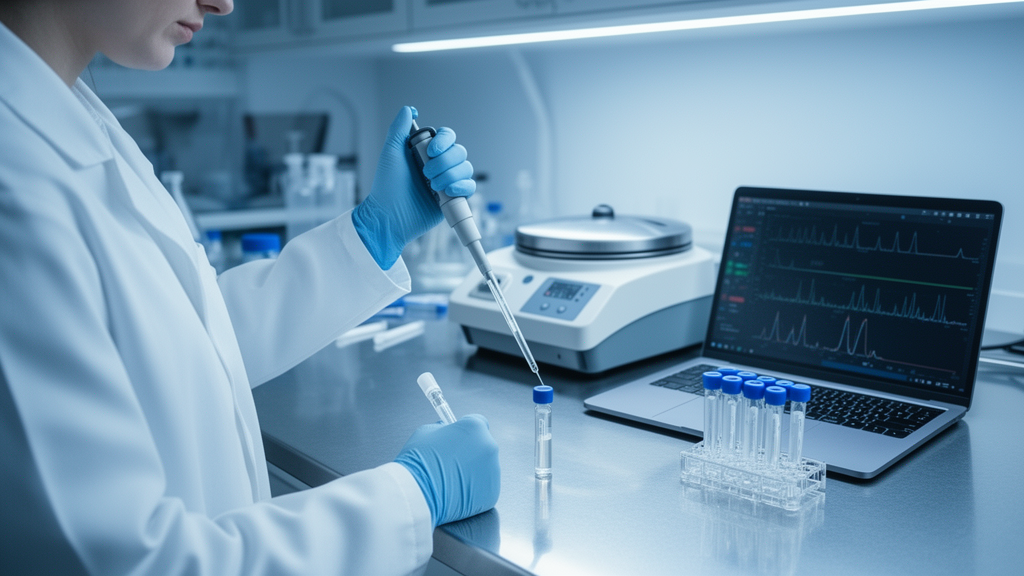
The extraction comparison covered three commercial kits for total nucleic acids: the QIAamp Fast DNA Stool Mini Kit, the GeneJET Genomic DNA Purification Kit and the mirVana miRNA Isolation Kit. For viral nucleic acids specifically, the team used the NucleoSpin Virus Kit after passing swab eluate through a 0.45 micrometer filter to remove debris and enrich viral particles. The results were strikingly dependent on the combination of buffer and kit. For total DNA, swabs stored in BHI medium with glycerol and extracted with GeneJET yielded the most DNA, 3.75 micrograms on average, significantly more than RNAlater storage at 1.98 micrograms or the combined buffer at 1.83 micrograms. For total RNA, the pattern reversed: RNAlater storage paired with the mirVana kit produced 3.98 micrograms, far exceeding roughly 1 microgram from either BHI-based condition. The QIAamp stool kit failed to extract detectable DNA from several swabs, a failure the authors attribute to its aggressive lysis chemistry being tuned for dense fecal microbial communities rather than sparse respiratory material.
For viral nucleic acids, RNAlater again proved superior. Viral RNA yields reached 1.57 micrograms in RNAlater-preserved swabs, compared with 0.89 micrograms for BHI with glycerol and 1.02 micrograms for the combined buffer. Viral DNA yields did not differ significantly among preservation conditions, but RNAlater-preserved samples still produced the highest viral DNA amounts, 1.35 micrograms on average. The hybrid preservation strategy, which was intended to combine the cryoprotective properties of glycerol with the RNA-stabilizing action of RNAlater, produced the lowest yields across all extraction methods. The authors suggest the two buffers are fundamentally incompatible: BHI with glycerol is designed to keep microbial cells viable, while RNAlater acts as a fixative, and their opposing physicochemical properties appear to disrupt both cell integrity and nucleic acid purification. New samples also outperformed banked samples, with viral DNA and viral RNA yields significantly higher in freshly collected swabs than in those stored for a year, although the authors caution that the two groups came from different animals, so inter-animal variability may contribute to the difference.
The bioinformatic side of the study compared two widely used taxonomic classifiers, Kraken2 and Kaiju, applied to metagenomic sequences generated on an Illumina NovaSeq platform. After quality filtering and removal of host reads by alignment to the bovine reference genome, an average of about 19.6 million reads per sample remained from roughly 25 million raw reads. Kraken2, using a k-mer-based exact matching strategy against the 2024 RefSeq viral database, annotated 23,931 viral contigs. Kaiju, which performs protein-level alignment in greedy mode against the far larger 2023 NCBI non-redundant protein database, annotated 42,977 contigs. At the species level, both tools identified Orf virus as the dominant taxon, at 41.04 percent of assigned abundance under Kraken2 and 50.88 percent under Kaiju, with Betacoronavirus 1 and bovine rhinitis viruses also prominent. But Kaiju additionally detected bovine coronavirus, bovine rhinovirus 1, ungulate bocaparvovirus 6 and bovine alphaherpesvirus 1, several of which were absent or below detection in the Kraken2 output.
The genome-type breakdown highlighted why the classifier choice matters. Kraken2 detected 131 double-stranded DNA viruses, 9 single-stranded DNA viruses and 37 single-stranded RNA viruses, with 14 unclassified entries and no dsRNA viruses. Kaiju detected 95 dsDNA viruses, 9 ssDNA viruses, one dsRNA virus, 7 unclassified entries and 70 ssRNA viruses. Kraken2-specific detections were enriched in dsDNA bacteriophages, including phages infecting Mannheimia and Streptococcus, whereas Kaiju-specific detections included host-associated RNA and DNA viruses such as bovine orthopneumovirus, bovine viral diarrhea virus 2 and ungulate bocaparvoviruses. The authors explain that Kraken2’s nucleotide-level matching struggles with divergent or fragmented viral sequences, particularly RNA viruses that mutate rapidly and are incompletely represented in reference databases, while Kaiju’s protein-space alignment tolerates synonymous substitutions and frameshift mutations, improving detection of distant viral homologs. A benchmarking study in clinical respiratory samples cited by the authors similarly found Kaiju more sensitive for RNA viruses.
Importantly, the authors frame the two classifiers as complementary rather than competitive. Kraken2 captured bacteriophages that regulate the upper respiratory tract bacterial community and that Kaiju missed, so combining both tools may yield a more complete picture of the virome, encompassing both host-infecting viruses and phage signals. The study also confronted the two chronic hazards of low-biomass viromics: amplification bias and contamination. Whole genome amplification was applied uniformly across all samples to ensure consistency, but the authors note that such amplification can preferentially enrich certain genome types and distort relative abundance estimates, so absolute abundances should be interpreted with caution. Multiple negative controls, including extraction blanks with and without carrier nucleic acids, amplification controls, a library preparation control and an environmental bench swab, were processed through the entire pipeline. Taxa detected in two or more controls were removed from downstream analyses when present at low abundance in biological samples, and the key high-abundance respiratory viruses were not detected in control libraries at levels comparable to the biological samples.
The practical payoff of the optimized workflow is that RNA viruses, which earlier metagenomic studies of the cattle respiratory tract largely missed, can now be recovered consistently alongside DNA viruses from the same low-biomass swabs. By establishing that RNAlater preservation, NucleoSpin Virus extraction and Kaiju-based classification maximize viral nucleic acid recovery and taxonomic resolution, the study provides a standardized starting point for investigating how viruses interact with bacteria and the host immune system in respiratory health. The authors note one remaining variable they did not test: the type of swab itself, whether rayon-tipped, cotton-tipped, flocked or cytobrush, which may also shape virome composition and will need attention in future standardization efforts.
Subject of Research: Optimization of sample preservation, nucleic acid extraction and bioinformatic classification for profiling DNA and RNA viromes in deep nasopharyngeal swabs from beef cattle
Article Title: Optimized approaches to profile low biomass DNA and RNA virome in the upper respiratory tract of beef cattle
Article References: Wang, Y., Zhou, M., Malmuthuge, N., Chen, Y., Alexander, T. W., Timsit, E., & Guan, L. L. (2026). Optimized approaches to profile low biomass DNA and RNA virome in the upper respiratory tract of beef cattle. Animal Microbiome, 8(1), Article 101. https://doi.org/10.1186/s42523-026-00567-4
Image Credits: AI Generated
DOI: 10.1186/s42523-026-00567-4
Keywords: virome, beef cattle, upper respiratory tract, deep nasopharyngeal swab, RNAlater, nucleic acid extraction, metagenomics, Kraken2, Kaiju, bovine respiratory disease, RNA viruses, low biomass samples
News Source: William Thompson. (October 29, 2026). Refined workflow recovers DNA and RNA viromes from cattle nasal swabs. Scienmag.