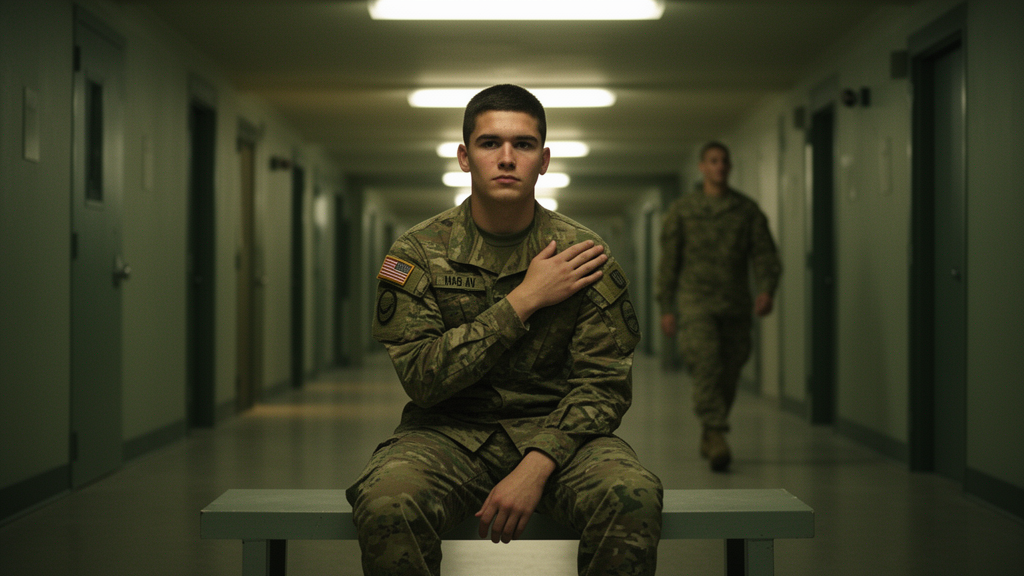
Active duty service members often delay or avoid seeking care for musculoskeletal injuries and pain, driven by fear of career repercussions, a pervasive “push through pain” culture, and frustrations with the Military Health System, according to a new qualitative interview study published in Frontiers in Sports and Active Living. The research, conducted by a team at the Uniformed Services University, offers one of the most detailed portraits to date of how troops navigate musculoskeletal health across their entire military careers, and it points to cultural and systemic changes that could reduce a burden that already dominates military medicine.
Musculoskeletal injury and pain are the leading cause of medical encounters and limited duty days among US Active Duty Service Members, and they drive high rates of healthcare utilization among Veterans. The burden rises with age and is disproportionately higher among female service members and Veterans. Yet the true scale of the problem is likely underestimated: an estimated 64 percent of musculoskeletal injuries among military recruits and roughly half of such injuries in operational units go unreported to medical personnel. Key drivers of this silence include fear of duty-limiting profiles, the formal documentation of medical restrictions that can sideline careers, worries about professional repercussions, and simple logistical inconvenience. Delayed treatment may accelerate the progression from acute injury to chronic conditions, compounding long-term health impacts and costs across both the Military Health System and the Department of Veterans Affairs.
To understand why service members avoid care despite these stakes, researchers conducted semi-structured individual interviews with 60 active duty members, 31 men and 29 women, recruited from four military medical and academic facilities in the National Capital Region. Participants ranged in age from 22 to 57, with a median age of 38 and a median of 16 years of service, and they represented every branch of the US military except the Space Force. All had a history of musculoskeletal injury or pain during their service, which was an intentional eligibility requirement to ensure direct experience with the topic. Interviews lasted 20 to 60 minutes, were conducted in person or over video conference by a civilian researcher away from military leaders, and were audio recorded, transcribed, and analyzed using applied thematic analysis, an inductive method that identifies and interprets patterns of meaning across participant accounts.
The analysis produced seven major themes: military impact, care-seeking, the Military Health System, prevention and optimization, leadership, mental health, and gender. The care-seeking theme captured a tangle of personal, cultural, and systemic factors shaping whether troops seek help. Barriers included logistical hurdles such as long wait times, inconvenient clinic locations, difficulty taking time off work, and a lengthy referral process in which participants described needing roughly four appointments before receiving meaningful care. Career fears loomed just as large. One participant described how people in high-tempo units keep injuries quiet because of an implicit fear of losing flying status or mission eligibility. Others described a stigma in which frequent visits to medical care risked being labeled a malingerer, reinforcing a culture of fighting through injuries.
Experiences within the Military Health System itself shaped these decisions. Participants reported inconsistent quality of care, describing first-line visits to primary care providers they felt lacked musculoskeletal-specific training, temporary “quick fix” treatments such as pain medication or injections aimed at getting them through a training course or deployment, and little follow-up after diagnosis. Many accounts reflected feelings of being dismissed by providers, of having their pain disbelieved, or of being suspected of exaggerating symptoms or malingering. One African American female participant shared her perception that providers took her pain less seriously because of her race and interpreted her care-seeking as drug-seeking rather than evaluating her condition. At the same time, some participants acknowledged that military service provided better access to care than civilian alternatives, and positive past interactions with providers emerged as a key facilitator that increased willingness to seek care in the future.
The interviews also revealed how military service itself cuts both ways for musculoskeletal health. On one hand, mandatory fitness testing instilled exercise habits that some participants credited with sustaining their health, and newer initiatives such as dynamic warm-up programs and the Army’s Holistic Health and Fitness (H2F) program were viewed as genuine cultural improvements. On the other hand, participants described heavy load carriage, ill-fitting boots and body armor, cramped ship berthing, rigid aircraft seats, and punishing operational tempos that left no time for recovery. Some reported deploying with known injuries or choosing to defer care until after completing a training course, viewing graduation as worth the physical cost. Participants also perceived that the Department of Defense prioritizes mission readiness over individual well-being and does not sufficiently invest in specialty care such as sports medicine, physical therapy, occupational therapy, or holistic services like nutrition and chiropractic care.
Leadership emerged as a decisive, and highly variable, factor. Some participants described supportive commanders who respected medical profiles and actively encouraged care-seeking, including embedded providers whose office hours within a squadron building made treatment nearly frictionless. Others recounted leaders who ignored medical restrictions, with one participant describing a physical therapist’s recommendation for 30 days of light duty overruled by a medical officer who offered five. Participants emphasized that because of the military’s hierarchical structure, lasting cultural change requires top-down support: commands must encourage early care-seeking, respect medical profiles, and abide by physical training guidelines for improvements to take hold. Notably, prior research cited in the study found that among Army Drill Instructors, health-promoting leadership was associated with significantly lower perceived barriers to seeking treatment.
The mental health theme underscored a bidirectional relationship between physical and psychological well-being. Participants described how persistent pain exacerbated existing distress or contributed to depression, anxiety, and stress, while increased stress in turn intensified their perception of pain. Because many service members tie their identity closely to physical fitness and military role, losing function or duty capability to injury carried a particular psychological weight. The authors note that injured athletes, a population they describe as analogous in many respects, show elevated rates of depression, anxiety, sleep disorders, and loss of identity, and they argue that integrating mental and behavioral health interventions with traditional physical rehabilitation could offer a more comprehensive approach to military musculoskeletal care.
Gender-specific experiences formed the final theme. Although a majority of participants did not perceive that gender affected their care, a subset described distinct dynamics. Some female service members reported feeling pressure to work harder and avoid drawing attention to injuries in a male-dominated environment, fearing they would be seen as weak, with one participant saying she did not get as much care as she should have until things got really bad. Others reported not being believed about their pain, which led them to avoid care in the future. Participants with previous pregnancies described ligament laxity, pelvic girdle and low back pain, core muscle dysfunction, and pubic symphysis dysfunction, along with difficulty accessing pelvic floor physical therapy within the Military Health System, with one participant still on a waitlist and paying out of pocket for care. The study notes that a British Army assessment found 71 percent of postpartum women sustained a musculoskeletal injury in their first year back on duty compared with 28 percent of non-postpartum women, and that although each US service branch operates a Pregnancy and Postpartum Performance Training program, implementation reportedly varies widely by installation.
The authors caution that several factors limit how broadly these findings apply. Participants were recruited in the National Capital Region, where access to major military medical facilities may represent a comparatively resource-rich, best-case context for the Military Health System, meaning barriers could differ in type or magnitude at smaller or remote installations. Many participants worked in medical or medically adjacent occupations, roughly 64 percent of the sample, potentially giving them greater health literacy and different experiences navigating care than non-medical personnel, and about 20 percent of those were medical or clinical psychology students. Rank was not collected, the long average tenure of about 16 years may introduce recall bias, and the Space Force was not represented. Saturation was not formally assessed during data collection, which concluded when the prespecified target of 60 participants was reached. The researchers, all civilians without personal military service, maintained a documented reflexive process to limit interpretive bias. Within those constraints, the study identifies concrete opportunities: streamlining specialty care referrals, reducing wait times, enhancing provider training for common musculoskeletal conditions, expanding unit-level assets such as embedded athletic trainers, and building targeted support for service members during pregnancy and postpartum recovery. Future work, the authors suggest, should measure how prevalent these barriers are across different installations, branches, and occupations, and co-design interventions with the service members they are meant to help.
Subject of Research: Barriers and facilitators to musculoskeletal injury and pain care-seeking among active duty US service members
Article Title: Active duty service members' experiences navigating musculoskeletal health throughout their military careers: a qualitative interview study
Article References: Hollis, B. F., Gregory, A. B., & Ricker, E. A. (2026). Active duty service members' experiences navigating musculoskeletal health throughout their military careers: a qualitative interview study. Frontiers in Sports and Active Living, 8, Article 1910200. https://doi.org/10.3389/fspor.2026.1910200
Image Credits: AI Generated
DOI: 10.3389/fspor.2026.1910200
Keywords: musculoskeletal injury, chronic pain, military health, care-seeking barriers, qualitative research, Military Health System, service members, leadership, mental health, gender bias, postpartum recovery, injury prevention
News Source: Ophelia Keating. (October 28, 2026). Push Through Pain: Interviews Reveal Why Troops Hide Injuries and Delay Care. Scienmag.