

• HOME
  • NEWS
  • EXPLORE
    • CAREER
      • Companies
      • Jobs
    • EVENTS
    • iGEM
      • News
      • Team
    • PHOTOS
    • VIDEO
    • WIKI
  • BLOG
  • COMMUNITY
    • FACEBOOK
    • INSTAGRAM
    • TWITTER
Sunday, November 1, 2026
BIOENGINEER.ORG
No Result
View All Result
  • Login
  • HOME
  • NEWS
  • EXPLORE
    • CAREER
      • Companies
      • Jobs
        • Lecturer
        • PhD Studentship
        • Postdoc
        • Research Assistant
    • EVENTS
    • iGEM
      • News
      • Team
    • PHOTOS
    • VIDEO
    • WIKI
  • BLOG
  • COMMUNITY
    • FACEBOOK
    • INSTAGRAM
    • TWITTER
No Result
View All Result
Bioengineer.org
No Result
View All Result
Home NEWS Science News Biology

Peroxisomal Protein PEX11β Restores Mitochondrial Function and Behavior in Huntington’s Disease Mice

by
October 29, 2026
in Biology
Reading Time: 2 mins read
0
Peroxisomal Protein PEX11β Restores Mitochondrial Function and Behavior in Huntington's Disease Mice

Peroxisomal Protein PEX11β Restores Mitochondrial Function and Behavior in Huntington's Disease Mice

Share on FacebookShare on TwitterShare on LinkedinShare on RedditShare on Telegram

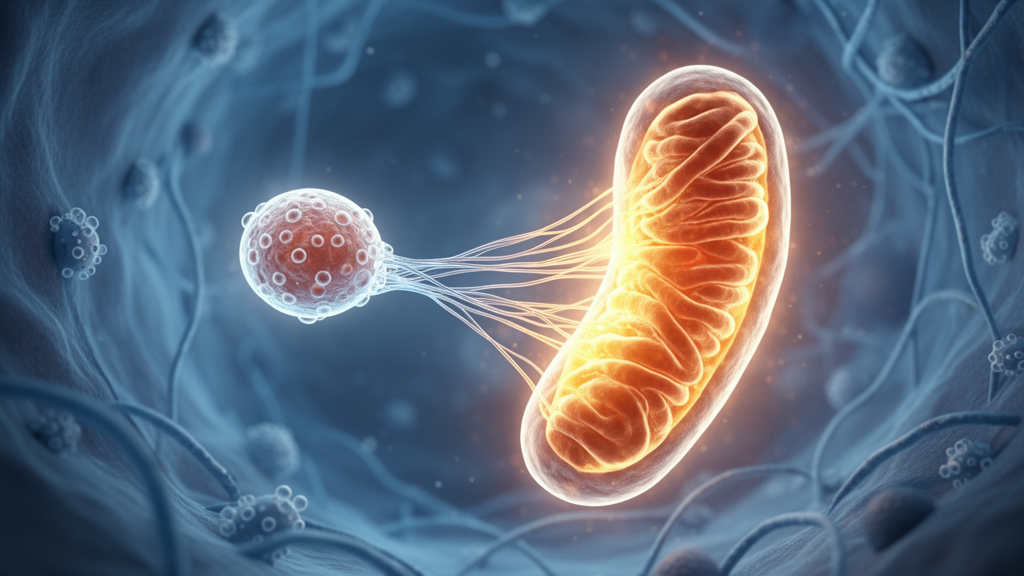
In a study published in Cell Communication and Signaling, researchers report that PEX11β, a peroxisomal fission protein, is downregulated in Huntington’s and Alzheimer’s disease, and that restoring it in a mouse model of Huntington’s-like pathology alleviated motor and cognitive deficits while reinstating mitochondrial gene expression in the striatum.

Mitochondrial fission and impaired expression and function of respiratory Complex II are established hallmarks of both Huntington’s disease (HD) and Alzheimer’s disease (AD). The authors set out to test whether a shared mechanism might drive mitochondrial fragmentation across these different conditions. Using patient transcriptomic data alongside in vitro cellular models, they connected disease-associated loss of PEX11β to mitochondrial fragmentation and to impaired expression of genes governing mitochondrial fusion and Complex II.

The authors frame this as evidence that PEX11β-mediated regulation of fission-fusion dynamics links mitochondrial integrity to behavioral outcomes.

Both approaches pointed to Yin Yang 1 (YY1) as a critical transcription factor regulating the coordinated expression of PEX11β and Complex II genes. This regulatory link offers a possible explanation for the unique co-expression pattern between PEX11β and respiratory chain complexes that the authors describe in the current study.

The findings also extend toward amyloid-associated neuropathology, the protein-aggregation process central to Alzheimer’s disease, although the abstract indicates this connection is based on analytical insight rather than demonstrated rescue in AD models. Importantly, the in vivo results come from a toxin-induced model of Huntington’s-like pathology, not from patients or from genetic HD models, and the work relies on patient transcriptomic correlations plus cell culture experiments rather than direct measurement in human brain tissue. The article was published on 21 October 2026 as an open-access paper and shared early under a scheme in which the peer-reviewed accepted version is citable but still subject to further edits before the final Version of Record.

Subject of Research: The role of the peroxisomal protein PEX11β in mitochondrial dysfunction and behavioral deficits in Huntington's and Alzheimer's disease models

Article Title: PEX11β-mediated improvement of mitochondrial dysfunction restores behavioral defect and cellular viability in neuropathological conditions

Article References: Kumar, V., Kodam, P., Kunja, C., Balasubramanyam, S. N., Komal, P., Sanyal, A., & Maity, S. (2026). PEX11β-mediated improvement of mitochondrial dysfunction restores behavioral defect and cellular viability in neuropathological conditions. Cell Communication and Signaling. https://doi.org/10.1186/s12964-026-03270-8

Image Credits: AI Generated

DOI: 10.1186/s12964-026-03270-8

Keywords: PEX11β, mitochondrial fission, Huntington's disease, Alzheimer's disease, Complex II, Yin Yang 1, peroxisomes, neurodegeneration, 3-nitropropionic acid, striatum, gene expression, PEX11

News Source: Juliet Wilcox. (October 29, 2026). Peroxisomal Protein PEX11β Restores Mitochondrial Function and Behavior in Huntington’s Disease Mice. Scienmag.


Tags: 3-nitropropionic acidAlzheimer's diseasecomplex IIgene expressionHuntington’s diseasemitochondrial fissionneurodegenerationperoxisomesPEX11PEX11βstriatumYin Yang 1
Share12Tweet7Share2ShareShareShare1

Related Posts

Microbial Sources and Stress Shape the Hidden Endophytes of an Invasive Plant

Microbial Sources and Stress Shape the Hidden Endophytes of an Invasive Plant

October 30, 2026
Firebreaks Leave Lasting Scars in Grasslands While Wildfire Heals Fast

Firebreaks Leave Lasting Scars in Grasslands While Wildfire Heals Fast

October 30, 2026

Hidden Peptides in Non-Coding RNAs Reshape Cardiovascular Biology

October 30, 2026

Phage K Holin’s C-Terminal Region Shapes Antibacterial Activity, Study Finds

October 30, 2026

POPULAR NEWS

  • Microbial Sources and Stress Shape the Hidden Endophytes of an Invasive Plant

    Microbial Sources and Stress Shape the Hidden Endophytes of an Invasive Plant

    29 shares
    Share 12 Tweet 7
  • Firebreaks Leave Lasting Scars in Grasslands While Wildfire Heals Fast

    29 shares
    Share 12 Tweet 7
  • ZNF207 shields glutamine transporter ASCT2 from degradation to fuel liver cancer growth

    29 shares
    Share 12 Tweet 7
  • Systematic review maps sustainability tensions in offshore wind development

    29 shares
    Share 12 Tweet 7

About

We bring you the latest biotechnology news from best research centers and universities around the world. Check our website.

Follow us

Recent News

Microbial Sources and Stress Shape the Hidden Endophytes of an Invasive Plant

Firebreaks Leave Lasting Scars in Grasslands While Wildfire Heals Fast

ZNF207 shields glutamine transporter ASCT2 from degradation to fuel liver cancer growth

Subscribe to Blog via Email

Enter your email address to subscribe to this blog and receive notifications of new posts by email.

Join 86 other subscribers
  • Contact Us

Bioengineer.org © Copyright 2023 All Rights Reserved.

Welcome Back!

Login to your account below

Forgotten Password?

Retrieve your password

Please enter your username or email address to reset your password.

Log In
No Result
View All Result
  • Homepages
    • Home Page 1
    • Home Page 2
  • News
  • National
  • Business
  • Health
  • Lifestyle
  • Science

Bioengineer.org © Copyright 2023 All Rights Reserved.
