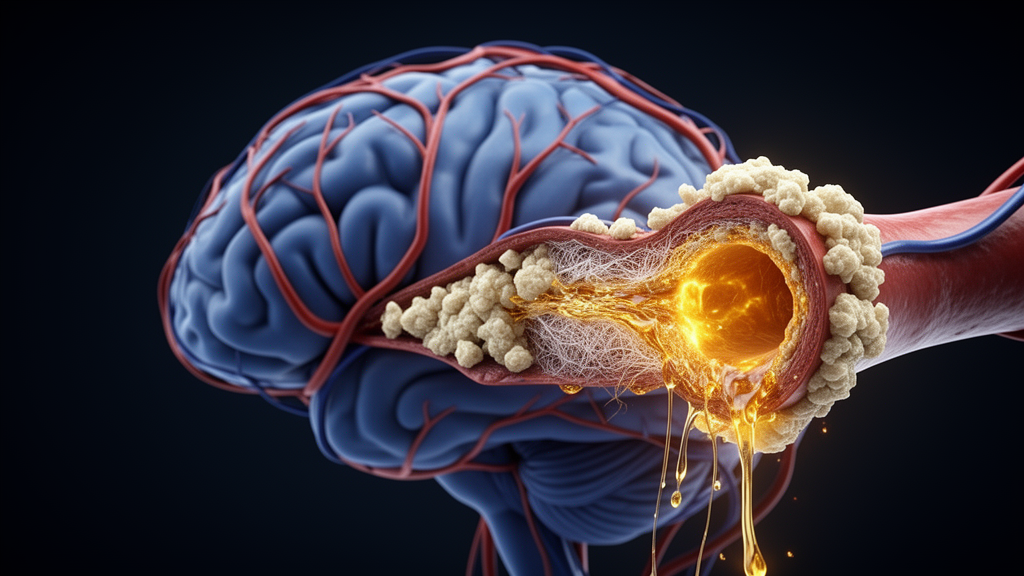
Researchers at Radboud University Medical Centre in Nijmegen have launched a longitudinal observational study designed to track how amyloid-beta peptides change over time in the cerebrospinal fluid of people with cerebral amyloid angiopathy, a disease in which amyloid proteins accumulate in the blood vessels of the brain. The project, called MODEM-LAMBDA-C, is part of the Mechanisms Of DEMentia initiative and is described in a study protocol published in Frontiers in Neurology. Rather than reporting new clinical results, the paper lays out in detail how the investigators plan to measure disease processes that, until now, have been difficult to monitor in living patients.
Cerebral amyloid angiopathy, abbreviated CAA, is characterised by the deposition of amyloid-beta peptides within the cerebral vasculature, predominantly in arterioles, leptomeningeal vessels and capillaries of the cerebral cortex. It is a major cause of lobar intracerebral haemorrhage, convexity subarachnoid haemorrhage, cognitive impairment and dementia. The condition is far from rare in the ageing brain: moderate-to-severe CAA pathology is present in almost 50 percent of patients with Alzheimer’s disease, meaning the two disorders frequently coexist. Known risk factors include APOE gene variants, high blood pressure and brain injury, although the exact mechanisms that initiate amyloid aggregation and propagation are not fully understood.
One of the intriguing biochemical signatures of CAA lies in the length of the amyloid-beta peptides involved. Amyloid precursor protein, when cleaved by enzymes, yields peptides of varying length. Shorter peptides such as Aβ38 and Aβ40 are more soluble and are enriched in vascular deposits, whereas longer peptides such as Aβ42 and Aβ43 accumulate in the neuritic plaques typical of Alzheimer’s disease. These pathological differences are mirrored in the cerebrospinal fluid. A meta-analysis of cross-sectional studies showed that CSF levels of Aβ38, Aβ40 and Aβ42 are decreased in CAA compared to controls, and Aβ43 has also been found to be reduced. Notably, the CSF profile differs between CAA and Alzheimer’s disease, because Aβ38, Aβ40 and Aβ42 concentrations are decreased in CAA while Aβ43 levels are similar between the two conditions.
What has been missing so far is longitudinal data. According to the study team, the dynamics of CSF amyloid-beta peptides over time in CAA, and their relationship with blood-brain barrier dysfunction, remain poorly understood. This gap matters for several reasons. Improved knowledge of longitudinal changes could provide insights into the mechanisms of disease propagation and prognosis, and could help detect asymptomatic CAA pathology in Alzheimer’s disease. That question has acquired new urgency with the emergence of anti-amyloid therapies for Alzheimer’s disease, since pre-existing CAA has been shown to be a risk factor for clinical complications of this treatment. Better biomarkers could also inform early diagnosis, risk management and clinical decision-making about anticoagulant use in affected patients.
The second central theme of the study is the blood-brain barrier, the highly selective interface that separates the circulation from brain tissue. One hypothesised cause of amyloid accumulation in CAA is dysfunction of this barrier, which is defined as changes in bidirectional permeability through any of its transport routes. The gold standard for identifying such dysfunction is post-mortem immunohistochemical examination of extravasated serum proteins such as fibrinogen, thrombin and albumin in the perivascular brain parenchyma, an approach obviously unsuited to monitoring living patients. In clinical practice, the ratio of albumin concentration in cerebrospinal fluid to serum, known as Qalb, is commonly used as an indicator of barrier dysfunction, but the researchers note that this marker lacks specificity, and no established fluid biomarkers currently reflect barrier permeability or molecular defects directly.
To image the barrier in living patients, the team will use dynamic contrast-enhanced magnetic resonance imaging, or DCE-MRI, in which leakage of a gadolinium-based contrast agent serves as a proxy for permeability. This technique has produced conflicting results so far: two recent studies with a total of 39 participants with CAA reported divergent findings, with one describing increased leptomeningeal vessel leakage in CAA and the other reporting decreased leakage. Moreover, no published studies have correlated fluid biomarkers of barrier dysfunction with DCE-MRI measurements in patients with CAA. It therefore remains unresolved whether CSF amyloid-beta levels associate with barrier dysfunction measured by orthogonal methods, or with clinical outcomes such as cognitive decline and haemorrhagic manifestations.
The MODEM-LAMBDA-C study is designed as a single-centre, prospective, longitudinal observational cohort study with two to four years of follow-up at Radboudumc. The primary objective is to compare longitudinal changes in CSF concentrations of Aβ38, Aβ40, Aβ42 and Aβ43 between patients with CAA and age- and sex-matched cognitively healthy control participants. Secondary objectives include describing whether CSF amyloid-beta concentrations correlate with novel fluid biomarkers of barrier dysfunction, determining barrier integrity with DCE-MRI in both groups, testing whether DCE-MRI vascular leakage correlates with the amyloid peptides and fluid biomarkers, and examining whether APOE gene variants are associated with measured levels of the peptides and biomarkers.
The study builds on two earlier cross-sectional projects at the same centre, the BIONIC and CAFÉ studies, in which cerebrospinal fluid and blood samples were collected from 46 participants with CAA and 29 control subjects. The investigators will re-invite these participants for a second visit to enable longitudinal sample collection and DCE-MRI imaging, and they expect 20 participants with CAA and a similar number of controls to enrol from this pool. In addition, they aim to recruit 10 new participants with CAA and 10 healthy controls, targeting a total of 30 participants per group to allow for withdrawals and loss to follow-up. CAA patients will be recruited from the neurology outpatient clinic according to the Boston 2.0 criteria, while controls will be drawn from an online platform for brain research and matched by age and sex. Because no longitudinal data on CSF amyloid-beta changes in CAA exist, a formal sample size calculation was not possible, underscoring the exploratory nature of the project.
The assessment protocol is extensive. At baseline, participants undergo clinical assessment, cognitive testing with the Montreal Cognitive Assessment, blood pressure measurement, a 3T brain MRI examination including a dynamic contrast-enhanced sequence, blood sampling and a lumbar puncture to obtain approximately 15 millilitres of cerebrospinal fluid. The MRI protocol includes sequences for quantifying tissue relaxation times, detecting white matter hyperintensities, diffusion-weighted imaging and quantitative susceptibility mapping to assess the extent of CAA and markers such as cortical superficial siderosis and cerebral microbleeds, which feed into a small vessel disease burden score. The DCE sequence involves an intravenous bolus of gadobutrol followed by 70 acquisitions over 25 minutes, from which leakage rate and related volume parameters are derived using Patlak plot kinetic analysis. At the two-year follow-up visit, all assessments except the MRI are repeated, and the paired samples are analysed within the same batch to minimise batch effects, with Aβ40, Aβ42, total tau and phosphorylated tau measured by a chemiluminescent immunoassay and Aβ38 and Aβ43 analysed by previously described methods.
On the biomarker side, the team will evaluate candidate markers of barrier dysfunction based on their specificity to the blood-brain barrier, their involvement in barrier functions such as tight junctions and cell-cell communication, their measurability in cerebrospinal fluid or plasma, and the availability of suitable immunoassays. Based on preliminary findings, the researchers currently envision longitudinally measuring CSF concentrations of TIE2, MCAM and VCAM1. Statistical analysis will rely on linear mixed-effects models, adjusted for age and APOE genotype, with false discovery rate correction for multiple comparisons. The investigators hypothesise that CSF Aβ38, Aβ40, Aβ42 and Aβ43 concentrations will notably decline over two years in CAA compared to controls, while remaining stable in controls. They also acknowledge limitations, including the possibility that some elderly controls carry asymptomatic amyloid pathology, expected to affect at most two participants given the low prevalence of CAA pathology in cognitively normal elderly people, and the likelihood that drop-out will skew follow-up towards less severely affected patients. By integrating biochemical and imaging markers of amyloid pathology and barrier dysfunction, the study aims to provide a comprehensive understanding of the mechanisms underlying CAA and, ultimately, to contribute to improved diagnosis and prognostic strategies. The study is registered with identifier NL85709.091.23.
Subject of Research: A longitudinal observational protocol study measuring CSF amyloid-beta peptides and blood-brain barrier dysfunction in cerebral amyloid angiopathy
Article Title: Longitudinal amyloid-beta measurements and blood–brain barrier dysfunction in cerebral amyloid angiopathy as part of the Mechanisms Of DEMentia project: protocol of the MODEM-LAMBDA-C study
Article References: Stellingwerf, A., Schreuder, F. H. B. M., Kuiperij, H. B., Van Der Kolk, A. G., Backes, W. H., Claassen, J. A. H. R., & Verbeek, M. M. (2026). Longitudinal amyloid-beta measurements and blood–brain barrier dysfunction in cerebral amyloid angiopathy as part of the Mechanisms Of DEMentia project: protocol of the MODEM-LAMBDA-C study. Frontiers in Neurology, 17, Article 1949765. https://doi.org/10.3389/fneur.2026.1949765
Image Credits: AI Generated
DOI: 10.3389/fneur.2026.1949765
Keywords: cerebral amyloid angiopathy, amyloid-beta, blood-brain barrier, cerebrospinal fluid, DCE-MRI, longitudinal study, study protocol, Alzheimer's disease, biomarkers, small vessel disease, APOE, dementia
News Source: Cassandra Pierce. (October 28, 2026). New study tracks amyloid-beta and blood-brain barrier leakage in CAA. Scienmag.