Every building material carries a footprint that stretches far beyond the construction site where it is finally used. A new open-access study published in the journal City, Territory and Architecture introduces a method for tracing those footprints back to their source, mapping the local-scale environmental impacts that quarrying and extraction impose on the landscapes where materials actually originate.
The research, led by Erpinio Labrozzi with Monica Lavagna and Andrea Campioli, addresses a gap in mainstream assessment practice. Global-scale metrics dominate current evaluations of building materials, but they say little about what happens to the specific places where extraction occurs. To fill that gap, the authors first propose a novel concept, Collateral Landscapes, which frames these localised impacts within the global manufacturing processes that drive them.
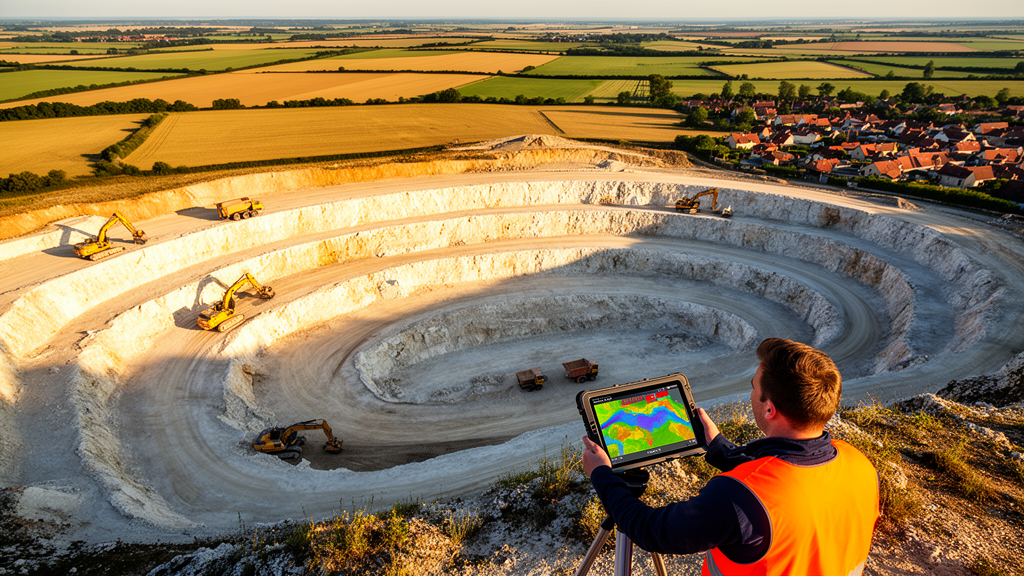
Building on that framing, the team developed the Collateral Landscapes Impact Assessment Tool, or CLIAT. At present the tool focuses on extractive activities and is intended primarily for planners and decision-makers, offering a way to conduct preliminary assessments and to prioritise and guide recovery operations at quarry sites.
To make the tool measurable, the researchers systematically reviewed local-scale indicators and grouped them into eight Local Impact Categories. From these, three were selected for the first implementation of CLIAT: Visual Impact, Local Biodiversity Impact, and Local Water Footprint. Each category was translated into a corresponding subindex.
Each subindex combines two kinds of parameters. Potential Impact Indicators quantify the direct and indirect pressures exerted by an extractive activity, while Local Vulnerability Factors contextualise those pressures according to the specific susceptibility of the affected territory. All of these parameters are computed from spatial data within a GIS environment, allowing the assessment to be grounded in geographically explicit evidence rather than aggregate averages.
The methodology’s outputs go beyond numbers. Alongside numerical scores, the tool produces maps and multilayered diagrams, and image atlases provide a human-eye perspective on the potentially exposed species and the landscapes affected by extraction.
The researchers tested the approach on six quarries of coloured marble in Northern Italy, a territory they characterise as being under high anthropogenic pressure. Applying CLIAT produced an impact score for each quarry and sorted the sites into three profiles: one high-impact site (Quarry 5), an intermediate cluster comprising Quarries 2, 3, 4 and 6, and a lower-impact site (Quarry 1). According to the authors, these results demonstrate the tool’s ability to quickly prioritise recovery or impact-mitigation measures across a pool of extractive sites.
Reliability was addressed in two ways. The Visual Impact subindex underwent a validation procedure that showed a strong correlation between questionnaire scores and the tool’s results. Separately, the reliability of the whole scoring methodology was assessed through an uncertainty and sensitivity analysis that systematically perturbed raw data, weighting schemes and aggregation rules. That analysis, the authors report, provided evidence of CLIAT’s robustness.
The study is published as open access, and the version currently available is shared early to provide faster access to peer-reviewed, accepted research; it is citable and carries a permanent DOI, but remains subject to further edits before the final Version of Record replaces it. Even in this form, the work offers planners a concrete starting point for looking beyond global metrics and asking what extraction means for the specific places, species and vistas that host it.
Subject of Research: A geospatial assessment tool for the local-scale environmental impacts of building material extraction.
Article Title: Collateral Landscapes: geospatial assessment of building materials’ local-scale impacts
Article References: Labrozzi, E., Lavagna, M., & Campioli, A. (2026). Collateral Landscapes: geospatial assessment of building materials’ local-scale impacts. City, Territory and Architecture. https://doi.org/10.1186/s40410-026-00316-9
Image Credits: AI Generated
DOI: 10.1186/s40410-026-00316-9
Keywords: Collateral Landscapes, CLIAT, GIS, quarrying, building materials, local impacts, biodiversity, water footprint, visual impact, Northern Italy, marble quarries, spatial data
News Source: Denise Maddox. (October 28, 2026). New GIS tool maps the hidden local impacts of quarrying building materials. Scienmag.