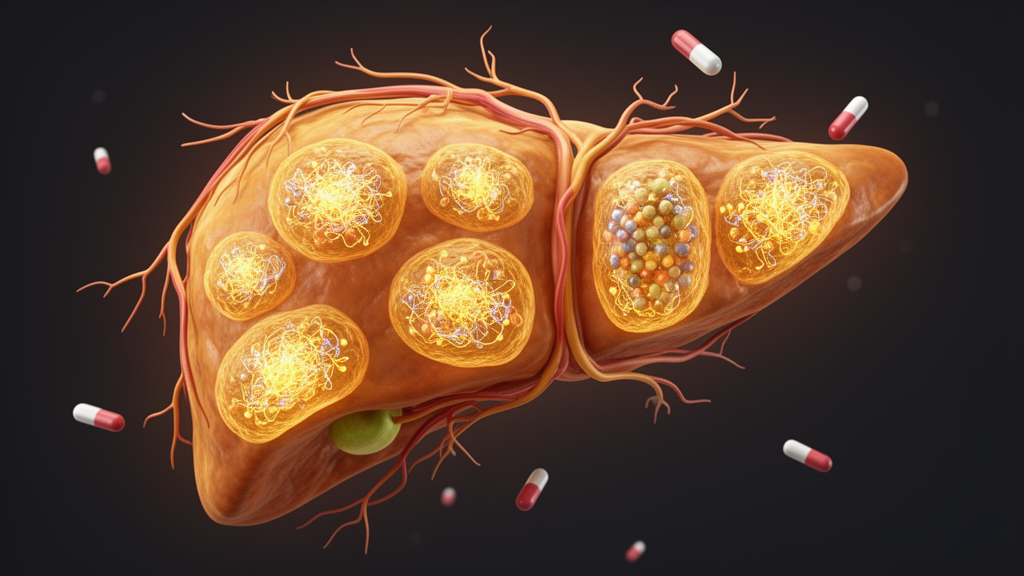
Hepatocellular carcinoma, the most common form of primary liver cancer, remains one of the leading causes of cancer-related death worldwide, and its incidence continues to climb in parallel with the global epidemic of obesity, type 2 diabetes, and metabolic dysfunction-associated steatotic liver disease. A newly published open-access review in the journal Amino Acids argues that the key to understanding this disease lies not in any single metabolic pathway, but in the way glucose, lipid, and amino acid metabolism operate together as one interconnected network that fuels tumor growth, spread, and escape from immune surveillance.
At the heart of this network is metabolic reprogramming, the process by which cancer cells abandon the efficient energy-production strategies of healthy cells in favor of a regime better suited to rapid proliferation. In hepatocellular carcinoma, the review explains, this reprogramming couples accelerated aerobic glycolysis, known as the Warburg effect, to sustained de novo lipogenesis and extensively rewired amino acid handling. Together, these shifts supply both the energy and the biosynthetic building blocks that tumors need to proliferate, metastasize, and evade the immune system.
The review goes beyond a conventional pathway-by-pathway account by emphasizing three integrative perspectives. The first concerns the metabolic intermediates themselves. Molecules such as lactate, acetyl-CoA, succinyl-CoA, and alpha-ketoglutarate, which are traditionally viewed simply as chemical waypoints in metabolism, also operate as signaling molecules and as substrates for epigenetic enzymes. In this role, metabolic reprogramming feeds back onto chromatin and transcription, helping to stabilize the malignant state of the tumor cell.
The second perspective involves a superimposed layer of regulation by non-coding RNAs and epigenetic machinery. According to the authors, this regulatory layer co-controls the glycolytic, lipogenic, and amino acid programs of the tumor, and it is the perturbation of this layer, rather than the malfunction of any single enzyme, that ultimately dictates the metabolic phenotype of the cancer. This framing shifts attention from individual metabolic targets toward the network-level controls that coordinate them.
The third perspective is clinical. The review positions metabolic rewiring as a principal driver of resistance to multikinase inhibitors, a class of targeted drugs used in the treatment of advanced hepatocellular carcinoma. On this view, metabolic enzymes are not merely passive participants in tumor biology but actionable co-targets whose modulation could influence how patients respond to existing therapies.
A central thesis of the synthesis is that the amino acid metabolic state of a hepatocellular carcinoma is not simply a downstream supply of carbon and nitrogen for the tumor. Instead, the authors argue, it acts as a determinant of the tumor’s immune phenotype. This idea is crystallized by a finding highlighted in the review: hepatocellular carcinomas belonging to an amino acid metabolic cluster are enriched for PD-1-positive cells and may preferentially respond to immune-checkpoint blockade, the immunotherapy strategy that has transformed treatment for several other cancers.
The review also integrates the contribution of liver-lineage transcription factors and of CTNNB1, a gene whose recurrent activating mutations imprint a distinct tumor subtype that depends on fatty acid oxidation. By placing these genetic and transcriptional determinants alongside omics-driven molecular classification of hepatocellular carcinoma, the authors connect metabolic reprogramming to the broader question of tumor heterogeneity, why different patients, and even different regions of the same tumor, can behave so differently.
Taken together, the framework links metabolic reprogramming to three of the most consequential features of hepatocellular carcinoma: its heterogeneity, its ability to evade immune attack, and its resistance to therapy. The authors argue that viewing glucose, lipid, and amino acid metabolism as a single dysregulated network, rather than as parallel biochemical roads, offers a more coherent explanation of how the disease establishes and maintains its malignant state.
The practical payoff, according to the review, lies in metabolism-directed diagnosis and treatment. If the metabolic state of a tumor shapes its immune phenotype and its drug sensitivity, then characterizing that state could help identify which patients are most likely to benefit from immune-checkpoint blockade or from combinations that pair targeted drugs with metabolic co-targets. The authors outline concrete avenues along these lines, positioning metabolic profiling as a potential complement to existing molecular classification of the disease.
As a review article, the work synthesizes findings from across the hepatocellular carcinoma literature rather than presenting new experimental data, and its claims about therapeutic responses, including the suggested link between amino acid metabolism and immune-checkpoint blockade benefit, reflect the studies it integrates rather than a single clinical trial. Even so, the synthesis offers a unifying lens on a cancer whose rising global burden tracks closely with metabolic disease, and it underscores how deeply tumor biology and metabolism are intertwined in the liver.
Subject of Research: Metabolic reprogramming of glucose, lipid, and amino acid metabolism in hepatocellular carcinoma
Article Title: The role of glucose, lipid, and amino acid metabolism in hepatocellular carcinoma
Article References: Sun, M., Wang, Y., Li, Y., Sun, J., Zhou, Q., Huang, J., & Wu, D. (2026). The role of glucose, lipid, and amino acid metabolism in hepatocellular carcinoma. Amino Acids. https://doi.org/10.1007/s00726-026-03570-w
Image Credits: AI Generated
DOI: 10.1007/s00726-026-03570-w
Keywords: hepatocellular carcinoma, metabolic reprogramming, Warburg effect, amino acid metabolism, lipogenesis, immune evasion, immune-checkpoint blockade, tumor heterogeneity, epigenetics, non-coding RNAs, drug resistance, liver cancer
News Source: Nathaniel Bowman. (October 27, 2026). Metabolic Rewiring Emerges as a Central Driver of Liver Cancer Growth and Treatment Resistance. Scienmag.