• HOME
  • NEWS
  • EXPLORE
    • CAREER
      • Companies
      • Jobs
    • EVENTS
    • iGEM
      • News
      • Team
    • PHOTOS
    • VIDEO
    • WIKI
  • BLOG
  • COMMUNITY
    • FACEBOOK
    • INSTAGRAM
    • TWITTER
Sunday, November 8, 2026
BIOENGINEER.ORG
No Result
View All Result
  • Login
  • HOME
  • NEWS
  • EXPLORE
    • CAREER
      • Companies
      • Jobs
        • Lecturer
        • PhD Studentship
        • Postdoc
        • Research Assistant
    • EVENTS
    • iGEM
      • News
      • Team
    • PHOTOS
    • VIDEO
    • WIKI
  • BLOG
  • COMMUNITY
    • FACEBOOK
    • INSTAGRAM
    • TWITTER
No Result
View All Result
Bioengineer.org
No Result
View All Result
Home NEWS Science News Cancer

Macrophage-linked biomarkers flagged for esophageal cancer chemoradiotherapy response in computational study

by
October 29, 2026
in Cancer, Health
Reading Time: 2 mins read
0
Macrophage-linked biomarkers flagged for esophageal cancer chemoradiotherapy response in computational study

Macrophage-linked biomarkers flagged for esophageal cancer chemoradiotherapy response in computational study

Share on FacebookShare on TwitterShare on LinkedinShare on RedditShare on Telegram

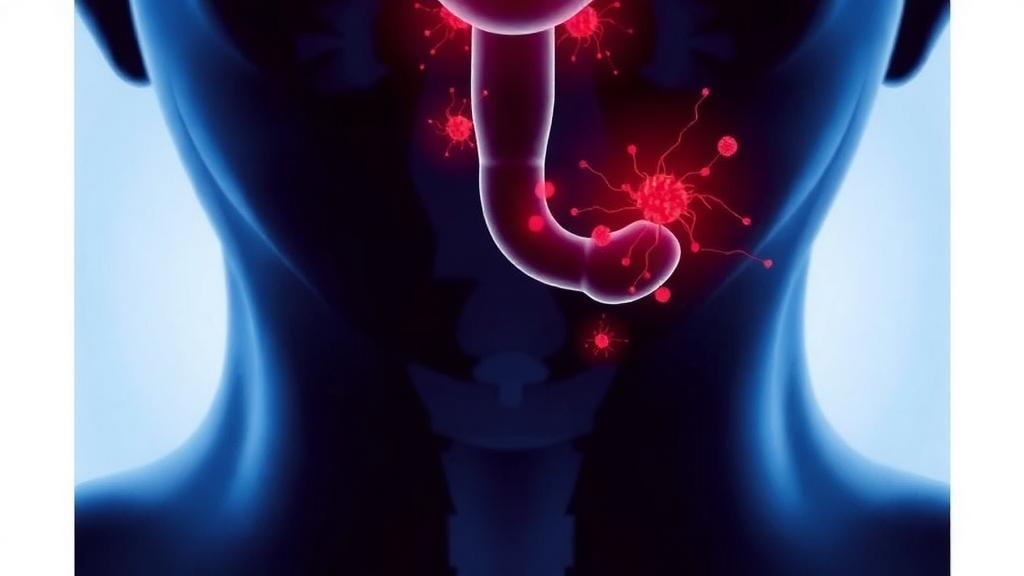
KRT14 and MMP10 have been identified as macrophage-associated candidate biomarkers linked to chemoradiotherapy response in esophageal squamous cell carcinoma (ESCC), according to a computational study published in Discover Oncology. The research, led by Shanglin Dong and colleagues, combined public gene expression datasets with machine learning to prioritize the two genes, which the authors propose as hypotheses-generating markers rather than validated clinical predictors.

ESCC is a highly aggressive malignancy with substantial variability in how patients respond to chemoradiotherapy. Tumor-associated macrophages, immune cells that populate the tumor microenvironment, are thought to influence treatment responses, but the macrophage-related molecular features tied to chemoradiotherapy response in ESCC have remained incompletely characterized. To address this, the team mined Gene Expression Omnibus datasets to find differentially expressed genes between ESCC and normal esophageal tissue, and between patients who responded to chemoradiotherapy and those who did not.

The analysis pipeline layered several approaches. Immune infiltration analysis and weighted gene co-expression network analysis identified gene modules associated with macrophage infiltration, yielding 53 macrophage-associated differentially expressed genes related to treatment response. Three machine learning methods—LASSO regression, SVM-RFE, and Boruta—then narrowed the field to KRT14 and MMP10. A prediction model built on these two genes achieved an area under the curve of 0.834 in distinguishing responders from non-responders within the analyzed data.

Survival analysis added a prognostic dimension: higher KRT14 expression was associated with favorable survival in the datasets examined. Both genes correlated with transcriptional programs related to epithelial plasticity, immune regulation, and metabolism.

The researchers also explored potential therapeutic angles using purely computational tools. Reverse network pharmacology and molecular docking predicted that the compounds β-carotene and deoxycholic acid could interact with MMP10, and molecular dynamics simulations suggested persistent protein-ligand interactions and conformational stability of the resulting complexes. These are predicted interactions, not experimentally demonstrated binding or activity.

The authors emphasize that the findings are computational and generate testable hypotheses about the biological relevance of these biomarkers and the predicted compound-target interactions. Because the study relies on retrospective public datasets and in silico modeling, the biomarker associations and predicted drug interactions require further experimental and clinical validation before any translation into patient care.

Subject of Research: Computational identification of macrophage-associated biomarkers of chemoradiotherapy response in esophageal squamous cell carcinoma

Article Title: Integrative identification of macrophage-associated candidate biomarkers of chemoradiotherapy response in esophageal squamous cell carcinoma

Article References: Dong, S., Li, L., You, S., Ren, Y., & Guo, Y. (2026). Integrative identification of macrophage-associated candidate biomarkers of chemoradiotherapy response in esophageal squamous cell carcinoma. Discover Oncology. https://doi.org/10.1007/s12672-026-06153-z

Image Credits: AI Generated

DOI: 10.1007/s12672-026-06153-z

Keywords: esophageal squamous cell carcinoma, chemoradiotherapy, tumor-associated macrophages, KRT14, MMP10, biomarkers, bioinformatics, machine learning, tumor microenvironment, molecular docking, single-cell RNA-seq, Discover Oncology

News Source: Nathaniel Bowman. (October 29, 2026). Macrophage-linked biomarkers flagged for esophageal cancer chemoradiotherapy response in computational study. Scienmag.
Tags: BioinformaticsbiomarkerschemoradiotherapyDiscover OncologyEsophageal squamous cell carcinomaKRT14Machine LearningMMP10molecular dockingsingle-cell RNA-seqtumor microenvironmenttumor-associated macrophages
Share12Tweet7Share2ShareShareShare1

Related Posts

Iodine Measurements on Photon-Counting CT Track CA 19-9 in Pancreatic Cancer

Iodine Measurements on Photon-Counting CT Track CA 19-9 in Pancreatic Cancer

November 8, 2026
Survey Assesses Syrian Parents' Knowledge of Pediatric Epistaxis First Aid

Survey Assesses Syrian Parents’ Knowledge of Pediatric Epistaxis First Aid

November 8, 2026

Digital Support Program Boosts Positive Views Among Chinese-American Dementia Caregivers

November 8, 2026

Qualitative Study Explores Environmental Influences on Young Rural Women’s Physical Activity

November 8, 2026

POPULAR NEWS

  • Review: Numerical Simulation of Supersonic Fuel Film Cooling

    Review: Numerical Simulation of Supersonic Fuel Film Cooling

    29 shares
    Share 12 Tweet 7
  • Survey Assesses Syrian Parents’ Knowledge of Pediatric Epistaxis First Aid

    29 shares
    Share 12 Tweet 7
  • Ezetimibe and Sericin Combination Reduces Cadmium Neurotoxicity in Rat Study

    29 shares
    Share 12 Tweet 7
  • UKRI Backs Five Research Hubs Developing Health Technologies With £52 Million

    29 shares
    Share 12 Tweet 7

About

We bring you the latest biotechnology news from best research centers and universities around the world. Check our website.

Follow us

Recent News

Iodine Measurements on Photon-Counting CT Track CA 19-9 in Pancreatic Cancer

Review: Numerical Simulation of Supersonic Fuel Film Cooling

Survey Assesses Syrian Parents’ Knowledge of Pediatric Epistaxis First Aid

Subscribe to Blog via Email

Enter your email address to subscribe to this blog and receive notifications of new posts by email.

Join 86 other subscribers
  • Contact Us

Bioengineer.org © Copyright 2023 All Rights Reserved.

Welcome Back!

Login to your account below

Forgotten Password?

Retrieve your password

Please enter your username or email address to reset your password.

Log In
No Result
View All Result
  • Homepages
    • Home Page 1
    • Home Page 2
  • News
  • National
  • Business
  • Health
  • Lifestyle
  • Science

Bioengineer.org © Copyright 2023 All Rights Reserved.