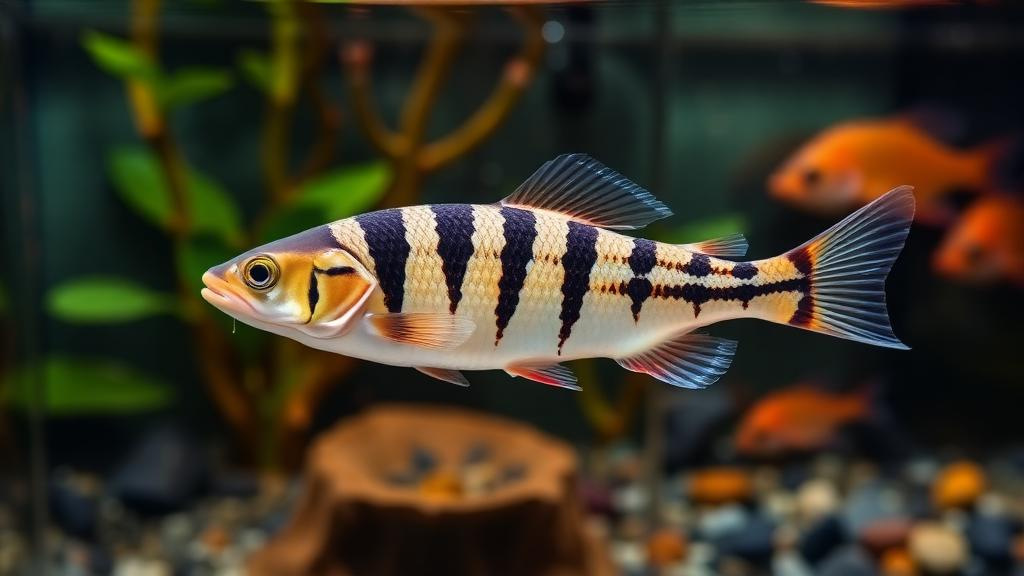
Striped dwarf catfish (Mystus vittatus) reared in a biofloc system grew fastest, survived best, and used feed most efficiently when stocked at the lowest density tested, according to a 90-day experiment conducted at Sylhet Agricultural University in Bangladesh. Among the three biofloc densities examined, 250 fish per cubic meter outperformed both 300 and 350 fish per cubic meter, delivering the highest final weight, weight gain, specific growth rate, and survival rate, along with the lowest feed conversion ratio. The findings, published in Aquaculture Science and Management, offer the first systematic evaluation of stocking density for this small South Asian catfish under biofloc conditions.
The research team, led by Alaka Shah Roy and Nirmal Chandra Roy, set up twelve concrete tanks of 1000 liters each, arranged as four treatments with three replicates. Three treatments ran as biofloc systems at densities of 350, 300, and 250 fish per cubic meter, designated BFT350, BFT300, and BFT250. A fourth treatment served as a control: a clear-water system stocked at 350 fish per cubic meter without any carbon source. Molasses supplied the carbon that fuels the heterotrophic bacteria at the heart of biofloc technology, converting fish waste into microbial biomass that the fish can consume as supplementary food. A commercial probiotic mixture containing Bacillus, Lactobacillus, Nitrosomonas, Nitrobacter, Saccharomyces cerevisiae, and Aspergillus oryzae species was used to prepare the biofloc media, and floc volume was maintained at roughly 30 milliliters per liter using an Imhoff cone.
Juvenile M. vittatus weighing 0.91 plus or minus 0.02 grams and measuring 4.30 plus or minus 0.01 centimeters were stocked in all treatments and fed a commercial pelleted diet containing 28.12 percent crude protein twice daily for 90 days. The experiment ran from April 4 to July 2, 2022. Fish in the biofloc groups received both the basal diet and the microbial flocs, with no water exchange apart from topping up evaporation losses, while control fish were reared with a water-exchange system. Dissolved oxygen was held at 5 to 6 milligrams per liter through continuous aeration, and the photoperiod was fixed at 12 hours of light and 12 hours of darkness.
Water quality remained acceptable across all treatments throughout the trial. Temperatures ranged from 27.97 to 28.57 degrees Celsius, pH from 6.47 to 7.01, dissolved oxygen from 5.47 to 7.27 milligrams per liter, total dissolved solids from 76 to 117 parts per million, electrical conductivity from 89 to 97 microsiemens per centimeter, and total ammonia nitrogen from 0.23 to 0.50 milligrams per liter. Dissolved oxygen was significantly lower in the highest-density biofloc treatment, BFT350, than in the others, while total ammonia nitrogen was highest in the clear-water control and lowest in BFT250. The authors attribute the pattern of falling oxygen and rising ammonia at higher densities to the greater biomass and metabolic waste load, consistent with earlier studies on density effects in intensive culture.
Growth results showed a clear inverse relationship between stocking density and performance within the biofloc treatments. Fish in BFT250 reached a mean final weight of 7.18 plus or minus 0.00 grams and a weight gain of 6.27 plus or minus 0.00 grams, both significantly higher than in the other treatments. Survival in BFT250 was 93.87 plus or minus 0.61 percent and the specific growth rate was 2.30 plus or minus 0.00 percent per day, while BFT350 recorded the lowest values for both, at 2.12 plus or minus 0.02 percent per day and 82.67 plus or minus 1.01 percent. Feed conversion ratio was lowest in BFT250 at 1.30 plus or minus 0.00, indicating the most efficient feed use at the lowest density. The authors suggest that fish at lower density enjoy more space, more feed, and more dissolved oxygen, and face less competition, whereas crowding at high density can trigger aggressive behavior that raises energy expenditure and depresses growth.
The study also compared biofloc culture with the clear-water control. Growth measures including mean weight gain, percentage weight gain, survival, and specific growth rate were significantly higher in the biofloc groups, and feed conversion ratios were notably lower. The authors note that previous polyculture studies of M. vittatus reported feed conversion ratios of 1.21 to 1.38 and specific growth rates of 2.15 to 2.70 percent per day, and they position the biofloc results favorably against those benchmarks. Biofloc, they explain, acts as an additional protein-rich food source and harbors microorganisms that may stimulate digestive enzymes, enhancing feed efficiency; supplementary carbohydrates in the system are also credited with supporting growth, feed utilization, and survival.
Blood analysis at the end of the trial revealed subtle but measurable differences across densities. Red blood cell counts were highest in BFT250 at 3.68 plus or minus 0.05 million per microliter, followed by BFT300, BFT350, and the control, while hemoglobin peaked in BFT250 at 12.89 plus or minus 0.08 grams per deciliter. Hematocrit was significantly elevated in BFT300 and BFT250, and BFT350 showed hematocrit levels significantly lower than the control. White blood cell counts did not differ significantly among treatments. The authors interpret the decline in red cell indices with increasing density as a possible consequence of elevated stress and red blood cell degradation under high-density, low-flow conditions, while cautioning that the overall effect of stocking density on blood parameters was slight and statistically nonsignificant for some measures.
Proximate composition of the fish shifted with density as well. Moisture content was highest in BFT250 at 74.89 plus or minus 0.01 percent, significantly different from the control’s 74.40 plus or minus 0.04 percent, and protein levels rose as stocking density fell. Lipid content, by contrast, peaked in BFT350 at 3.94 plus or minus 0.03 percent, followed by BFT300, BFT250, and the control, a pattern the authors describe as showing no consistent density-dependent trend. Ash content did not differ statistically among treatments. Histological examination added a further layer: liver structure appeared normal in all treatments, with clear hepatocytes, nuclei, and lipid vacuoles and no pathological alterations, suggesting the biofloc environment preserved hepatic health regardless of density.
The intestine told a more nuanced story. Midgut histology appeared normal overall, but villus length, width, intestinal wall thickness, and crypt depth varied among treatments. Villus length decreased gradually as stocking density increased, reaching its lowest value in BFT350, which was significantly lower than in the control group. Villus width was greatest in BFT300, followed by BFT350, the control, and BFT250, but these width differences were not statistically significant. The authors suggest that longer villi at lower densities may indicate improved absorptive capacity, while noting that the nonsignificant width differences imply the changes may not stem from density-related stress. They conclude that, of the densities tested, 250 fish per cubic meter optimized growth, feed efficiency, and physiological health of M. vittatus in biofloc systems, and they call for future work testing a broader range of densities and incorporating economic analysis to establish cost-effectiveness and identify the true optimum for this culturally important small indigenous species.
Subject of Research: Effects of stocking density on growth, body composition, blood parameters, and tissue structure of striped dwarf catfish reared in biofloc systems
Article Title: Effect of stocking density on growth, proximate composition, hematology, and histology of the striped dwarf catfish (Mystus vittatus) in a biofloc system
Article References: Roy, A. S., Roy, N. R., Akther, K. R., Rahman, Z., Nasren, S., Hossain, M. A., & Roy, N. C. (2026). Effect of stocking density on growth, proximate composition, hematology, and histology of the striped dwarf catfish (Mystus vittatus) in a biofloc system. Aquaculture Science and Management, 3(1), Article 9. https://doi.org/10.1186/s44365-026-00037-7
Image Credits: AI Generated
DOI: 10.1186/s44365-026-00037-7
Keywords: biofloc technology, striped dwarf catfish, Mystus vittatus, stocking density, aquaculture, growth performance, hematology, histology, proximate composition, water quality, small indigenous species, feed conversion ratio
News Source: Alan Morgan. (October 29, 2026). Lower stocking density boosts striped dwarf catfish growth in biofloc systems. Scienmag.