A single letter change in a human gene may help determine how early and how aggressively Parkinson’s disease takes hold. In a study published in Cellular and Molecular Life Sciences, researchers in China report that a human-specific variant of the GLUD2 gene, known as T1492G, intensifies the hallmark pathology of Parkinson’s disease in mice and that the damage travels along a previously underappreciated communication line between two types of glial cells: astrocytes and microglia. The finding, which centers on the complement protein C3 and its receptor C3aR, points to a molecular relay that could be intercepted therapeutically, potentially slowing the neurodegeneration that robs patients of movement and, eventually, independence.
Parkinson’s disease is defined by two intertwined processes: the progressive loss of dopaminergic neurons in the substantia nigra pars compacta, a small but critical nucleus in the midbrain, and the accumulation of misfolded α-synuclein protein into aggregates that spread through vulnerable circuits. Most cases are sporadic, but genetic variants influence age of onset and disease trajectory. The GLUD2 gene encodes glutamate dehydrogenase 2, an enzyme involved in glutamate metabolism, and it is found only in humans and other primates. Earlier association work linked the T1492G variant to an earlier onset of Parkinson’s disease, but the mechanism connecting this metabolic gene to neurodegeneration remained obscure. The new study set out to close that gap by engineering the variant into a well-established mouse model of α-synuclein pathology.
The team, led by Xingting Huang, Zhongqiang Su, and Shaohua Ding, with corresponding authors Wenlong Zhang, Pingyi Xu, and Xinling Yang, used A53T α-synuclein transgenic mice, which carry a mutation first identified in families with inherited Parkinson’s disease and produce pathological α-synuclein aggregation. Into these animals, the researchers introduced astrocyte-specific expression of GLUD2 T1492G using adeno-associated viral vectors, ensuring that the variant was active in the star-shaped glial cells that normally support neurons and regulate brain inflammation. Wild-type mice receiving the same variant served as a control, and supplementary data showed that GLUD2 T1492G overexpression alone did not induce overt neuroinflammation or Parkinson-like pathology in otherwise healthy animals, indicating that the variant acts as a modifier of existing disease rather than a standalone trigger.
The results were striking. Mice carrying both the A53T α-synuclein transgene and the GLUD2 T1492G variant showed exacerbated α-synuclein pathology, including increased levels of phosphorylated α-synuclein, the pathological form of the protein. They also suffered greater loss of dopaminergic neurons in the substantia nigra and more severe motor impairment, measured through behavioral testing such as the open field test. In other words, the human variant did not merely coexist with the disease process; it actively amplified it, accelerating the degeneration of the very neurons whose death produces the tremor, rigidity, and slowness of movement that define the illness in patients.
To understand how a metabolic enzyme variant could produce such dramatic inflammatory and degenerative effects, the researchers turned to unbiased molecular profiling. Transcriptomic analysis of the affected brain tissue identified complement-related inflammatory signaling as one of the major pathways altered by GLUD2 T1492G, with enrichment of genes belonging to the complement and coagulation cascades. Complement proteins form an ancient arm of the immune system best known for tagging pathogens and damaged cells for destruction, but in the brain they have emerged as powerful mediators of glial crosstalk and, when chronically activated, of neuronal injury. Complementary metabolomic profiling revealed disrupted metabolic homeostasis, consistent with the variant’s known effects on glutamate handling and suggesting that metabolic and inflammatory disturbances reinforce one another.
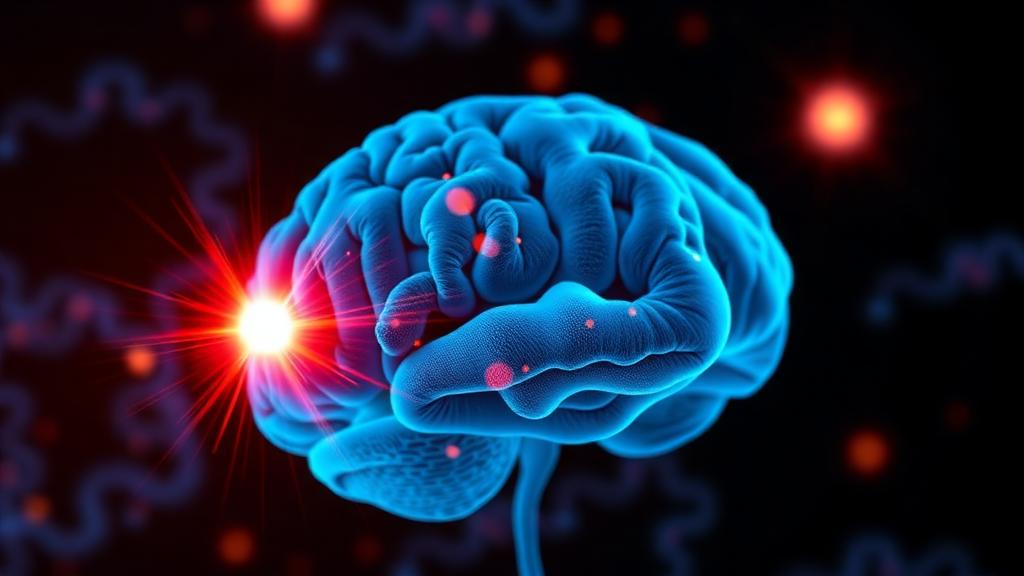
The mechanistic core of the study lies in a signaling axis between astrocytes and microglia, the resident immune cells of the brain. The researchers found that GLUD2 T1492G enhanced the induction of complement C3 in astrocytes. C3 released from astrocytes then promoted inflammatory activation in microglia through the C3a receptor, or C3aR, which signals via the NF-κB pathway, a master switch of inflammation. Activated microglia, in turn, amplified the overall neuroinflammatory response in the substantia nigra. Immunofluorescence analysis supported this cellular division of labor: C3aR was found predominantly on microglia rather than on the dopaminergic neurons themselves, meaning the neurons were likely being damaged by the inflammatory milieu rather than directly responding to C3a signaling.
Crucially, the team did not rely on correlation alone. In conditioned-medium transfer experiments, culture fluid from astrocytes expressing the GLUD2 T1492G variant was applied to microglia, and the microglia responded with the inflammatory activation predicted by the C3–C3aR model. The researchers then intervened at both ends of the axis. Astrocyte-specific knockdown of C3 reduced the pathological cascade, and pharmacological inhibition of C3aR likewise blunted the microglial inflammatory response and eased disease-related outcomes. Together, these gain-of-function and loss-of-function approaches provide functional evidence that the astrocyte–microglia C3–C3aR signaling axis is not merely a bystander in GLUD2 T1492G-associated pathology but a driver of it.
The significance of this work extends beyond one genetic variant. Neuroinflammation has long been recognized in Parkinson’s disease brains, with activated microglia and reactive astrocytes clustering around degenerating neurons, but the field has struggled to determine whether glial activation is a cause or a consequence of neurodegeneration. By showing that a human risk variant acting specifically in astrocytes can worsen disease through a defined glial signaling pathway, the study strengthens the causal argument and supplies concrete molecular targets. It also illustrates a broader principle emerging in neurodegeneration research: glial cells are not passive support staff but active participants whose intercellular conversations can determine the pace of neuronal death.
Therapeutically, the findings suggest several points of intervention. Blocking C3aR with drugs, or reducing C3 production in astrocytes, could in principle dampen the inflammatory amplification loop that the GLUD2 T1492G variant ignites. Complement-targeted therapies already exist for other conditions, which may ease the path toward testing such approaches in Parkinson’s disease, although translating findings from A53T mice to the heterogeneous human disease will require considerable further work. The study also raises questions about why this human-specific variant persists in the population and how GLUD2’s metabolic functions in glutamate metabolism connect to complement induction, questions the metabolomic data hint at but do not fully resolve.
For now, the study offers Parkinson’s researchers something they rarely get: a complete mechanistic chain linking a human genetic risk factor, a specific cell type, an intercellular signaling molecule, and a measurable worsening of disease in a living animal model. If the astrocyte–microglia C3–C3aR axis proves equally important in human patients, quieting this glial conversation could become a strategy for slowing a disease that currently has no treatment capable of halting its progression. The work was supported by the National Natural Science Foundation of China and several regional funding programs, and the open-access article is available with full supplementary data documenting the experimental validation of the antibody specificity, gene expression, and cellular localization findings that underpin the model.
Subject of Research: The role of a human GLUD2 variant in exacerbating Parkinson's disease pathology through astrocyte–microglia complement C3–C3aR signaling
Article Title: A GLUD2 variant aggravates Parkinson’s disease pathology in A53T α-synuclein mice via the astrocyte–microglia C3‒C3aR pathway
Article References: Huang, X., Su, Z., Ding, S., Wang, X., Shao, Y., Han, T., Liu, T., Yong, Y., Zhang, W., Xu, P., & Yang, X. (2026). A GLUD2 variant aggravates Parkinson’s disease pathology in A53T α-synuclein mice via the astrocyte–microglia C3‒C3aR pathway. Cellular and Molecular Life Sciences. https://doi.org/10.1007/s00018-026-06399-4
Image Credits: AI Generated
DOI: 10.1007/s00018-026-06399-4
Keywords: Parkinson's disease, GLUD2, alpha-synuclein, astrocytes, microglia, complement C3, C3aR, neuroinflammation, dopaminergic neurons, substantia nigra, A53T mice, neurodegeneration
News Source: Cassandra Pierce. (October 5, 2026). Human GLUD2 Gene Variant Worsens Parkinson’s Disease by Igniting an Astrocyte–Microglia Complement Cascade. Scienmag.