• HOME
  • NEWS
  • EXPLORE
    • CAREER
      • Companies
      • Jobs
    • EVENTS
    • iGEM
      • News
      • Team
    • PHOTOS
    • VIDEO
    • WIKI
  • BLOG
  • COMMUNITY
    • FACEBOOK
    • INSTAGRAM
    • TWITTER
Monday, May 11, 2026
BIOENGINEER.ORG
No Result
View All Result
  • Login
  • HOME
  • NEWS
  • EXPLORE
    • CAREER
      • Companies
      • Jobs
        • Lecturer
        • PhD Studentship
        • Postdoc
        • Research Assistant
    • EVENTS
    • iGEM
      • News
      • Team
    • PHOTOS
    • VIDEO
    • WIKI
  • BLOG
  • COMMUNITY
    • FACEBOOK
    • INSTAGRAM
    • TWITTER
  • HOME
  • NEWS
  • EXPLORE
    • CAREER
      • Companies
      • Jobs
        • Lecturer
        • PhD Studentship
        • Postdoc
        • Research Assistant
    • EVENTS
    • iGEM
      • News
      • Team
    • PHOTOS
    • VIDEO
    • WIKI
  • BLOG
  • COMMUNITY
    • FACEBOOK
    • INSTAGRAM
    • TWITTER
No Result
View All Result
Bioengineer.org
No Result
View All Result
Home NEWS Science News Chemistry

High- performance 3D printer for titanium structures and In situ synthesis of alloys

Bioengineer by Bioengineer
February 26, 2021
in Chemistry
Reading Time: 2 mins read
0
IMAGE
Share on FacebookShare on TwitterShare on LinkedinShare on RedditShare on Telegram

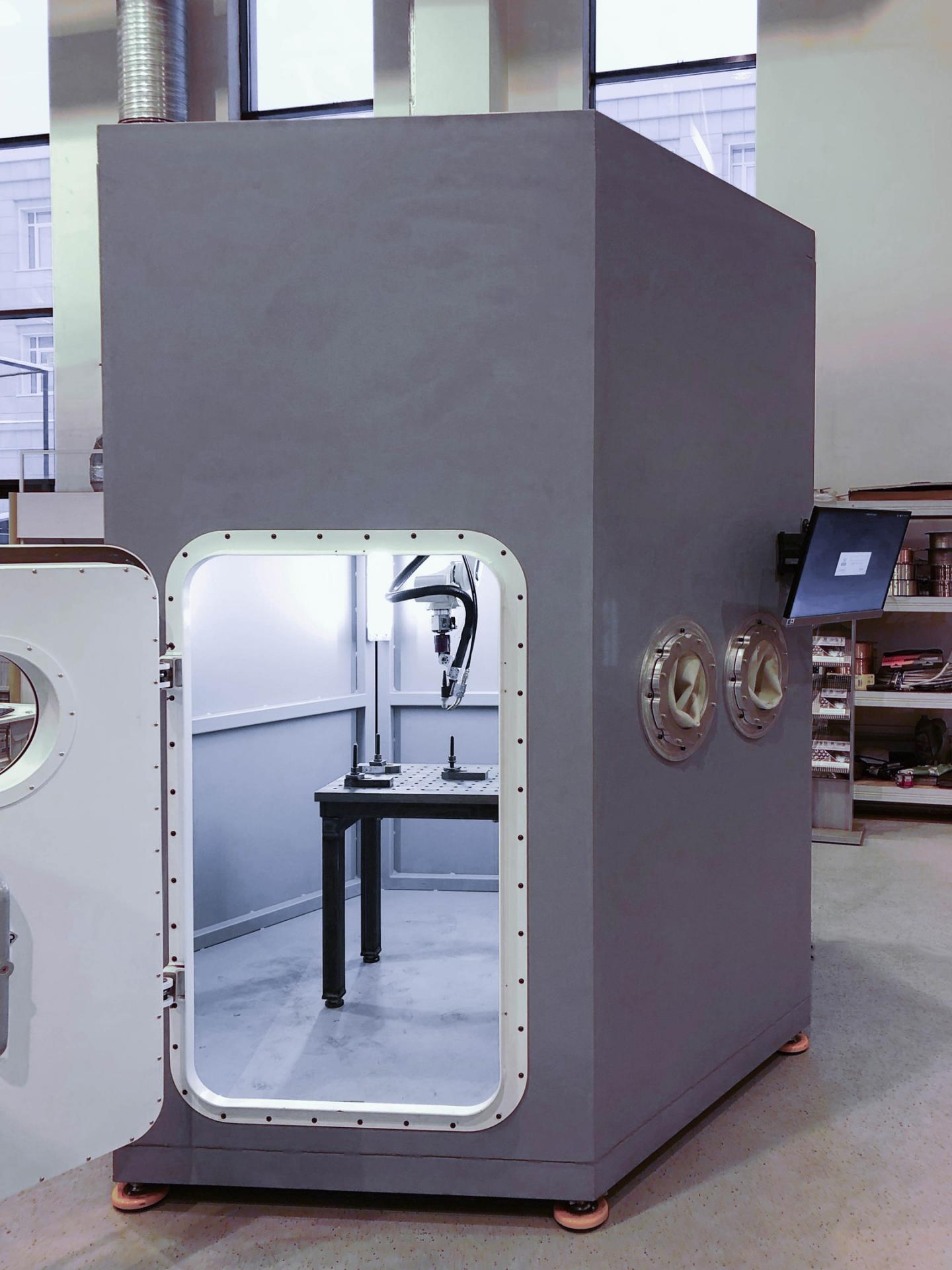
3D printer for high-speed printing of titanium structures
IMAGE

Credit: Peter the Great St.Petersburg Polytechnic University

Researchers from Peter the Great St.Petersburg Polytechnic University (SPbPU) developed and manufactured a unique 3D printer named the “Prism”. The 3D-printer was manufactured and firstly demonstrated on January 29, 2021. The main purpose of the developed printer is to print structures made of titanium, an expensive material, but essential for various industries due to its strength properties and low specific weight. The printing system is located in a chamber with an inert atmosphere. This printer may also be used to print products made of steel, aluminum, magnesium, nickel alloys. The researchers used the wire as a raw material to ensures the high productivity of the process. The layer-by-layer deposition is performed in the 3D printer, in which the wire is melted due to the burning of an electric arc. In developed printer two wires can be fed simultaneously to increase productivity and to synthesize new alloy or gradient structures from two dissimilar wires.

Concerning the numbers, German and Spanish companies are limited in wire feed rates at the level of 6 m / min, the printer developed at the Polytech University prints at the feed rate of 12 m / min.

“Our printer “Prism” has higher performance characteristics compared to the analogs. Due to the use of chamber with an inert atmosphere, we can print any metal, even very active like titanium. Also, the technology of printing itself were improved by the scientific group of SPbPU by developing a double wire feeding system and special shape of a current and voltage waveforms that used for electric arc burning.

In fact, it is allowed to use two dissimilar materials during 3D-printing. Using two different wires helps to create innovative materials with gradient transitions in the structure or, for example, intermetallic compounds that are rarely used now due to the complexity of product manufacturing. Thus we can print a 4 kg titanium product within one hour. Our printer, due to the use of robotic arm, can be adapted for the needs of a specific enterprise, in particular, to increase or, on the contrary, to reduce its printing area,” notes Oleg Panchenko, Head of the Laboratory of Light Materials and Structures SPbPU.

Scientists have already obtained several patents for the solutions used in the printer.

###

Media Contact
Raisa Bestugina
[email protected]

Tags: Atomic/Molecular/Particle PhysicsChemistry/Physics/Materials SciencesElectrical Engineering/ElectronicsElectromagneticsIndustrial Engineering/ChemistryMaterialsNanotechnology/MicromachinesResearch/DevelopmentRobotry/Artificial IntelligenceSoftware Engineering
Share12Tweet8Share2ShareShareShare2

Related Posts

Humans and Zebra Finches Share Similar Speech Learning Techniques #ASA190 — Chemistry

Humans and Zebra Finches Share Similar Speech Learning Techniques #ASA190

May 11, 2026
Unveiling Dark Matter Through Molecular Insights — Chemistry

Unveiling Dark Matter Through Molecular Insights

May 11, 2026

From Touch to Sight: A Bioinspired Multisensory Framework Endows Robots with Human-Like Perception

May 11, 2026

Announcing the 2026 Carbon Future Young Investigator Award Winners

May 11, 2026
Please login to join discussion

POPULAR NEWS

  • Research Indicates Potential Connection Between Prenatal Medication Exposure and Elevated Autism Risk

    841 shares
    Share 336 Tweet 210
  • New Study Reveals Plants Can Detect the Sound of Rain

    728 shares
    Share 290 Tweet 182
  • Salmonella Haem Blocks Macrophages, Boosts Infection

    62 shares
    Share 25 Tweet 16
  • Breastmilk Balances E. coli and Beneficial Bacteria in Infant Gut Microbiomes

    57 shares
    Share 23 Tweet 14

About

We bring you the latest biotechnology news from best research centers and universities around the world. Check our website.

Follow us

Recent News

Humans and Zebra Finches Share Similar Speech Learning Techniques #ASA190

New Study Uncovers How Fungal Parasites Attack Strawberries and Raspberries

City of Hope Researchers to Present Groundbreaking Immunotherapy and Precision Medicine Advances Across Multiple Cancer Types at ASCO 2026

Subscribe to Blog via Email

Enter your email address to subscribe to this blog and receive notifications of new posts by email.

Join 82 other subscribers
  • Contact Us

Bioengineer.org © Copyright 2023 All Rights Reserved.

Welcome Back!

Login to your account below

Forgotten Password?

Retrieve your password

Please enter your username or email address to reset your password.

Log In
No Result
View All Result
  • Homepages
    • Home Page 1
    • Home Page 2
  • News
  • National
  • Business
  • Health
  • Lifestyle
  • Science

Bioengineer.org © Copyright 2023 All Rights Reserved.