In the intricate dance between plants and their pathogens, the narrative often centers on invasive diseases hitching rides across continents—plunging naïve flora into battles against foreign foes. Yet, recent groundbreaking research upends this traditional storyline, revealing a more nuanced dynamic where native pathogens leap from longtime indigenous hosts onto newly introduced crops. This revelation, unearthed through meticulous genetic sleuthing, holds profound implications for global agriculture and the future management of plant diseases.
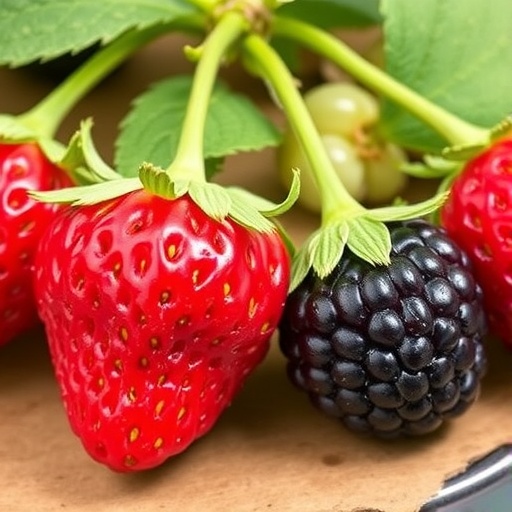
Strawberries and raspberries, beloved worldwide for their sweetness and nutritional value, have long been victims of the insidious powdery mildew disease. This ailment, distinguished by a white, dusty fungal coating, undermines the plants’ photosynthetic machinery and siphons off vital nutrients, leading to weakened crops and reduced yields. However, scientists have now unveiled that the powdery mildew fungi infesting these berry crops on different continents are far from identical invaders. Instead, they reveal a tale of evolutionary divergence and host jumping, challenging entrenched ideas about pathogen spread and adaptation.
Through comprehensive genetic analysis of both contemporary and century-old fungal samples collected across North America, Europe, and Asia, the researchers uncovered two distinct species behind the powdery mildew outbreaks in strawberries. North American populations are plagued by Podosphaera shepherdiae, while Podosphaera fragariae wreaks havoc in European and Asian fields. These closely related fungi trace their divergence back over five million years, suggesting a deep evolutionary split aligned with the geographic separation of their host plants.
This ancient separation undermines the prevailing assumption that a single pathogen species spread globally alongside its favored crop. Instead, the data support a scenario where the powdery mildew fungi evolved in tandem with native Rosaceous plants—the family that includes roses, strawberries, raspberries, and others—and only jumped hosts when these berries were introduced into new ecosystems harboring related fungal populations. Such host jumps represent a pivotal mechanism in the emergence of new plant diseases, providing pathogens with novel ecological niches and expanding their genetic repertoire.
Intriguingly, microscopic examination divulges the strategic complexity of these fungi’s survival and propagation mechanisms. The round overwintering structures observed on infected plants release sac-like bodies packed with spores, which are ensnared by delicate filamentous threads. These threads anchor the spores securely onto host surfaces, enhancing infection efficiency and ensuring the continuation of fungal life cycles across seasons. The varied coloration seen under the microscope corresponds to developmental stages, reflecting the fungi’s dynamic interaction with their environment.
The implications stretch beyond academic curiosity. Understanding that native pathogens can rapidly adapt to introduced crops calls for a reassessment of biosecurity protocols and breeding programs. As Michael Bradshaw, assistant professor of plant pathology and lead author, emphasized, the assumption that pathogens originate from a singular global source misses the intricate ecological interplay at work. “This co-evolutionary history means our introduced crops engage in an ongoing molecular arms race with local fungi, shaping disease outbreaks in unpredictable ways,” he notes.
This revelation also poses new challenges for agriculture in an era marked by globalization. While currently, the North American and European powdery mildew species remain distinct and geographically confined, the increasing movement of plant materials raises the specter of these pathogens intermingling. Such contact could catalyze genetic recombination, potentially giving rise to more virulent or adaptable fungal strains. The dynamics of co-infection—whether competitive, synergistic, or neutral—remain an open field for urgent research.
Adding layers to this complexity, related fungi afflicting other economically crucial crops, such as wheat and wine grapes, exhibit similar patterns worth investigating. The powdery mildew species targeting these hosts may likewise harbor hidden histories of host jumps and ancient divergence, revealing generalizable principles governing plant-pathogen interactions on a global scale. Bradshaw’s team aims to extend these molecular clock techniques and genomic analyses to decipher the evolution and epidemiology of these pathogens further.
In sum, this research not only shines a spotlight on the evolutionary strategies wielded by fungal pathogens but also reframes our understanding of disease emergence in crop systems. It underscores the importance of considering native ecological contexts and evolutionary legacies when developing disease management strategies and breeding resistant cultivars. As humanity continues to rely heavily on global crop production, such insights become indispensable in safeguarding food security.
The study, published in the prestigious Proceedings of the National Academy of Sciences, represents a collaborative triumph powered by cross-disciplinary expertise and advanced molecular tools. Funding support from the National Science Foundation and the U.S. Department of Agriculture underscores the significance of this work in addressing emerging plant disease challenges. The research not only enriches scientific knowledge but also arms growers, policymakers, and scientists alike with critical information to anticipate and mitigate future pathogen threats.
As the landscape of global agriculture evolves, integrating the lessons from this study into surveillance, breeding, and quarantine efforts will be crucial. Recognizing that pathogen evolution does not conform to simple narratives empowers us to develop resilient cropping systems capable of withstanding the dynamic pressures of native and introduced diseases alike. This paradigm shift marks a milestone in plant pathology, inviting a reexamination of how we perceive and combat the ever-changing world of rural pathogens.
Subject of Research: Not applicable
Article Title: Global Crop Introduction Drives Host Jumps, Turning Native Pathogens into Emerging Diseases
News Publication Date: 8-May-2026
Web References: https://www.pnas.org/doi/10.1073/pnas.2536984123
Image Credits: Andrew Paul
Keywords: powdery mildew, fungal pathogens, host jumps, strawberries, raspberries, plant disease emergence, Podosphaera shepherdiae, Podosphaera fragariae, crop introduction, pathogen evolution, molecular clock, plant pathology
Tags: agricultural biosecurity and native pathogenscross-continental fungal pathogen studydisease management in berry farmingevolutionary divergence of fungifungal disease adaptation in plantsfungal parasites on berriesgenetic analysis of plant pathogenshost jumping in fungal diseasesnative pathogens infecting cropsPodosphaera species in agriculturepowdery mildew disease in strawberriespowdery mildew impact on crop yield