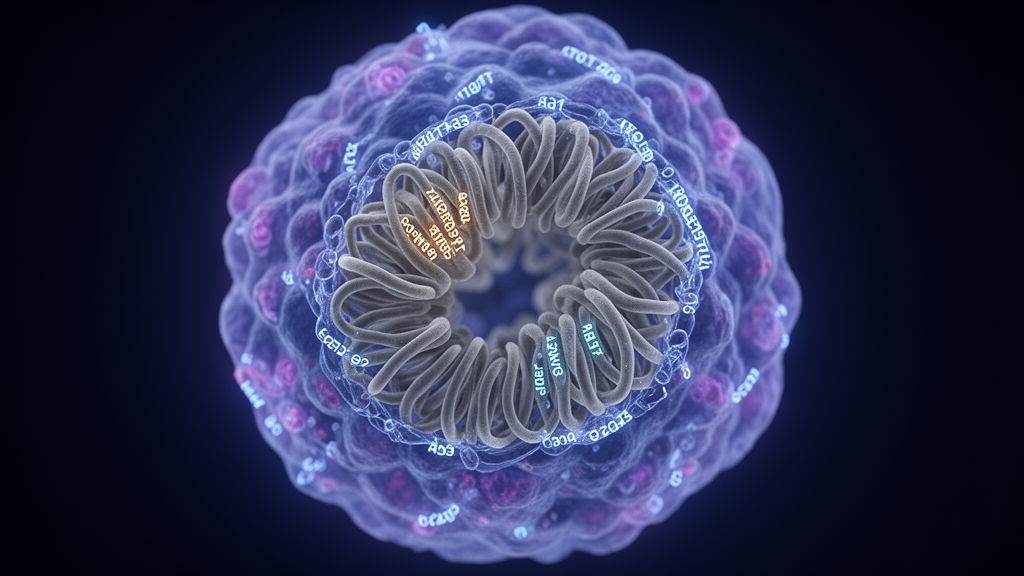
Triple-negative breast cancer remains one of the most feared diagnoses in oncology. Lacking the three molecular targets—estrogen receptor, progesterone receptor, and HER2—that anchor most modern breast cancer therapies, it accounts for roughly 10 to 15 percent of all breast cancers yet claims a disproportionate share of lives, with rapid growth, high metastatic potential, and early recurrence within three to five years of treatment. Now, a study published in Experimental & Molecular Medicine by Ji Hoon Oh of Keimyung University, Da Som Jeong of Yonsei University, and Clara Yuri Kim of the University of Pennsylvania has uncovered a previously hidden mechanism behind that aggression: a three-dimensional folding defect in the genome that silences two developmental genes acting as natural brakes on tumor progression.
The genes in question, HOXD1 and HOXD8, belong to the homeobox family, an ancient set of 39 transcription factors arranged in four clusters—HOXA, HOXB, HOXC, and HOXD—that orchestrate body patterning along the head-to-tail axis during embryonic development. In vertebrates, these genes are expressed in a strictly ordered sequence known as collinearity, and their spatiotemporal control depends heavily on the physical architecture of the chromosome. In recent decades, scientists have realized that the same developmental programs can be hijacked or corrupted in cancer, with individual HOX genes acting as oncogenes in some contexts and tumor suppressors in others. What remained unclear was whether subtype-specific regulatory patterns within the HOXD cluster—particularly those governed by chromatin structure—might explain why some breast cancers behave so much more viciously than others.
To find out, the team combined large-scale computational mining of patient datasets from The Cancer Genome Atlas with laboratory experiments in breast cancer cell lines and validation in mouse models. Scanning all HOXD family members across the four major molecular subtypes of breast cancer, they found that HOXD1 and HOXD8 stood out with the most consistent, subtype-specific downregulation in triple-negative tumors, while neighboring cluster genes such as HOXD3, HOXD4, HOXD9, HOXD10, HOXD11, HOXD12, and HOXD13 showed no statistically significant subtype-specific patterns. Survival analysis reinforced the clinical weight of the finding: patients with low expression of either gene had significantly worse overall survival, and the combination of low expression of both genes sharpened the poor-prognosis curve even further.
The correlation extended into the laboratory. Quantitative PCR and western blotting confirmed that triple-negative cell lines such as MDA-MB-231 expressed far less HOXD1 and HOXD8 protein than non-triple-negative lines like MCF7 and BT474. When the researchers silenced the two genes with RNA interference in the non-aggressive cells, the cells became markedly more invasive, more migratory, and more proliferative. The reverse experiment proved equally telling: forcing HOXD1 or HOXD8 expression in triple-negative cells suppressed invasion, migration, and proliferation. Together, these gain- and loss-of-function results painted HOXD1 and HOXD8 as tumor suppressors whose loss licenses the aggressive phenotype that defines triple-negative disease.
But why would two genes that are not physically adjacent within the cluster—and that do not regulate each other’s expression directly—switch off in concert? The answer, the researchers discovered, lies in the three-dimensional organization of the genome. The HOXD cluster sits near the boundary of a subtopologically associating domain, a discrete chromatin neighborhood, and publicly available CTCF ChIA–PET data revealed partitioned interaction patterns extending in two directions across the locus. Circularized chromosome conformation capture showed that HOXD1 and HOXD8 physically contact each other in the folded chromosome, forming a loop that skips over the intervening genes. Chromosome conformation capture assays then demonstrated that these HOXD1–HOXD8 interactions were far more prominent in MCF7 cells, where both genes are active, than in MDA-MB-231 cells, where both are silenced.
The architect of that loop is CTCF, the CCCTC-binding factor, a highly conserved protein often described as the master weaver of the genome. CTCF can act as an activator, repressor, or insulator depending on context, and its binding to DNA is famously sensitive to methylation of CpG dinucleotides within its recognition sequence. ChIP-seq data showed two CTCF-binding sites near HOXD1 and four near HOXD8 in MCF7 cells, with visibly reduced occupancy at the same sites in triple-negative MDA-MB-231 cells. Critically, total CTCF levels were identical between subtypes—the difference was not how much CTCF a cell makes, but whether it can gain access to its landing pads at the HOXD locus.
The methylation connection soon came into focus. Chromatin immunoprecipitation revealed that DNMT3b, one of the enzymes that writes DNA methylation, accumulated more heavily at the HOXD1 and HOXD8 regions in triple-negative cells than in non-triple-negative cells. Bisulfite-based analyses confirmed the consequence: MCF7 cells carried a hypomethylated, open chromatin state at the HOXD1 and HOXD8 promoters, whereas MDA-MB-231 cells were distinctly hypermethylated. When the researchers treated triple-negative cells with 5-Aza-2′-deoxycytidine, a demethylating agent, CTCF binding was restored at the HOXD1 and HOXD8 sites, chromatin interaction patterns within the cluster partially reorganized, and expression of both genes climbed back up. Methylation, in other words, appears to be the upstream switch that evicts CTCF, collapses the regulatory loop, and silences the tumor-suppressive pair.
The team then tested causality directly. Using CRISPR–Cas9, they deleted specific CTCF-binding sites near HOXD1 and HOXD8 in MCF7 cells. The edited cells lost CTCF enrichment at the targeted regions, showed reduced HOXD1 and HOXD8 expression, and became more invasive. In mouse xenografts, tumors derived from the deletion clones progressed faster, while re-expression of HOXD1 and HOXD8 attenuated the aggressive in vivo phenotype. Molecular profiling of the tumors showed that deletion clones carried increased expression of proliferation- and invasion-associated genes, including epithelial-to-mesenchymal transition markers, and that forced HOXD1/HOXD8 expression largely reversed these signatures. The loop, the data suggest, is not merely correlated with tumor behavior—it helps drive it.
Finally, the researchers traced the downstream pathway. Correlation analysis across patient and cell line datasets identified a set of co-dysregulated genes, narrowed to six that distinguished triple-negative tumors, including ERGIC1, TFF3, and FOXA1. FOXA1 emerged as the most responsive target: it was strongly upregulated when HOXD1 or HOXD8 were overexpressed in triple-negative cells, downregulated when the two genes were depleted in non-triple-negative cells, and restored in xenografts where HOXD1 and HOXD8 were re-introduced. Bioinformatic scanning found nine HOX consensus motifs in the FOXA1 promoter, and luciferase reporter assays showed that HOXD1 or HOXD8 overexpression activated a FOXA1 promoter construct spanning positions −2000 to −1, but not a shorter −1020 to −1 construct, pinpointing the regulatory elements to a discrete upstream region. Low FOXA1 expression, like low HOXD1/HOXD8, correlated with poor overall survival in patients.
The study is, according to its authors, the first to identify coordinated, subtype-specific downregulation of HOXD1 and HOXD8 in triple-negative breast cancer linked to altered CTCF occupancy and DNA methylation at the HOXD locus, defining a suppressed regulatory axis—CTCF, HOXD1, HOXD8, FOXA1—that parallels the well-characterized chromatin-based dysregulation of HOXA9 in acute myeloid leukemia. The implications are twofold. Scientifically, the work demonstrates how spatial genome organization can selectively silence specific genes within a cluster while sparing their neighbors, likely through CTCF-mediated loops that connect distant regulatory elements. Clinically, it suggests that the HOXD1/HOXD8 regulatory axis, and the epigenetic machinery that controls it, could serve as both biomarkers of aggressive disease and targets for intervention—raising the tantalizing possibility that demethylating strategies capable of restoring CTCF binding and re-folding the HOXD locus might one day help rein in one of the deadliest forms of breast cancer.
Subject of Research: CTCF-mediated chromatin architecture and epigenetic silencing of HOXD1 and HOXD8 in triple-negative breast cancer progression
Article Title: CTCF-associated chromatin changes between HOXD1 and HOXD8 contribute to TNBC progression
Article References: Oh, J. H., Jeong, D. S., & Kim, C. Y. (2026). CTCF-associated chromatin changes between HOXD1 and HOXD8 contribute to TNBC progression. Experimental & Molecular Medicine. https://doi.org/10.1038/s12276-026-01861-6
Image Credits: AI Generated
DOI: 10.1038/s12276-026-01861-6
Keywords: triple-negative breast cancer, HOXD1, HOXD8, CTCF, chromatin architecture, DNA methylation, FOXA1, tumor suppressor genes, HOX genes, 3D genome, epigenetics, CRISPR
News Source: Juliet Wilcox. (October 9, 2026). Hidden Genome Folds Silence Two Tumor-Suppressing Genes in Aggressive Breast Cancer. Scienmag.