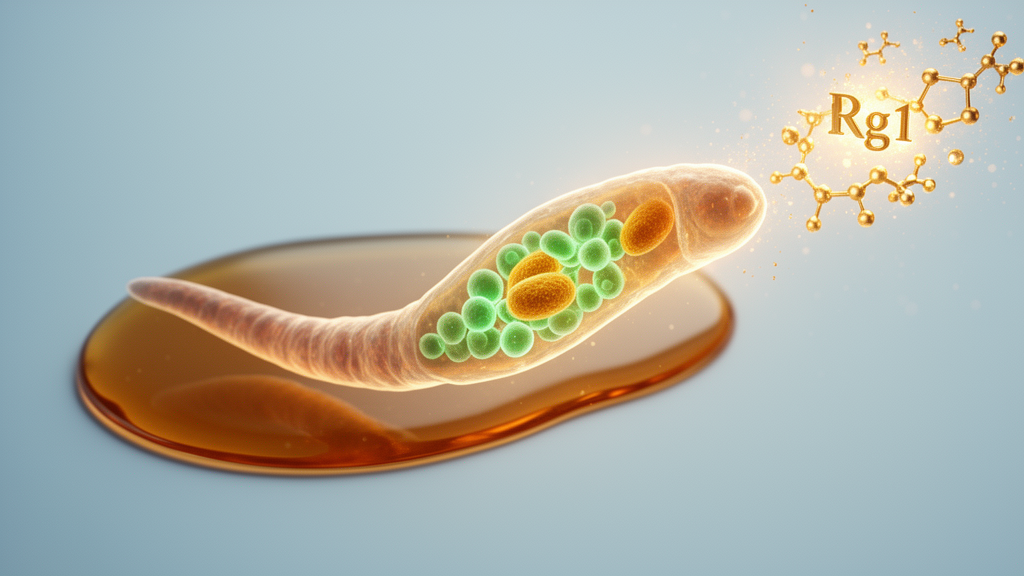
A compound extracted from Panax ginseng appears to slow aging in microscopic worms by switching on a cellular cleanup process in their mitochondria, according to a study published in the journal Biogerontology on 25 October 2026.
The compound, ginsenoside Rg1, is described by the researchers as the main active component of ginseng. Previous work had suggested it could improve mitochondrial function and delay cell aging by regulating chaperone-mediated mitophagy, the process by which cells remove damaged mitochondria. How the compound might act in a whole organism, however, remained unclear.
When the worms were treated with Rg1, the researchers observed that cells stayed alive longer and muscle shape was better maintained in aged animals. The treated worms also lived longer than untreated animals.
Further experiments indicated that Rg1 improved mitochondrial function by activating mitophagy. The worms given the compound were also better able to resist oxidative stress, a form of cellular damage closely linked to aging.
To identify the molecular mechanism, the researchers combined RNA sequencing with bioinformatics analysis. This pointed to daf-16, a transcription factor, as a key target of Rg1 in the worms.
The team then tested the finding using daf-16 knockout strains, worms in which the gene had been disabled. Those experiments confirmed that Rg1 produced its anti-aging effects through the daf-16 pathway. Both the activation of mitophagy and the improvement in antioxidant capacity were mediated by daf-16, meaning the compound’s benefits depended on that transcription factor being present.
The authors conclude that Rg1 slows aging in C. elegans through a daf-16-mediated mitophagy pathway, and they present the work as experimental support for studying and using natural products in anti-aging research.
It is important to note the scope of the findings. The study was conducted entirely in C. elegans, a model organism, and the results reported here come from the article’s abstract. The effects described are observations in worms, not demonstrations of clinical benefit in humans, and no human trials are reported in the available material. Whether ginsenoside Rg1 would produce similar anti-aging effects in people remains an open question that would require separate research.
Subject of Research: How ginsenoside Rg1 regulates mitophagy and the DAF-16 pathway to delay aging in Caenorhabditis elegans.
Article Title: Ginsenoside Rg1 promotes mitophagy and delays aging through the DAF-16 in Caenorhabditis elegans
Article References: Li, X., Shang, H., Chen, N., Ma, T., Lu, D., Liu, R., Fan, P., Li, S., & Bie, S. (2026). Ginsenoside Rg1 promotes mitophagy and delays aging through the DAF-16 in Caenorhabditis elegans. Biogerontology, 27(6), Article 187. https://doi.org/10.1007/s10522-026-10536-8
Image Credits: AI Generated
DOI: 10.1007/s10522-026-10536-8
Keywords: ginsenoside Rg1, Panax ginseng, mitophagy, aging, Caenorhabditis elegans, DAF-16, mitochondria, oxidative stress, lifespan, RNA sequencing, natural products, biogerontology
News Source: Beatrice Stafford. (October 28, 2026). Ginseng Compound Rg1 Extends Lifespan in Worms Through a DAF-16-Driven Mitophagy Pathway. Scienmag.