


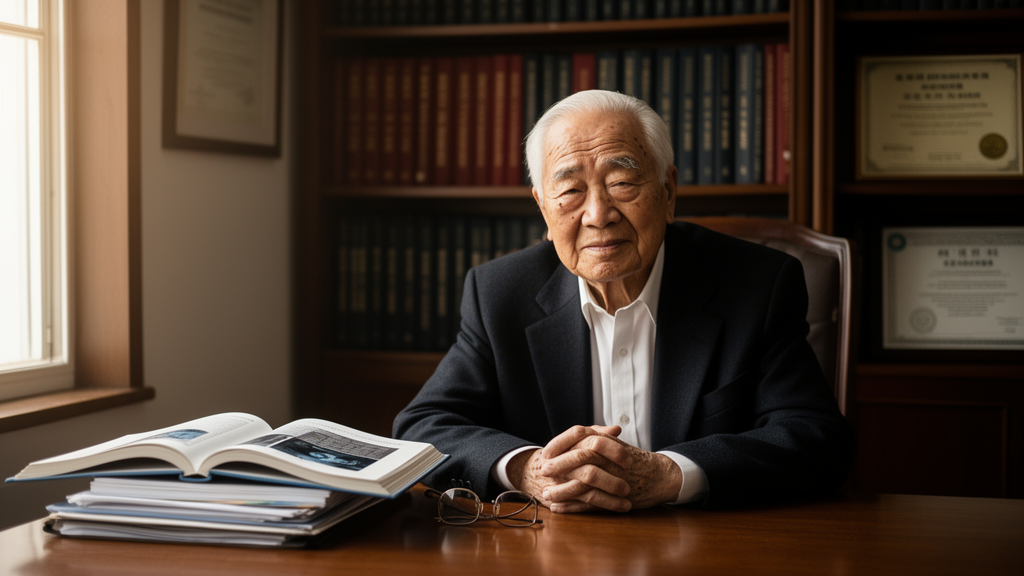
Professor Li Shichuo, widely described as a pioneer of epilepsy prevention and treatment in China, a founding father of neuroepidemiological research in the country, and a standard-bearer for national epilepsy governance worldwide, died on March 7, 2026, at the age of 84 after a prolonged illness. The news was announced in an obituary published in Acta Epileptologica, the open access journal he served as Editor-in-Chief from 2019 to 2026. The announcement, authored by Weijia Jiang, Ying Tang and Dong Zhou, records a career that stretched across more than four decades and reshaped how epilepsy is understood, surveyed and governed both in China and internationally.
Over the course of his professional life, Professor Li held a series of roles that placed him at the intersection of clinical neurology, public health administration and international advocacy. He served as President of the first and second councils of the China Association Against Epilepsy (CAAE), the national organization he initiated in 2005, and he guided Acta Epileptologica from its founding period through a period of rapid international growth. The obituary describes him as having devoted his lifelong efforts to laying a solid foundation for epilepsy care and research, a foundation on which his colleagues say future generations will continue to build.
His contributions to global epilepsy policy are among the most consequential elements of his record. In 1997, representing the World Health Organization, he jointly launched the Global Campaign Against Epilepsy (GCAE) together with the International League Against Epilepsy (ILAE) and the International Bureau for Epilepsy (IBE), an initiative credited with bringing epilepsy into the global public health spotlight for the first time. In 1998, he proposed an initiative to reduce the global burden of epilepsy, with aims that included preventing the onset of epilepsy, narrowing the treatment gap, and improving access to medical resources. He went on to lead what the obituary describes as the first comprehensive global epilepsy governance project, encompassing an update on the China Demonstration Project and the CREST Study.
Professor Li’s engagement with international institutions deepened over the following decades. In 2005, the same year he initiated the establishment of the CAAE, he represented China in joining the ILAE at the 26th International Epilepsy Congress in Paris. He published what is described as the world’s first national report on the Global Campaign Against Epilepsy, and he was the first to declare at the WHO that epilepsy constitutes a public health problem. He advocated leveraging China’s approaches and practical experience to provide reference models for other countries, and he was among the first to put forward the concept of national epilepsy governance, a framework in which a nation organizes prevention, treatment, education and policy around the condition in a coordinated way.
That advocacy work culminated in two landmark achievements on the world stage. In 2015, he promoted the adoption of Resolution 68.20 at the World Health Assembly, which the obituary identifies as the world’s first resolution specifically targeting epilepsy. In 2019, he authored the WHO’s first single-disease report on epilepsy, a document that highlighted the condition as an urgent public health priority. Internationally, he took the lead in proposing a national comprehensive epilepsy governance framework, formulated the overall framework for national epilepsy management, established an epilepsy center model and standardized workflow tailored to China’s national conditions, and carried out continuous public awareness and education centered on International Epilepsy Care Day, observed on June 28.
Professor Li’s second major sphere of contribution lay in epidemiological research on major neurological diseases in China. In 1983, in collaboration with Bruce S. Schoenberg of the United States National Institutes of Health, he systematically introduced modern neuroepidemiological methodologies to China, established standardized protocols for data collection and quality control, and cultivated a cohort of neurologists equipped with professional epidemiological expertise. This methodological transfer laid the groundwork for the large-scale population studies that followed, and it helped establish the disciplined, standardized approach to disease measurement that Chinese neuroepidemiology has relied upon in the decades since.
The fruits of that methodological foundation appeared quickly. In 1985, he published China’s first epidemiological report on epilepsy, and he continued monitoring the prevalence of epilepsy in China for four decades. He conducted surveys across regions with varying levels of healthcare resources and was the first to identify the inflection point of epilepsy prevalence nationwide. He laid the foundation for China’s first large-scale epidemiological survey on neurological diseases, and, based on community cohorts in six cities, his team consistently reported the prevalence distribution and risk factors of dozens of major neurological disorders. His epidemiological interests extended beyond epilepsy as well: he led clinical trials to verify the efficacy of blood pressure control in the prevention and treatment of cerebrovascular diseases, with follow-up spanning a decade from 1987 to 1997.
A third major contribution concerned epilepsy care in resource-limited settings. Professor Li established what the obituary calls the foundational framework for epilepsy prevention and control in resource-poor areas of China. He introduced the WHO rural demonstration project to China for the first time, confirmed the long-term efficacy of phenobarbital in resource-poor settings, and validated the efficacy and safety of valproate sodium as an alternative medication regimen. His research also identified preventable and modifiable risk factors for death among rural patients with epilepsy in China, work that connected the epidemiological and treatment strands of his career and pointed toward practical interventions for the populations most at risk.
The fourth pillar of his career was editorial and institutional. It had long been Professor Li’s cherished wish, the obituary notes, to establish an internationally influential English-language academic journal in epilepsy originating from China. Thanks to his initiative and the joint efforts of the editorial team, Acta Epileptologica came into being. During his tenure as Editor-in-Chief from 2019 to 2026, the journal achieved what the announcement describes as a leap forward in academic influence and internationalization, and it was successfully indexed by leading international and domestic databases including ESCI, PubMed Central, Scopus, and the Core Library of the Chinese Science Citation Database.
Professor Li’s work earned him numerous prestigious honors. In 2019, he was named among the Top Ten Medical Experts with Outstanding Contributions, recognized with the Power of Promoting Industry Development award by the Organizing Committee of the Medical Professionals Summit and Physicians Daily. In 2021, he received the Lifetime Achievement Award from the International League Against Epilepsy and the International Bureau for Epilepsy, a joint recognition from the two bodies with which he had collaborated since the launch of the Global Campaign Against Epilepsy. He authored more than 100 high-quality papers in Chinese or English over the course of his career. The editorial office of Acta Epileptologica, in closing its tribute, stated that it will carry forward his legacy, strive for higher standards, press ahead with full efforts to advance the journal into higher-level databases, continuously expand its academic influence, and contribute wisdom and strength to building a global community for epilepsy prevention and treatment.
Subject of Research: The life and contributions of Professor Li Shichuo to epilepsy prevention, neuroepidemiology and global epilepsy governance
Article Title: Obituary: we mourn the passing of Professor Li Shichuo, Editor-in-Chief of Acta Epileptologica
Article References: jiang, W., Tang, Y., & Zhou, D. (2026). Obituary: we mourn the passing of Professor Li Shichuo, Editor-in-Chief of Acta Epileptologica. Acta Epileptologica, 8(1), Article 26. https://doi.org/10.1186/s42494-026-00264-4
Image Credits: AI Generated
DOI: 10.1186/s42494-026-00264-4
Keywords: Li Shichuo, epilepsy, Acta Epileptologica, neuroepidemiology, Global Campaign Against Epilepsy, China Association Against Epilepsy, World Health Organization, public health, obituary, phenobarbital, WHA Resolution 68.20, ILAE
News Source: Kendall Mcintyre. (October 29, 2026). Professor Li Shichuo, Pioneer of Global Epilepsy Governance and Founding Editor of Acta Epileptologica, Dies at 84. Scienmag.



