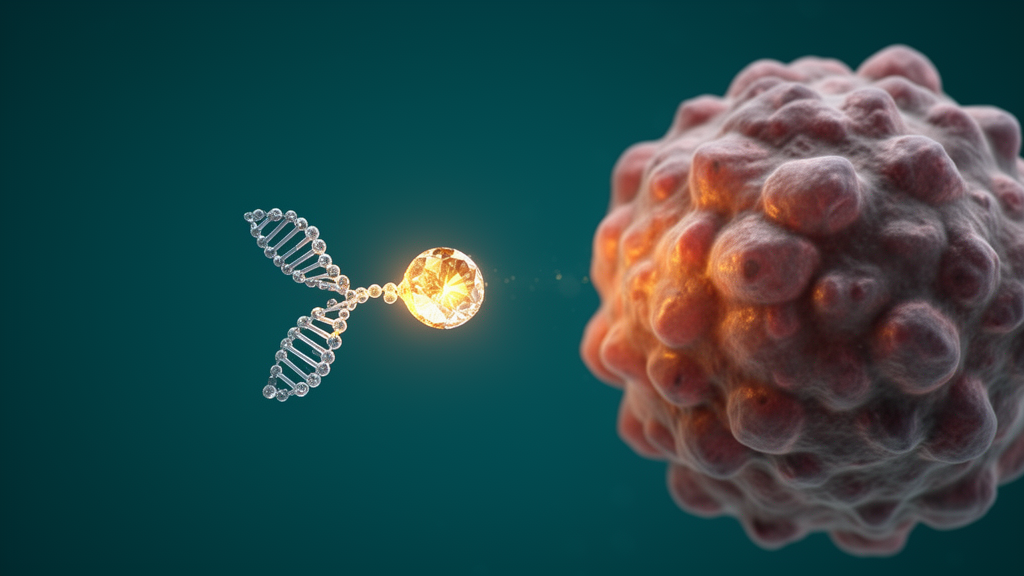
Researchers have designed a single molecule that fuses a tumor-suppressing microRNA with a chemotherapy drug, and in preclinical tests it defeated colorectal cancer cells that had become resistant to two standard treatments. The compound, called Gem-miR-15a, was described in an open-access study published in Journal of Experimental & Clinical Cancer Research on 27 October 2026. Resistance to 5-fluorouracil (5-FU)-based chemotherapy remains a major clinical obstacle in colorectal cancer, the authors note.
MicroRNA-based therapeutics are attractive candidates because microRNAs act on many targets at once, but their clinical translation has been hindered by poor stability and suboptimal delivery. The team addressed both problems by chemically modifying tumor-suppressor microRNA-15a with gemcitabine, integrating the microRNA's tumor-suppressive activity and the drug's chemotherapeutic potency into one molecular entity. The therapeutic candidate was evaluated across a spectrum of preclinical models: parental and drug-resistant colorectal cancer cell lines, three-dimensional tumor spheroids, patient-derived organoids, and in vivo metastatic models.
The researchers performed cell viability, apoptosis, and cell cycle analyses, together with RNA sequencing and protein-level validation. Statistical analyses used Student's t-test or two-way ANOVA with mixed effects, and data were reported as mean ± SD. Gem-miR-15a showed potent anti-proliferative activity with IC50 values in the low nanomolar range, roughly 100- to 5,000-fold greater potency than 5-FU and oxaliplatin.
Importantly, the compound retained its efficacy in both 5-FU-resistant and oxaliplatin-resistant colorectal cancer models, effectively overcoming acquired chemoresistance in these laboratory systems. Mechanistically, treatment induced S-phase cell cycle arrest, eliminated the G2-phase cell population, and triggered apoptosis. RNA sequencing analysis further demonstrated modulation of pathways such as p53 signaling and a reversal of resistance-associated gene expression.
The team corroborated these transcriptomic findings at the protein level, strengthening the mechanistic account of how the molecule reprograms resistant cancer cells. In vivo, Gem-miR-15a significantly reduced tumor growth at a dose approximately 12-fold lower than gemcitabine alone, with no observable toxicity in the studied models. The authors report that the compound's enhanced stability, effective delivery, and robust efficacy across resistant models support a favorable safety profile and strong potential for clinical translation.
The study's conclusion positions Gem-miR-15a as a potent, multi-targeted therapeutic strategy capable of overcoming chemoresistance in colorectal cancer. Because the evidence comes from cell lines, spheroids, organoids, and animal metastatic models rather than human trials, clinical benefit in patients has not yet been demonstrated, and further testing would be required before any therapeutic use. Still, the design principle is notable: rather than combining a microRNA drug and a chemotherapy separately, the researchers built a single molecule in which each component reinforces the other.
If the preclinical results hold up in later development, such gemcitabine-modified microRNAs could offer a way to treat tumors that have stopped responding to the fluorouracil- and oxaliplatin-based regimens that anchor current colorectal cancer care.
Subject of Research: A gemcitabine-modified microRNA-15a therapeutic that overcomes 5-FU and oxaliplatin resistance in preclinical colorectal cancer models
Article Title: Development of gemcitabine-modified miR-15a as a novel, multimodal treatment strategy to overcome 5-FU and oxaliplatin resistance in colorectal cancer
Article References: Ojha, A., Pal, A., Chao, M., Davuluri, R. V., & Ju, J. (2026). Development of gemcitabine-modified miR-15a as a novel, multimodal treatment strategy to overcome 5-FU and oxaliplatin resistance in colorectal cancer. Journal of Experimental & Clinical Cancer Research. https://doi.org/10.1186/s13046-026-03865-6
Image Credits: AI Generated
DOI: 10.1186/s13046-026-03865-6
Keywords: colorectal cancer, Gem-miR-15a, chemoresistance, 5-fluorouracil, oxaliplatin, gemcitabine, microRNA therapeutics, miR-15a, WEE1, CHK1, patient-derived organoids, preclinical models
News Source: Nathaniel Bowman. (October 27, 2026). Gemcitabine-Fused microRNA Shows Promise Against Chemoresistant Colorectal Cancer in Preclinical Models. Scienmag.