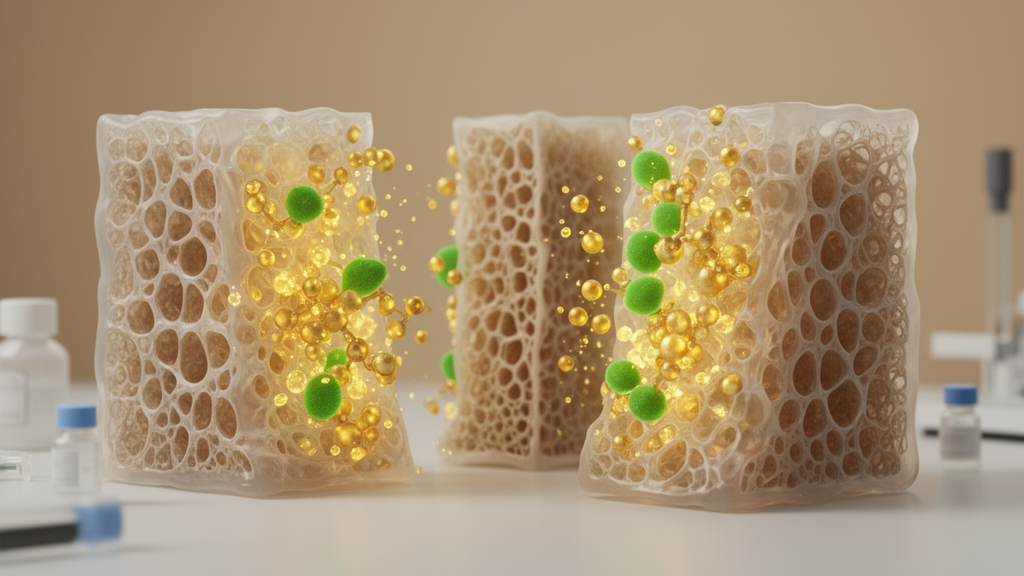
A mushroom-derived polysaccharide and a simple plant phenolic compound may each protect bone from the destructive effects of long-term steroid therapy, according to a new experimental study in mice. Researchers report that high doses of p-hydroxybenzoic acid (HBA) and lentinan, a beta-glucan extracted from the shiitake mushroom Lentinula edodes, significantly reduced bone deterioration in a mouse model of glucocorticoid-induced osteoporosis, with high-dose HBA approaching the performance of teriparatide, a clinically approved osteoporosis drug used as the study’s benchmark. The study, conducted by a team from Selcuk University, Istanbul Aydin University, Harran University and Gabriele d’Annunzio University and published in Frontiers in Pharmacology, addressed a pressing clinical problem.
Glucocorticoids such as methylprednisolone and prednisolone are indispensable for treating chronic inflammatory and autoimmune diseases, but prolonged use, particularly at doses equivalent to 5 mg or more of prednisolone per day for longer than three months, is strongly associated with bone loss and fractures. The resulting condition, glucocorticoid-induced osteoporosis, is a leading cause of drug-induced secondary osteoporosis and is especially damaging in younger patients whose bone formation is suppressed while resorption accelerates. To model this condition, the investigators assigned 68 male Swiss albino mice, aged 8 to 10 weeks, to seven groups. One group served as a healthy control receiving saline. A second group received 10 mg/kg/day of methylprednisolone subcutaneously to induce osteoporotic changes. The remaining five groups received methylprednisolone plus one of the following treatments: low-dose HBA at 50 micrograms/kg/day, high-dose HBA at 100 micrograms/kg/day, low-dose lentinan at 200 mg/kg/day by oral gavage, high-dose lentinan at 400 mg/kg/day, or teriparatide at 3 micrograms/kg/day as a positive comparator.
All treatments were given daily for 10 weeks, and all 68 animals completed the study with no unscheduled deaths or humane endpoints reached. The dose selection was carefully calibrated. Using allometric scaling by body surface area, the researchers calculated that the mouse methylprednisolone dose corresponds to roughly 49 mg/day in a 60-kg adult, within the range of high-dose clinical therapy and well above the threshold linked to bone loss. The teriparatide dose translated to approximately 14.6 micrograms/day, close to the approved human dose of 20 micrograms/day. The HBA and lentinan doses were drawn from previous in vivo studies demonstrating biological activity without systemic toxicity. The biochemical results painted a clear picture of steroid damage and partial rescue.
Mice receiving methylprednisolone alone showed sharply reduced serum levels of 25-hydroxyvitamin D3, falling from 52.63 to 15.74 micrograms per liter, and reduced insulin-like growth factor 1 (IGF-1), alongside elevated osteocalcin. High-dose lentinan and both HBA doses significantly raised vitamin D3 levels compared with the osteoporosis group, and high-dose HBA restored IGF-1 to levels statistically indistinguishable from healthy controls. Osteocalcin, a marker of bone turnover that was markedly elevated in the diseased animals, returned to control-like levels in the high-dose lentinan and high-dose HBA groups. Creatinine, glucose and phosphorus levels were also significantly lower in the osteoporosis group than in controls.
Bone turnover markers revealed mechanistic differences between the two compounds. Tartrate-resistant acid phosphatase 5b (TRACP-5b), a marker of osteoclast-driven bone resorption, was significantly elevated in osteoporotic mice and markedly reduced by teriparatide and high-dose HBA, suggesting a pronounced anti-resorptive profile for the phenolic compound. Conversely, bone-specific alkaline phosphatase (BALP), a marker of osteoblast maturation, was significantly depressed by the steroid, and this reduction was significantly prevented by high-dose lentinan, which also raised serum phosphorus levels. All treatment groups lowered the elevated PINP marker of collagen synthesis, and CTX-1 levels showed no statistically significant differences among groups. The authors interpret this pattern as lentinan acting predominantly on the osteoblastic, bone-forming side of remodeling, whereas high-dose HBA suppresses bone resorption alongside overall turnover rather than stimulating matrix synthesis. Hematological monitoring showed a modest rise in white blood cells in lentinan-treated mice, which the authors attribute to the compound’s known immunomodulatory pharmacodynamics rather than toxicity, and liver and kidney markers remained within reference ranges.
Histopathological examination of the femurs confirmed these biochemical signals. Under the microscope, the osteoporosis group displayed severe damage: thinning of bone trabeculae from resorption, loss of basophilia in the bone matrix from demineralization, osteoporotic cavities and fractures, refractile degenerative areas within osteoid tissue, erosive lesions in the periosteum and endosteum, and enlarged lacunae containing degenerating or absent osteocytes. Scoring of osteoporotic resorption-demineralization, degenerative-necrotic lesions, and cortical and trabecular thinning showed dose- and treatment-dependent improvement across all treated groups, with the order of recovery running from low-dose lentinan through low-dose HBA, high-dose lentinan, high-dose HBA, and finally teriparatide, which nearly normalized the histological appearance. Immunohistochemistry added a molecular layer to the story.
The osteoporotic bones showed strong expression of the inflammatory cytokines TNF-alpha and IL-1beta, the oxidative stress marker HSP-27, and the bone resorption regulators RANK and RANKL, all absent in healthy controls. The RANK/RANKL pathway is central to bone remodeling: RANKL, secreted mainly by osteoblasts, binds RANK on osteoclast precursors and drives their activation into bone-resorbing cells, while the decoy receptor osteoprotegerin normally restrains this process. Glucocorticoids tilt this axis toward osteoclastogenesis. All treatments reduced these markers, with high-dose HBA producing significant reductions in TNF-alpha, IL-1beta, HSP-27, RANK and RANKL compared with the osteoporosis group, consistent with its reported antioxidant and estrogen-like properties. The authors suggest that elevated phosphorylated HSP-27 may cooperate with RANKL to recruit monocytes into the bone microenvironment, accelerating osteoclast formation, and that the treatments interrupted this cascade.
The study’s authors frame the two compounds as complementary rather than competing. Teriparatide, an anabolic agent, produced the most complete normalization across histopathological and immunohistochemical measures. Lentinan, already used clinically in Japan and China as an adjuvant in cancer treatment and previously shown to suppress NF-kappa-B and p38 MAPK signaling in cartilage cells, acted mainly through immunomodulation and osteoblast support, although its improvement was partial and its effect on the resorption marker TRACP-5b limited. High-dose HBA showed the opposite signature, a strong anti-resorptive effect with reduced RANK, RANKL and inflammatory markers. The combination of the two was not tested and, the authors argue, merits investigation given their distinct mechanisms.
Important caveats temper the enthusiasm. The evidence is entirely preclinical, obtained in male mice over 10 weeks, without bone densitometry, micro-CT or biomechanical testing, and without pharmacokinetic characterization or formal dose-response analysis. RANK and RANKL expression was assessed by immunohistochemistry alone, without quantitative validation by Western blot or ELISA. Neither p-hydroxybenzoic acid nor lentinan has an approved indication for osteoporosis, and the researchers emphasize that these compounds should be viewed as candidate adjuncts to, not substitutes for, established anti-osteoporotic therapy. Standard care, including calcium and vitamin D supplementation and approved antiresorptive or anabolic drugs where indicated, remains the cornerstone of managing patients on long-term glucocorticoids. Further studies incorporating dose-response and combination designs, together with micro-CT and biomechanical assessments, are needed to validate the findings and establish any clinical relevance.
Subject of Research: Preclinical testing of hydroxybenzoic acid and lentinan against glucocorticoid-induced osteoporosis in mice
Article Title: Therapeutic potential of hydroxybenzoic acid and lentinan in mitigating glucocorticoid-induced osteoporosis: an experimental study
Article References: Soyler, B., Parlak, T. M., Buyuktaskapulu, I., Demircioglu, M., Dortbudak, M. B., Kocyigit, A., Demircioglu, I., Chiavaroli, A., & Dik, B. (2026). Therapeutic potential of hydroxybenzoic acid and lentinan in mitigating glucocorticoid-induced osteoporosis: an experimental study. Frontiers in Pharmacology, 17, Article 1957515. https://doi.org/10.3389/fphar.2026.1957515
Image Credits: AI Generated
DOI: 10.3389/fphar.2026.1957515
Keywords: glucocorticoid-induced osteoporosis, p-hydroxybenzoic acid, lentinan, shiitake mushroom, RANK/RANKL pathway, teriparatide, bone remodeling, TNF-alpha, oxidative stress, preclinical study, osteoclasts, osteoblasts
News Source: Ophelia Keating. (October 27, 2026). Mushroom Polysaccharide and Plant Phenolic Show Promise Against Steroid-Induced Bone Loss in Mice. Scienmag.