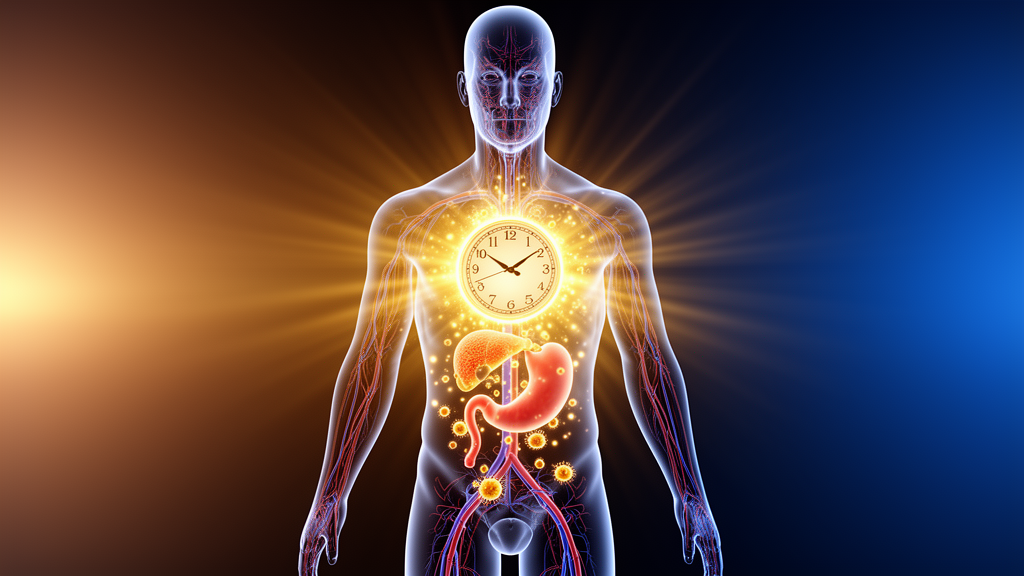
Immune defenses are not switched on around the clock. According to a mini review published in Frontiers in Molecular Medicine, the immune system runs on time, with surveillance, inflammation, tissue repair and memory formation each assigned to specific phases of the day and night. The authors, a group of researchers based in India and the United States, propose a “chrono-dynamic” model in which immune health depends on the synchronization of three groups of biological oscillators: the master circadian clock in the brain, food-entrainable metabolic oscillators, and autonomous cellular clocks in peripheral tissues. When these timing systems stay in phase, the review argues, the body achieves metabolic efficiency, keeps unnecessary inflammation low and mounts precise immune responses through temporal gating. When modern lifestyle factors such as irregular eating, sleep deprivation and chronic stress pull them apart, the result may be persistent low-grade inflammation, metabolic dysfunction, immune aging and chronic non-communicable disease.
The framework emerges from five decades of immunology research that has progressively redefined what the immune system does. Since the 1970s, mechanistic studies have mapped the cells, proteins, pathways and genes governing responses to infection, autoimmunity and cancer. Innate immunity provides the first layer of defense through pattern recognition of foreign material, delivering biochemical alarm signals that engage the adaptive system, which in turn supplies specificity and memory through clonal selection and gene editing of receptors. More recent paradigms have added tissue-specific immunity, in which the character of a response to the same antigen differs between the liver, lung, eye or brain, and a growing appreciation of the microbiome’s influence on virtually every aspect of immune function. The authors also highlight what they call the anticipatory immune system: neuronal activity in the brain, generated through thought and sensory experience, has been shown to influence innate immunity in ways that appear to anticipate danger.
The central conceptual shift in the review is from defense to homeostasis. Continuous immune activation is metabolically expensive, so the immune system has evolved to operate according to circadian rhythms rather than remaining constantly engaged. Immune cells are deployed, redistributed between the circulation, tissues and lymphoid organs, and renewed in predictable daily cycles that anticipate environmental challenges while promoting tissue repair during rest. This energy-efficient strategy is highly sensitive to metabolic cues, and shifts in energy utilization can influence immune cell activation, differentiation and longevity, a field now recognized as immunometabolism. The review organizes this temporal architecture into two opposing phases keyed to the light and dark cycles, each governed by distinct endocrine programs under the control of the suprachiasmatic nucleus, the hypothalamic master clock.
During the light cycle, the immune system enters what the authors describe as a surveillance and defense phase. In humans, rising cortisol levels coordinated through the hypothalamic-pituitary-adrenal axis promote the redistribution of leukocytes, including naïve T cells and monocytes. Citing work by Dimitrov and colleagues, the review notes that naïve T cells are negatively correlated with cortisol rhythms: the morning cortisol rise removes naïve CD4-positive T cells from the blood into the bone marrow and lymph nodes through upregulation of the chemokine receptor CXCR4. Effector CD8-positive T cells, by contrast, are positively correlated with epinephrine rhythms, increase after low-dose epinephrine infusion, and show the highest expression of beta-adrenergic and fractalkine receptors. Guided by chemokines, these cells traffic to barrier tissues such as the skin, lungs and gastrointestinal tract, enhancing surveillance at the sites most likely to encounter environmental challenges. At the same time, endocrine signals including insulin sensitivity and thyroid hormones synchronize immune metabolism with the energetic demands of the active phase, favoring rapid innate responses.
The dark cycle reverses the program. As melatonin rises from the pineal gland, cortisol declines, parasympathetic vagal activity increases, and inflammatory mediators shift, circulating leukocytes migrate back to the bone marrow and secondary lymphoid organs. Increased interactions among antigen-presenting cells, T cells and B cells, together with altered cytokine signaling, support the organization of immune responses and the consolidation of immunological memory. During sleep, the review states, immune cells interact to facilitate antigen presentation, T- and B-cell activation, memory formation and tissue repair, while cellular maintenance processes such as DNA repair, protein quality control, autophagy and mitochondrial restoration are enhanced. The authors also describe local, tissue-specific endocrine activity: immune and tissue-resident cells can convert circulating calcifediol into calcitriol, providing regional regulation of immune tolerance, regulatory T-cell differentiation and barrier homeostasis. The dark cycle thus serves as the principal phase for immune restoration, metabolic recovery and preparation for the next round of surveillance.
The molecular foundation for this timing rests on chronogenetics. Fifty years ago, Konopka and Benzer identified the genetic basis of circadian rhythms, and subsequent molecular characterization of the transcription-translation feedback loop involving BMAL1, CLOCK, PER and CRY by Takahashi and Reppert established the field that eventually earned Hall, Rosbash and Young the 2017 Nobel Prize in Physiology or Medicine. The human transcriptome contains clock-controlled genes whose expression is phase-locked to endogenous circadian and environmental diurnal cycles, coordinating cellular transcription, metabolism, DNA repair and immune functions. The review identifies three interconnected timing systems. The suprachiasmatic nucleus integrates environmental light signals and synchronizes systemic rhythms through the HPA axis and neuroendocrine pathways, influencing the timing of leukocyte trafficking, immune cell activation, cytokine production and inflammatory responses. Food-entrainable oscillators in the liver, hypothalamic nuclei and ghrelin-producing gastrointestinal cells synchronize circadian programs with feeding and fasting cycles through the gut-brain axis, independently of light. Finally, every nucleated cell carries an autonomous molecular clock that acts as a phase comparator, continuously adjusting local transcriptional programs for immune activation, metabolism and repair to maintain systemic alignment.
Endocrine chronobiology provides the hormonal machinery that translates these clocks into immune behavior. The master clock orchestrates daily peaks and troughs of cortisol, melatonin, human growth hormone, insulin sensitivity and thyroid hormones, which the authors describe as working in precise opposition to manage energy, sleep quality and cellular repair. Cortisol is a potent anti-inflammatory and immunosuppressive hormone whose levels fall to their lowest point in the early hours of the dark cycle, enabling immune activation and consolidation. The review emphasizes that these endocrine rhythms vary with biological sex, age and reproductive status: adrenal hormones such as cortisol show robust circadian patterns, whereas gonadal hormones display subtler daily oscillations superimposed on longer-term cycles such as the menstrual cycle. Endocrine regulation of immunity therefore differs across individuals and across the lifespan, a consideration the authors say should inform the interpretation of chronobiological immune biomarkers and the design of chronotherapeutic strategies. Disruption of these rhythms, whether environmental, behavioral, metabolic or genetic, may impair immune homeostasis and contribute to chronic inflammatory, metabolic and oncological disease.
From this framework the authors derive a proposed panel of chrono-biomarkers intended to assess immune resilience rather than disease alone. A healthy immune-metabolic system, they argue, is characterized not by maximal activation but by temporal regulation: appropriate circadian amplitude, low baseline inflammatory tone, preserved immune reserve and rapid, proportionate responses to challenge. Candidate markers drawn from routine blood samples include inflammatory tone indicators such as high-sensitivity C-reactive protein, interleukin-6, tumor necrosis factor-alpha and serum amyloid A; immune-cell composition and reserve measures such as the neutrophil-to-lymphocyte ratio and naïve T cell counts; adrenal and circadian regulation markers such as cortisol and DHEA-S; nocturnal restoration markers such as melatonin and growth hormone; and endocrine-metabolic indicators including thyroid hormones and vitamin D metabolites. Supporting evidence cited in the review includes findings by Besedovsky, Lange and Haack that effector cells and neutrophils rise in the blood during the active phase while naïve and central memory T cells peak at night, and a report by Long and colleagues that morning vaccination favors higher antibody responses. The authors stress that sampling time is critical, since a single measurement can obscure meaningful diurnal variation, and that the greatest value may lie in the relationships between markers and their temporal patterns rather than any individual reading.
The review’s authors have previously proposed an “ImmunoSCORE” concept for monitoring immune responses to infections, autoimmunity, cancer and therapeutic biologics, and they argue that systems immunology and multi-omics now make a dynamic, time-resolved version feasible. Serial measurements taken at defined biological times, combined with clinical, metabolic, behavioral and physiological data, could quantify the amplitude, phase, coherence and recovery of immune-endocrine networks, defining what the authors call immune-metabolic resilience: the capacity to anticipate physiological challenges, mount an appropriate response and efficiently return to homeostasis. They point to work by Skarke and colleagues analyzing large datasets from the UK Biobank on the “chronobiome” in young and old apparently healthy individuals as an example of this direction. Future studies, the authors suggest, should test whether chronic non-infectious diseases including obesity, diabetes, cardiovascular disease, neurodegeneration and cancer are associated with distinct patterns of chronobiological immune dysfunction, and whether chronic infections, autoimmune and allergic disorders and immune aging reflect persistent desynchronization rather than isolated molecular defects.
It is worth underlining that the chrono-dynamic model is presented as a framework and synthesis of existing literature rather than the product of new clinical trials, and several of its claims, particularly the proposal that restoring circadian coherence could shift medicine from reactive disease management toward proactive restoration of resilience, remain hypotheses to be tested. Even so, the review reframes health itself as an active biological state of synchronized resilience, in which robust circadian phase coherence, appropriate immune activation thresholds, metabolic harmony and efficient nocturnal restoration define good immune health. On this view, the goal of medicine would expand from suppressing pathology to restoring the evolutionary timing programs that maintain immune balance, metabolic integrity and lifelong adaptability, with wearable physiological monitoring, circadian biomarkers and computational modeling offering the tools to measure whether such restoration is actually achieved.
Subject of Research: Circadian and endocrine regulation of immune function across the day-night cycle
Article Title: Time of day metabolism and endocrine regulation of immune health
Article References: Hattangady, A., Singh, V., Gala, C., Chirmule, N., & Kadambi, V. (2026). Time of day metabolism and endocrine regulation of immune health. Frontiers in Molecular Medicine, 6, 1982547. https://doi.org/10.3389/fmmed.2026.1982547
Image Credits: AI Generated
DOI: 10.3389/fmmed.2026.1982547
Keywords: circadian rhythms, immunometabolism, suprachiasmatic nucleus, cortisol, melatonin, leukocyte trafficking, chrono-biomarkers, immune resilience, food-entrainable oscillator, inflammation, endocrine regulation, chronotherapy
News Source: Daisy Hatcher. (October 27, 2026). Body Clocks, Hormones and Metabolism May Set the Daily Rhythm of Immune Health. Scienmag.