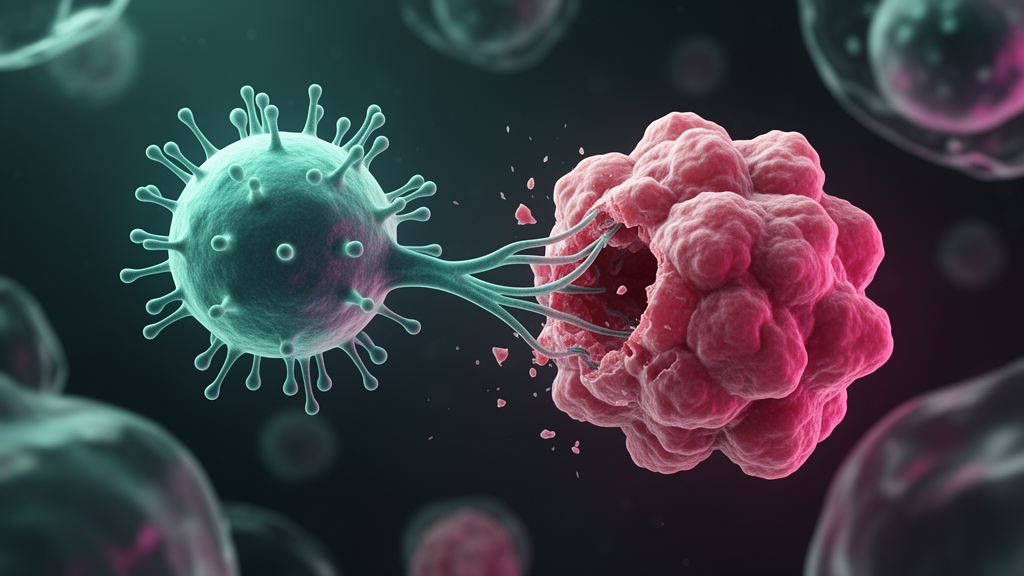
Chimeric antigen receptor T-cell therapy, the living-drug technology that has produced dramatic remissions in patients with leukemia and lymphoma, has long promised to do the same for solid tumors. A new review published in the Journal of Translational Medicine argues that breast cancer, the most common female malignancy worldwide, is finally within reach of that promise, but only if researchers confront three stubborn barriers that have kept the therapy from working outside the bloodstream. The analysis, led by Kui Liu, Qi Sun and Shanmei Du of Zibo Polytechnic University and Zibo Central Hospital in China, organizes the field’s progress around a simple bottleneck-and-solution logic, mapping each obstacle in breast cancer biology to an engineering strategy designed to overcome it.
The first and most fundamental barrier is antigen heterogeneity. CAR-T cells work by recognizing a single molecular target on the surface of cancer cells, then killing anything that displays it. In blood cancers, that target tends to be expressed uniformly, so a single receptor can wipe out the malignant population. Breast tumors are different. Within a single patient, cancer cells can display wildly different combinations of surface proteins, and the cells that lack the chosen target simply survive, multiply and drive relapse. Tumors can also shed or downregulate the target altogether, a process known as antigen escape. Compounding the problem is on-target, off-tumor toxicity: many candidate antigens appear at low levels on healthy tissues, meaning a receptor designed to attack the tumor can also attack vital organs.
The second barrier is subtype adaptation. Breast cancer is not one disease but a family of molecularly distinct diseases, including luminal A and luminal B tumors driven by hormone receptors, HER2-positive tumors amplifying a growth-factor receptor, and triple-negative breast cancer, the aggressive subtype that lacks all three standard markers. Each subtype carries its own immune landscape, its own candidate antigens and its own vulnerabilities, yet the review notes that research effort has been unevenly distributed, with triple-negative and HER2-positive disease attracting far more CAR-T attention than the luminal subtypes that make up the majority of cases. A receptor strategy optimized for one subtype cannot simply be transplanted to another.
The third barrier is the tumor microenvironment, the dense, hostile territory that solid tumors build around themselves. Breast tumors recruit immunosuppressive cells such as regulatory T cells, tumor-associated macrophages and myeloid-derived suppressor cells, which actively disable incoming immune attacks. They erect physical barriers, including abnormal vasculature, stiff extracellular matrix and high interstitial pressure, that prevent CAR-T cells from infiltrating deeply. They also impose metabolic constraints, depleting the nutrients and oxygen that T cells need to sustain their killing function, and they drench the surroundings in checkpoint molecules such as PD-L1 that switch activated T cells off. A CAR-T cell that reaches a breast tumor, the review emphasizes, often arrives exhausted, starved and surrounded by enemies.
Against these three barriers, the authors lay out three interconnected optimization strategies. The first is subtype-specific precision CAR design: selecting targets matched to each molecular subtype, such as HER2 for HER2-positive disease or antigens like mesothelin, MUC1 and others for triple-negative tumors, and validating that expression is strong and uniform on tumor cells while minimal on healthy tissue. This precision approach acknowledges that the future of breast cancer CAR-T lies not in a universal receptor but in a portfolio of subtype-tailored constructs, each grounded in the biology of the disease it is meant to treat.
The second strategy is dual-target CAR engineering, a family of techniques designed to defeat heterogeneity and escape. Tandem CARs carry two recognition domains on a single receptor, allowing one cell to sense two antigens at once. Parallel CARs express two independent receptors, so the cell can attack through either target. The most sophisticated variant is logic-gated control using SynNotch receptors, synthetic circuitry that requires one antigen to prime the cell before a second receptor can trigger killing. This AND-gate logic means the T cell fires only when it encounters the precise combination of markers found on tumor cells, dramatically reducing the risk of destroying healthy tissue that carries just one of the targets. By demanding multiple molecular confirmations before attacking, these designs make it far harder for tumors to escape by losing a single antigen.
The third strategy is multi-dimensional remodeling of the tumor microenvironment. The review describes approaches that range from clearing immunosuppressive cells, for example by depleting regulatory T cells or reprogramming suppressive macrophages, to physically and metabolically reshaping the tumor so that engineered cells can enter and function. CAR-T cells can themselves be armored with cytokines or engineered to resist exhaustion, and they can be combined with immune checkpoint inhibitors that neutralize the PD-L1 shield tumors deploy. The unifying idea is that CAR-T cells should not be sent into battle alone; they need the battlefield altered in their favor, whether through drugs, radiation, engineered secretion of local agents or genetic modifications that make the cells self-sustaining in hostile conditions.
Where does the clinic stand? The review summarizes early clinical trial experience showing manageable safety and preliminary efficacy in patients with HER2-positive and triple-negative breast cancer, the two subtypes where trials have concentrated. These results fall short of the spectacular complete-remission rates seen in blood cancers, but they demonstrate that CAR-T cells can be manufactured, infused and tolerated in solid tumor patients, and that some patients derive meaningful benefit. The authors identify three key translation challenges that now dominate the field: safety management, since solid-tumor targets raise the stakes of off-tumor toxicity; manufacturing scalability, since producing personalized cell products for each patient is slow and expensive; and efficacy durability, since responses in solid tumors have so far tended to be shorter-lived than those in hematologic disease. Each challenge, they argue, has targeted coping strategies, from safer receptor designs and kill-switch safeguards to streamlined manufacturing platforms and combination regimens that extend cell persistence.
Looking further ahead, the review surveys a wave of next-generation technologies that could reshape the field. CAR-NK cells, built from natural killer cells, offer the prospect of off-the-shelf products with a lower risk of graft-versus-host complications. CAR-macrophages, or CAR-M cells, are designed to penetrate solid tumors more effectively and to remodel the microenvironment from within. Nanobody-mediated CAR-T cells use single-domain antibodies, smaller and more stable than conventional antibody fragments, to build receptors with novel recognition properties. Perhaps most transformative is in vivo CAR engineering, which would skip the laboratory manufacturing step entirely by delivering genetic instructions directly into a patient’s own T cells inside the body. Alongside these biological advances, artificial intelligence is emerging as a design tool, with computational models used to predict optimal antigen targets, engineer receptor sequences and tailor treatments to individual tumor profiles, moving the field toward genuinely personalized immunotherapy.
The overall conclusion is cautiously ambitious. CAR-T therapy has evolved, in the authors’ assessment, into a clinically viable immunotherapeutic strategy for breast cancer, with significant progress in addressing its core bottlenecks through precision engineering, combination therapies and technological innovation. The convergence of synthetic biology, computational immunology and precision oncology, they write, lays a solid foundation for further optimization, and the priorities ahead are clear: deepen subtype-targeted therapy, upgrade CAR engineering and manufacturing platforms, optimize combination regimens and advance clinical translation so that access widens beyond specialized centers. Remaining hurdles in manufacturing, durability and affordability are real, and the authors are candid that the therapy is not yet standard care. But with coordinated effort across academia, industry and regulatory bodies, they argue, CAR-T therapy could eventually become a standard option for breast cancer, particularly for aggressive subtypes such as triple-negative disease where conventional options remain limited, and could deliver durable remissions and improved survival for patients worldwide. For a field that has spent a decade chasing the solid-tumor breakthrough, the review reads less like a eulogy for failed trials and more like an engineering roadmap, one that treats each biological barrier not as a dead end but as a design problem waiting for the right solution.
Subject of Research: Chimeric antigen receptor T-cell therapy for breast cancer
Article Title: Chimeric antigen receptor T-Cell therapy for breast cancer: current status, challenges and future perspectives
Article References: Chimeric antigen receptor T-Cell therapy for breast cancer: current status, challenges and future perspectives. (n.d.). https://doi.org/10.1186/s12967-026-08881-w
Image Credits: AI Generated
DOI: 10.1186/s12967-026-08881-w
Keywords: CAR-T cell therapy, breast cancer, tumor microenvironment, triple-negative breast cancer, HER2, antigen heterogeneity, dual-target CAR engineering, SynNotch, immunotherapy, CAR-NK, clinical translation, precision oncology
News Source: Nathaniel Bowman. (October 9, 2026). Engineered Immune Cells Edge Closer to Becoming a Real Weapon Against Breast Cancer. Scienmag.