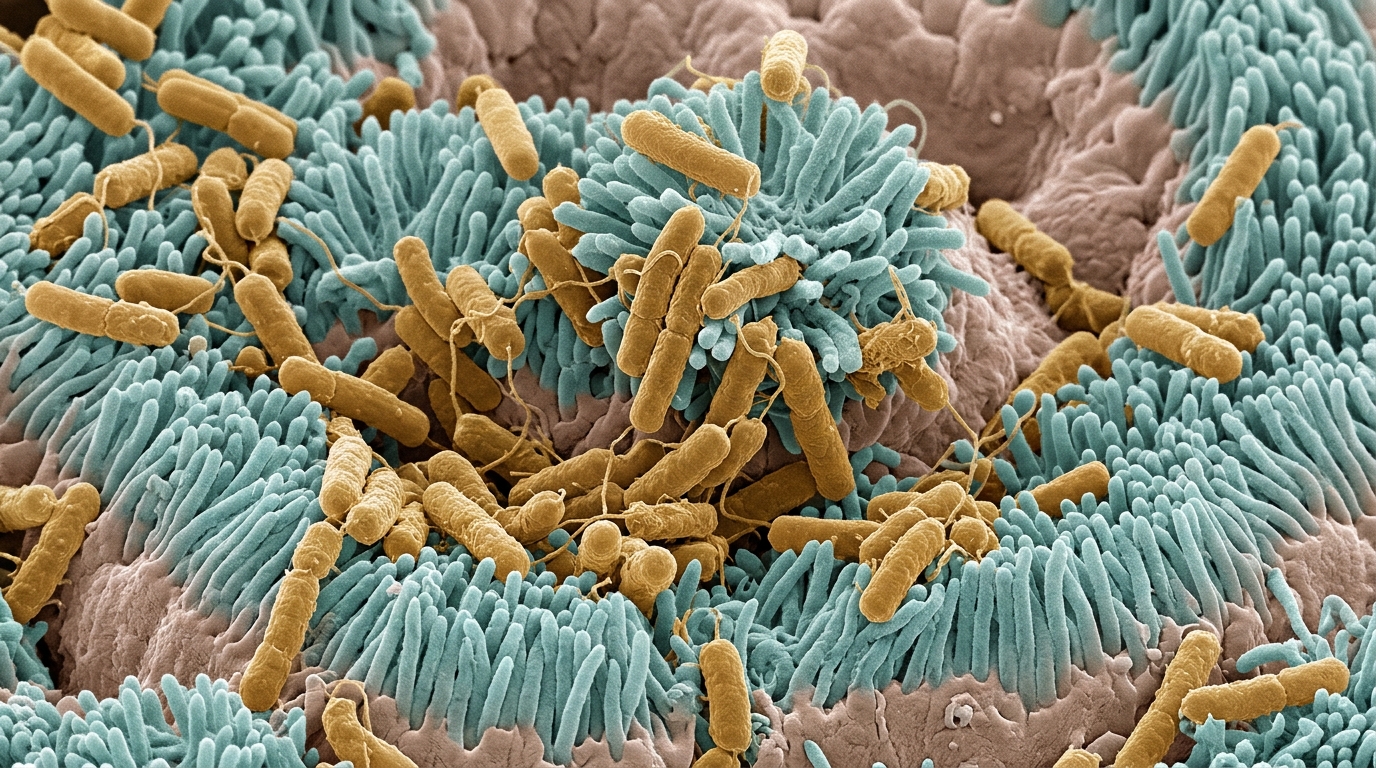
Scientists have genetically reprogrammed a common gut bacterium to secrete a therapeutic protein directly inside the intestines of mice, and the engineered microbe measurably improved metabolic and liver health in an animal model of fatty liver disease. The work, published in Nature Microbiology, turns Coprococcus comes, a member of the widespread bacterial family Lachnospiraceae, into a living delivery vehicle for interleukin-22, an immune signalling molecule that helps maintain the intestinal barrier. In mice with diet-induced metabolic dysfunction-associated steatotic liver disease, the IL-22-secreting bacteria improved glucose clearance, lowered fasting blood sugar, reduced a marker of systemic endotoxin exposure and shrank the average size of fat droplets in the liver.
The study addresses a long-standing obstacle in the field of engineered live biotherapeutics: many of the dominant bacteria in the human gut are extremely difficult to manipulate genetically. Lachnospiraceae are obligate anaerobic Clostridia that are prevalent in the human microbiome and produce metabolites linked to intestinal and metabolic health, yet they have largely resisted the standard tools of synthetic biology. The research team, led by Mark Mimee of the University of Chicago, built a modular toolkit that brings these organisms into the engineering fold, combining constitutive and inducible gene expression systems, chromosomal integration methods and protein secretion machinery.
To move DNA into the target bacteria, the researchers optimized interspecies matings between Escherichia coli and Lachnospiraceae, transferring genetic cargo on shuttle plasmids. They then designed a set of constitutive promoters derived from highly expressed housekeeping genes, including elongation factor EF-Tu and the sigma factor σ70, to drive a NanoLuc reporter gene in five species: Anaerostipes caccae, Anaerostipes hadrus, Coprococcus comes, Lachnoclostridium symbiosum and Mediterraneibacter gnavus. All four promoters produced detectable reporter expression, although promoter strength varied by host background, and a subset also functioned in a human clinical isolate of A. caccae. Critically, the engineered strains remained transcriptionally active during intestinal transit: when NanoLuc-expressing Lachnospiraceae were given to specific pathogen-free mice by oral gavage, faecal pellets showed detectable luminescence above media controls six hours later, demonstrating that heterologous gene expression can be maintained in the mammalian gut environment.
Beyond constant expression, the team adapted inducible systems that allow external control of the genetic circuits. Borrowing regulatory systems developed for studying Clostridioides difficile, they tested xylose-inducible and tetracycline-inducible designs across multiple species. The TetR–Ptet system responded fastest, with reporter output peaking three to six hours after induction, and showed a high dynamic range, from eight-fold induction in L. symbiosum to 164-fold in C. comes. To make the engineered DNA more stable and less dependent on antibiotic selection, the researchers used a modified Lactococcus lactis group II intron to insert a landing pad at a defined chromosomal locus in C. comes and M. gnavus, then employed Cre-mediated recombination to slot cargo genes permanently into the genome. Correct integration was observed in all three to five colonies screened for each construct, with no off-target integration detected, and the chromosomally integrated constructs proved more stable than plasmid-based ones during serial passage without antibiotics.
The toolkit was then expanded using the bacteria’s own transcriptomes as a design guide. The researchers compared gene expression of three Lachnospiraceae species grown in laboratory culture with the same species living inside gnotobiotic mice as part of a 15-member defined microbial community. From this differential expression analysis they identified 25 promoter candidates in C. comes spanning a predicted dynamic range with distinct environmental biases. The resulting library covered roughly a million-fold range of expression in vitro. When three representative promoters were tested in mice over one week, the promoter P4280, which is active in both settings and sits upstream of a pyruvate phosphate dikinase gene, produced the strongest faecal luminescence, while the in vitro-biased promoter P3185 was barely detectable in the gut. The in vivo-biased promoter P15915 was strongly induced inside the animals. These results establish a condition-aware promoter set and underscore how strongly environmental context shapes promoter performance.
Delivery of a protein payload required a secretion system, so the team combined proteomics and computational prediction to find candidate signal peptides. Mass spectrometry of M. gnavus culture supernatants identified proteins enriched outside the cell, while the SignalP algorithm predicted signal peptides from the genome. Fusing these sequences to NanoLuc and screening them in C. comes revealed several strong secretion signals; the synthetic peptide REA14 directed more than 99 percent of total NanoLuc into the culture supernatant, and the signal RgSS01 yielded approximately 100 to 200 nanograms per millilitre of reporter in supernatants, compared with about one nanogram per millilitre from strains lacking a secretion signal. The researchers also built a surface-display variant based on a truncated sortase-anchored protein, giving Lachnospiraceae two distinct strategies for localizing protein cargo.
With the delivery machinery in place, the team engineered C. comes to secrete mouse IL-22. They chose this species partly because Coprococcus has shown protective effects in mouse models of obesity and because IL-22 supports epithelial barrier integrity during gut and liver inflammation. The RgSS01-mIL-22 fusion protein was detected in culture supernatants under both constitutive and inducible control and after genomic integration, with peak titres around 100 nanograms per millilitre, consistent with prior reports of recombinant IL-22 with preclinical efficacy when delivered orally to mice. In a cell-based assay using human colonic epithelial HT-29-MTX cells, the bacterially secreted cytokine triggered STAT3 phosphorylation to a degree comparable to commercial recombinant IL-22, confirming its bioactivity. The final therapeutic strain, called Cc-IL-22, carries a chromosomally integrated cassette encoding both the secreted cytokine and a tracking reporter.
In healthy mice given the engineered strain three times weekly for three weeks, free IL-22 in the dosing inocula was below the detection limit of the assay, indicating the treatment did not simply deliver pre-made cytokine. Although elevated IL-22 was not detected in intestinal contents or serum, the treated mice showed clear molecular responses: the antimicrobial genes Reg3b and Reg3g were induced in ileal tissue, and to a lesser extent in the colon, and bulk transcriptomics of the ileum revealed upregulation of oxidative stress and antimicrobial programmes along with immune activation markers. The treatment was also associated with a shift in gut microbiome composition, with day 21 samples separating significantly from controls by PERMANOVA analysis, although complementary endpoint differential abundance testing found no robust genus- or family-level changes after multiple-testing correction.
The decisive test came in a mouse model of metabolic dysfunction-associated steatotic liver disease. Mice were fed a Western diet with 30 percent fructose-supplemented water for eight weeks to establish metabolic dysfunction, then divided into cohorts receiving bacterial growth media, wild-type C. comes or the IL-22-secreting strain for an additional eight to eleven weeks. Body weight trajectories diverged after treatment onset, with the largest attenuation in the engineered group, and fasting blood glucose was reduced compared with Western diet-fed controls. Glucose tolerance tests after seven weeks of treatment showed improved glucose clearance, although insulin sensitivity was unaffected. Histological analysis revealed attenuated hepatic steatosis, with decreased mean lipid droplet size, and serum aspartate aminotransferase, a marker of liver injury, was significantly reduced. Serum lipopolysaccharide-binding protein, a surrogate marker of systemic endotoxin exposure, also fell, while hepatic expression of the inflammatory genes Tnf and Ccl2 decreased significantly.
The authors propose that locally delivered IL-22 acts primarily at the intestinal interface, reducing systemic exposure to microbiota-derived inflammatory stimuli and thereby easing hepatic inflammation and fat accumulation, though they caution that future studies incorporating food intake, body composition, indirect calorimetry and tissue-specific IL-22 signalling readouts will be needed to define the mechanism and therapeutic scope. Notably, therapeutic efficacy was achieved despite only transient intestinal residence of the bacterium, suggesting durable engraftment may not be required for all live biotherapeutic applications. Major translation challenges remain, including the fastidious growth requirements and oxygen sensitivity of these anaerobes and the colonization resistance that native microbiomes mount against engineered strains without antibiotic pretreatment. Still, the demonstration that a native Lachnospiraceae can be genetically programmed to modulate host metabolic and immune physiology provides a foundation for developing engineered commensal therapeutics and for dissecting the causal links between commensal gene programmes and host health.
Subject of Research: Genetic engineering of commensal Lachnospiraceae bacteria for programmable therapeutic protein delivery in the mouse gut
Article Title: Engineering commensal Lachnospiraceae for programmable therapeutic delivery in the mouse gut
Article References: Arnold, J., McClure, S., Glazier, J., Shakya, S., Jansen, Z., Ahan, R. E., Villegas, D., Chen, T. L., Fuerte-Stone, J., McGann, R., & Mimee, M. (2026). Engineering commensal Lachnospiraceae for programmable therapeutic delivery in the mouse gut. Nature Microbiology. https://doi.org/10.1038/s41564-026-02527-9
Image Credits: AI Generated
DOI: 10.1038/s41564-026-02527-9
Keywords: Lachnospiraceae, Coprococcus comes, interleukin-22, engineered live biotherapeutics, gut microbiome, metabolic dysfunction-associated steatotic liver disease, chromosomal integration, secretion signals, mouse model, glucose homeostasis, hepatic steatosis, synthetic biology
News Source: Morgan Morrow. (November 5, 2026). Engineered gut bacterium secretes IL-22 and eases liver disease in mice. Scienmag.