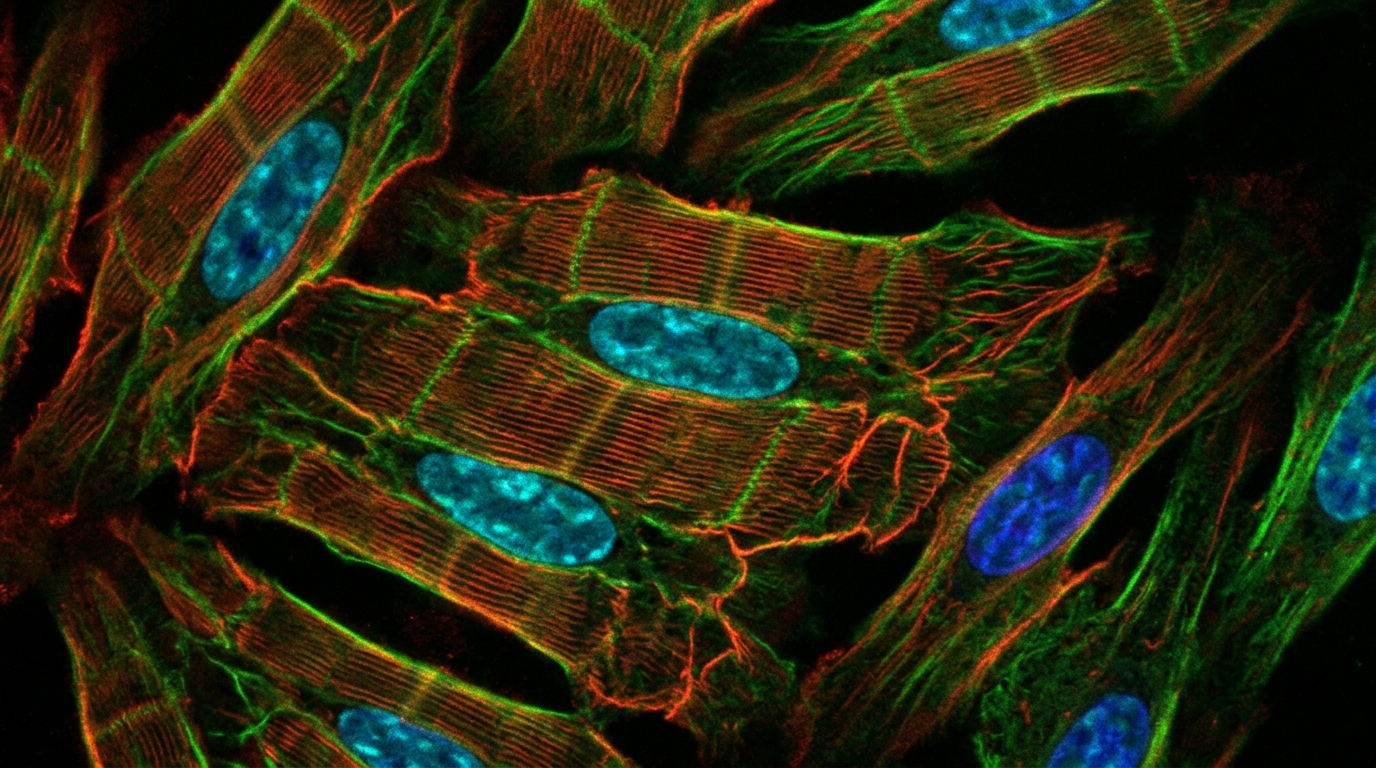
Cardiovascular disease does not strike men and women identically, yet the cellular roots of those differences have been hard to isolate. Sujin Kim, Min-Ju Kim, Geun-Young Kim and Hyun-Joung Lim synthesize studies that directly compare male-derived and female-derived cardiovascular cells within defined cell types, a comparison the authors describe as remaining limited despite extensive research on sex differences in human populations and whole-animal models.
The central problem the review addresses is confounding. In humans and in living animals, sex differences in disease outcomes could arise from circulating hormones, from interactions among many cell types, or from the cells themselves. Systemic environments make it difficult to disentangle cell-associated effects from hormonal and multicellular influences.
The review organizes its findings around three pathophysiological domains: oxidative stress, nitric oxide signaling and inflammatory responses. Across these domains, the reported differences between male-derived and female-derived cells vary in both direction and magnitude depending on the cell type examined, the tissue or vascular origin of the cells, the species studied and the specific experimental conditions used.
The authors emphasize that these are reported differences observed under defined experimental conditions, not uniform laws of cellular behavior, and that the specific model in which a difference appears matters as much as the difference itself.
Beyond the three main domains, the review highlights two mechanistic threads with direct genetic underpinnings. X-linked microRNAs have been linked to electrophysiological differences in specific experimental models, connecting sex chromosome content to the electrical behavior of cardiovascular cells. Both links, the review stresses, come from particular experimental systems rather than settled clinical consensus.
The authors are careful about what in vitro work can and cannot establish. Hormonal signaling and sex chromosome complement, they conclude, contribute to sex-associated cardiovascular responses in specific experimental models, a formulation that deliberately avoids overgeneralization. Complementary multicellular and in vivo approaches remain necessary, they write, to determine whether cellular findings hold at the tissue and organ levels.
That caution shapes the review’s practical message. The available evidence highlights the need for further direct male-female comparisons at the cellular level relevant to cardiovascular disease. The review’s authors argue that sex-aware cell study design, in which the sex of the donor cells is recorded and reported and both sexes are compared under identical conditions, can strengthen mechanistic cardiovascular research at its foundations.
The endpoint the authors envision is clinical. Such studies, they write, may provide a stronger foundation for developing sex-informed precision therapies for cardiovascular disease.
For now, the review stands as a map of what is known and, more pointedly, of what remains unknown. It integrates evidence primarily from studies of isolated cardiovascular cells, supplemented where appropriate by relevant in vivo and clinical findings, and it catalogs the hormonal, chromosomal and pathophysiological factors that may contribute to reported sex-associated differences.
Subject of Research: Sex-associated differences in cardiovascular cells examined through in vitro models of hormonal signaling, sex chromosomes, oxidative stress, nitric oxide signaling and inflammation
Article Title: Sex differences in cardiovascular disease: mechanistic insights from in vitro models
Article References: Kim, S., Kim, M.-J., Kim, G.-Y., & Lim, H.-J. (2026). Sex differences in cardiovascular disease: mechanistic insights from in vitro models. Biology of Sex Differences. https://doi.org/10.1186/s13293-026-01010-8
Image Credits: AI Generated
DOI: 10.1186/s13293-026-01010-8
Keywords: cardiovascular disease, sex differences, in vitro models, hormonal signaling, sex chromosome complement, oxidative stress, nitric oxide, inflammation, X-linked microRNAs, Y chromosome loss, fibrosis, precision medicine
News Source: Ophelia Keating. (November 6, 2026). Male and female cardiovascular cells differ under the microscope, review finds. Scienmag.