Weaning is one of the most demanding transitions in a young ruminant’s life, and the nutritional choices made during this window can leave lasting marks on the gut ecosystem and immune maturation. A new study published in Animal Microbiome examined whether a largely underutilized dairy by-product, fermented with a well-known propionic acid bacterium, could nudge the developing gut microbiota of lambs in a favourable direction. The researchers report that supplementation with Propionibacterium freudenreichii-fermented second cheese whey measurably reshaped the faecal microbial communities of weanling lambs, enriching obligately anaerobic Firmicutes while substantially reducing the relative abundance of Escherichia-Shigella, a genus that includes potentially pathogenic strains.
Second cheese whey is the liquid remaining after the extraction of whey proteins, and it is generated in large volumes by the dairy industry with few profitable outlets. According to the study’s background, when this by-product is fermented with P. freudenreichii it becomes enriched in short-chain fatty acids and secondary metabolites known to modulate gut microbiota composition and host immune responses. The team set out to assess whether this fermented liquid could serve as a functional feed additive in early-life nutritional strategies for small ruminants, evaluating its effects on growth performance, haematological parameters and faecal microbiota composition.
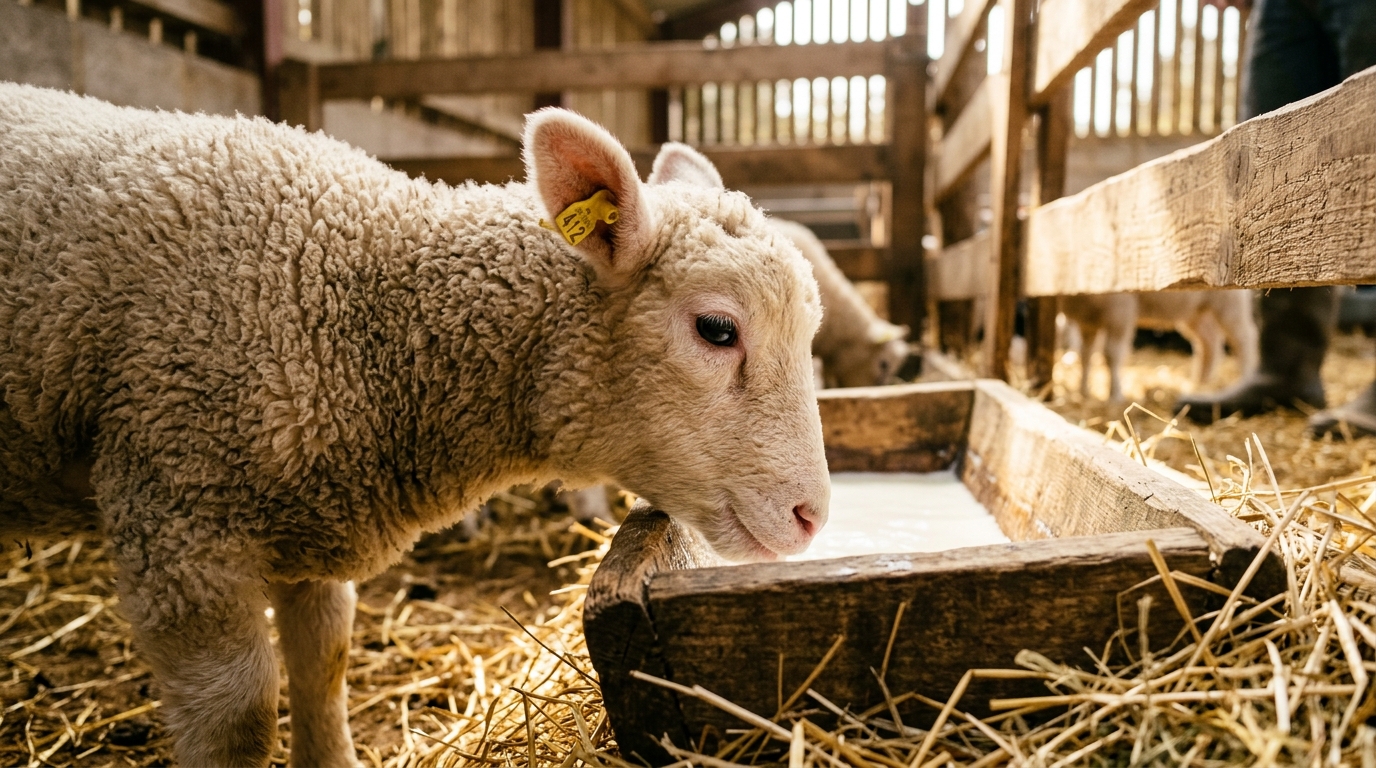
The trial involved twenty-one Sarda female lambs aged 58 to 60 days, randomly assigned to three groups of seven animals each. One group received 50 millilitres per day of the fermented second cheese whey, a second received the same daily volume of unfermented second cheese whey, and a third served as a non-supplemented control. The supplementation period lasted 14 days, allowing the researchers to track both the immediate growth response and the shifts in faecal microbial communities over a defined early-weaning window.
On the production side, the results were sobering: fermented second cheese whey supplementation had no effect on body weight gain. Haematological analysis did reveal significant variations in red blood cell count, with a p-value of 0.016, and in mean corpuscular volume, with a p-value of 0.02, although the authors note that all values remained within the physiological range for the ovine species. These findings suggest that the additive was well tolerated at the dose tested, without perturbing the animals’ basic metabolic or haematological status beyond normal biological variation.
The microbiota data told a more striking story. Faecal microbiota analysis showed increased bacterial alpha diversity in the fermented group, evidenced by higher richness and diversity indices with p-values below 0.05. Beta-diversity analysis further revealed a distinct microbial community structure in the lambs receiving the fermented supplement, meaning the overall composition of their faecal communities differed from those of the other groups rather than merely harbouring a few extra species. No comparable changes were observed in the unfermented group, pointing to the fermentation step, rather than the whey itself, as the driver of the microbial shifts.
At the taxonomic level, the most notable change was a 56.2% reduction in the abundance of Escherichia-Shigella in the fermented-supplemented lambs. This genus includes potentially pathogenic strains, making its decline particularly relevant for gastrointestinal health in young ruminants. The reduction was accompanied by a 5.08-fold enrichment of obligately anaerobic Firmicutes, including the genera Acetitomaculum, Blautia, Lachnospiraceae_NK3A20_group and Ruminococcus_gauvreauii_group. These taxa are associated with the fibrolytic and short-chain fatty acid producing functions typical of a mature ruminal and intestinal ecosystem, although the study reports compositional changes rather than direct functional measurements.
Beyond the bacterial community, the researchers conducted exploratory multivariate analysis of the fungal fraction of the faecal microbiota. This analysis highlighted Aspergillus, Malassezia and Coprinellus as candidate discriminatory fungal genera across the three treatments. The authors frame this as exploratory, meaning these fungal genera are flagged as candidates worthy of further investigation rather than confirmed functional drivers of the observed differences.
The study’s conclusions position fermented second cheese whey as a viable strategy for the valorisation of dairy industry by-products, with potential implications for environmental hygiene in livestock production systems. By converting a low-value liquid stream into a feed additive that modulates the faecal microbiota of weanling lambs, the approach addresses two pressures at once: the waste burden of cheese manufacturing and the need for effective early-life nutritional tools in small ruminant farming. The authors emphasize that the supplementation effectively modulated the faecal microbiota, enriching potentially beneficial taxa while reducing the relative abundance of Escherichia-Shigella.
Several caveats frame the interpretation of these findings. The trial involved a small number of animals per group, seven lambs in each of the three treatment arms, over a supplementation period of just 14 days, and the reported outcomes concern faecal microbiota composition, haematological values within the physiological range and growth performance that remained unchanged. The article was shared early as a peer-reviewed, accepted manuscript that is citable and carries a permanent DOI, with the note that this version is subject to further edits before the final Version of Record. The authors describe the fungal findings as exploratory, and the observed microbial shifts are associations reported at the community and genus level rather than demonstrated causal effects on health or disease resistance.
Nevertheless, the study adds to a growing body of work exploring how fermentation transforms dairy by-products into biologically active feed ingredients. The specific pattern observed, a rise in alpha diversity, a distinct beta-diversity profile, a marked drop in a genus containing potential pathogens and a concurrent expansion of obligately anaerobic Firmicutes, provides a defined microbiological signature that future trials can test against longer supplementation periods, larger cohorts and direct measurements of gut function and immune development in weanling small ruminants.
Subject of Research: Effects of fermented second cheese whey supplementation on faecal microbiota, growth and blood parameters in weanling lambs
Article Title: Supplementation with Propionibacterium freudenreichii fermented second cheese whey modulates the composition of faecal microbiota in weanling lambs
Article References: Mannazzu, I., Zara, G., Senes, A., Hatami, F., Fancello, F., & Cappai, M. G. (2026). Supplementation with Propionibacterium freudenreichii fermented second cheese whey modulates the composition of faecal microbiota in weanling lambs. Animal Microbiome. https://doi.org/10.1186/s42523-026-00631-z
Image Credits: AI Generated
DOI: 10.1186/s42523-026-00631-z
Keywords: weanling lambs, faecal microbiota, Propionibacterium freudenreichii, second cheese whey, dairy by-products, alpha diversity, Escherichia-Shigella, Firmicutes, small ruminants, feed additive, Supplementation, Propionibacterium
News Source: Drew Townsend. (November 6, 2026). Fermented Cheese Whey Reshapes Gut Microbes in Weanling Lambs. Scienmag.