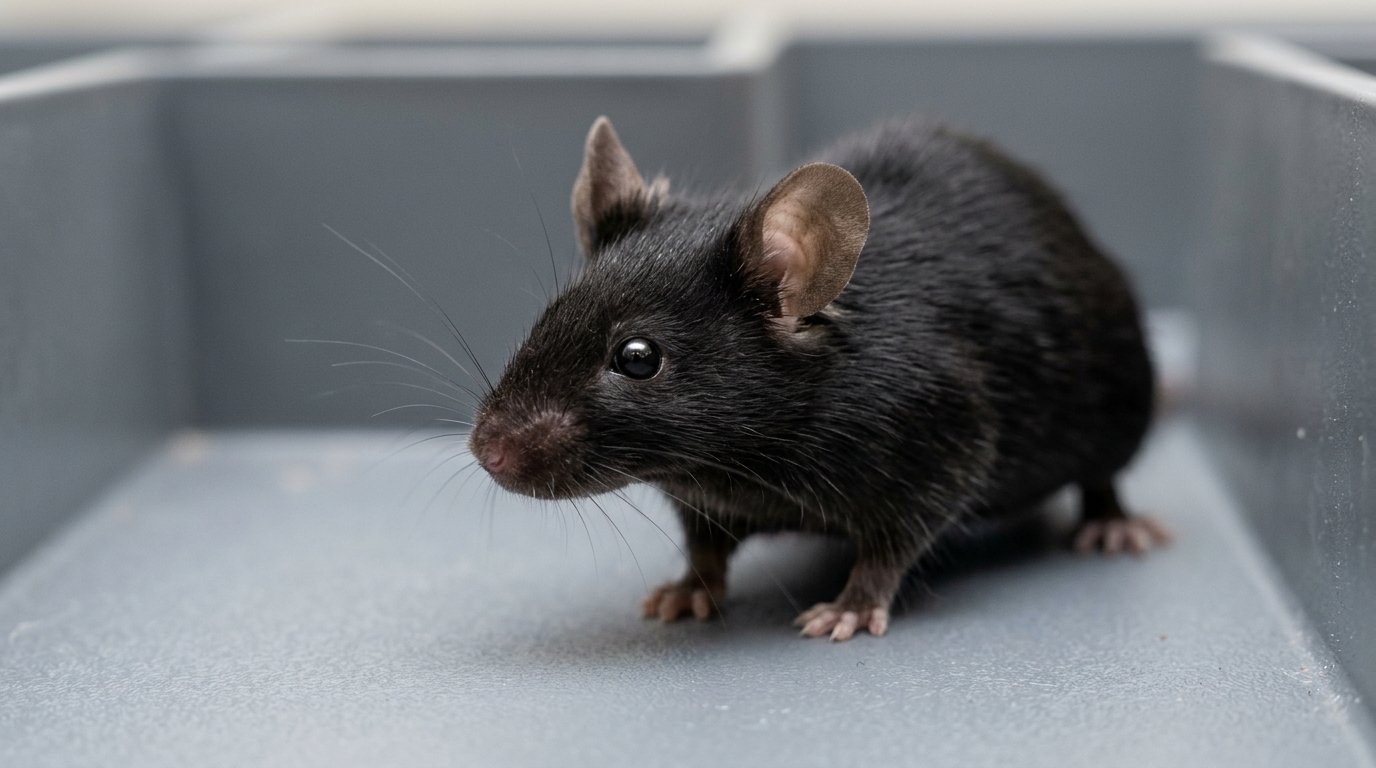
A mouse that fails a memory test may simply be going deaf. A rat that navigates poorly through a water maze may not be able to see the cues. According to a review published in Frontiers in Behavioral Neuroscience, rodent strain differences in hearing, vision, and sensory gating are systematically reshaping how cognitive phenotypes should be interpreted in learning, memory, and brain disease research, and the authors argue that many apparent cognitive deficits may instead reflect limited access to task-relevant stimuli rather than impaired learning or memory itself.
The review, led by Xin Liu, Shuai Wang, and Lin Zhao, synthesizes evidence from direct comparative studies across commonly used mouse and rat populations. It documents strain- and age-dependent variation in auditory brainstem response thresholds, visual acuity, prepulse inhibition, habituation, and auditory evoked responses. The central claim is that these sensory differences can affect how animals access task-relevant stimuli and how behavioral measures should be read, without necessarily indicating deficits in higher-order cognition. The authors frame their proposal as an integrative sensory–cognitive gating perspective that serves as a guide to interpretation rather than an established causal pathway.
The evidence base for auditory variation is particularly strong. In a large-scale comparison of 80 inbred mouse strains, Zheng and colleagues identified substantial differences in auditory brainstem response thresholds, with 16 strains showing significantly elevated thresholds before 3 months of age, including DBA/2J, A/J, and several 129-derived strains. Hearing loss in DBA/2J mice generally develops earlier and progresses more rapidly than in C57BL/6J mice, a distinction the review says is insufficiently emphasized in discussions focused primarily on C57BL/6-related age-dependent hearing impairment. Although both strains carry susceptibility variants involving Cdh23, genetic mapping studies identified an additional locus, ahl8, whose interaction with Cdh23 contributes substantially to the early-onset hearing loss of DBA/2J mice. These findings demonstrate that auditory phenotypes cannot be predicted from a single susceptibility allele or generalized across strains sharing that allele.
C57BL/6-derived mice nevertheless require particular attention because they are widely used in transgenic and systems neuroscience research. The Cdh23^ahl allele contributes to progressive hearing impairment, typically affecting high frequencies before extending to lower frequencies with age. However, its phenotypic effects depend on the surrounding genetic background. Kane and colleagues demonstrated that replacing the susceptible Cdh23 allele with the hearing-protective allele from CBA/CaJ markedly reduced hearing loss in a C57BL/6J background, whereas introducing the susceptible allele into a CBA/CaJ background had a much smaller effect. Direct comparisons of C57BL/6J and C57BL/6N mice further illustrate the importance of substrain-specific sensory phenotyping, with one study finding comparable age-related hearing-loss profiles across these substrains while another reported significantly higher thresholds at 24 and 32 kHz in commercially sourced C57BL/6N mice at approximately 3 months of age, with a threshold difference of approximately 35 dB at 32 kHz between substrains in that experimental population.
Visual function represents a parallel source of strain-dependent variation that can substantially alter performance in spatial and visually guided behavioral tasks. Brown and Wong compared visual ability across 13 mouse strains and found that differences in visual acuity accounted for a significant proportion of inter-strain variability in Morris water maze performance, whereas motor learning was not similarly explained by visual ability. This finding illustrates why impaired visuospatial performance should not automatically be equated with a generalized deficit in learning or memory. Sensory variation also occurs between closely related substrains: Simon and colleagues directly compared C57BL/6J and C57BL/6N mice and reported lower optokinetic visual acuity in C57BL/6N mice, together with substrain-dependent retinal abnormalities. Mattapallil and colleagues identified the Crb1^rd8 mutation in commercially sourced C57BL/6N populations but not in C57BL/6J mice, with affected animals exhibiting focal retinal dysplasia and degeneration. However, a subsequent longitudinal comparison did not detect a significant overall difference in visual acuity between C57BL/6J and C57BL/6N mice, indicating that retinal pathology does not necessarily translate into a consistent functional impairment across experimental populations.
The consequences of visual impairment are task dependent rather than universally detrimental to cognitive assessment. In Tg2576 Alzheimer’s disease mice, Yassine and colleagues found that rd1 homozygosity prevented successful Morris water maze acquisition, whereas deficits in other spatial-memory paradigms could still be detected independently of retinal degeneration. Comparable principles apply to rats, although the relevant strain characteristics differ. Prusky and colleagues measured visual acuity across pigmented and albino rat strains and reported approximate grating thresholds of 1.0 cycle/degree in Long–Evans and Dark Agouti rats, 1.5 cycles/degree in Fischer–Norway rats, and 0.5 cycle/degree in albino Fischer 344, Sprague–Dawley, and Wistar rats. These measurements demonstrate that visual ability varies both between pigmentation groups and among strains within the same broad category. In behavioral comparisons, Harker and Whishaw found strain-dependent differences in spatial learning across wild and laboratory rats, indicating that albinism and breeding history can influence task performance without establishing a simple hierarchy of general cognitive ability.
Beyond peripheral sensory accessibility, rodent strains differ in how sensory stimuli modulate reflex responses and central neural activity. Prepulse inhibition, the reduction in startle magnitude when a weak prestimulus precedes an intense startling stimulus, is widely used as an operational measure of sensorimotor gating. In a comparison of 13 inbred mouse strains, Paylor and Crawley found marked differences in PPI, with 129/SvEvTac, AKR/J, 129/J, and 129/SvJ mice generally exhibiting relatively high PPI, whereas C57BL/6J, C57BL/10J, and BUB/BnJ mice showed lower levels under the tested conditions. Although baseline startle amplitudes also differed substantially, they were not significantly correlated with PPI across strains, indicating that variation in reflex magnitude alone could not account for the observed gating phenotypes. The review emphasizes that low PPI in a particular strain should be interpreted as a context-dependent behavioral phenotype rather than direct evidence of a generalized cognitive or disease-related deficit.
Pharmacological responses in gating assays are also strain dependent. Dulawa and Geyer compared C57BL/6, 129Sv, and ICR mice and found that C57BL/6 mice exhibited lower baseline PPI than the other two populations, whereas 129Sv mice showed less startle habituation than C57BL/6 and ICR mice. MDMA reduced PPI in C57BL/6 and ICR mice but not 129Sv mice, while the serotonergic agonist RU24969 disrupted habituation in C57BL/6 and 129Sv mice but not ICR mice. Comparable complexity has been demonstrated in rats. Kinney and colleagues reported that apomorphine and amphetamine disrupted PPI in Wistar but not Sprague–Dawley rats obtained from the suppliers examined, whereas PCP and 8-OH-DPAT disrupted PPI in both populations. However, Swerdlow and colleagues subsequently demonstrated that differences in apomorphine sensitivity between Sprague–Dawley and Wistar rats depended on supplier origin, with the previously reported strain pattern not consistently reproduced across breeding sources. Together, these findings indicate that strain effects on gating cannot be characterized by a single fixed ranking, instead depending on stimulus timing, sensory modality, pharmacological challenge, and the genetic and breeding characteristics of the experimental population.
The review also examines neural mechanisms, while carefully distinguishing ex vivo network phenotypes from demonstrated mechanisms in behaving animals. Comparative studies have identified strain-dependent differences in hippocampal long-term potentiation and memory-related behavior, as well as in GABAergic synaptic properties, interneuron populations, and experimentally induced hippocampal network oscillations. Thalamic reticular nucleus–auditory thalamic and mediodorsal thalamus–prefrontal cortex pathways are considered plausible candidate circuit substrates for strain-dependent sensory processing, but the authors state that direct evidence that they mediate inter-strain cognitive differences remains limited. They argue that candidate circuit mechanisms should be distinguished from established cross-strain observations rather than presented as a unified causal pathway, and that higher oscillatory power or greater ripple incidence should not be interpreted as intrinsically beneficial or detrimental to cognition.
In genetically modified and brain disease models, genetic background can amplify, attenuate, or leave unchanged mutation-associated phenotypes, making both strong and limited background effects informative. Studies of Fmr1 knockout mice across several F1 genetic backgrounds found that multiple behavioral responses, including certain autism-related traits, depended on genetic background, whereas investigations of Shank3-deficient mice on C57BL/6, 129SVE, and FVB/Ntac backgrounds found that many mutation-associated behavioral abnormalities were relatively consistent across the tested backgrounds, with only modest strain effects. In Alzheimer’s disease research, introducing the 5xFAD transgene into genetically diverse BXD-derived backgrounds demonstrated substantial variation in AD-related cognitive decline and pathological phenotypes, while crossing 5xFAD mice with five Collaborative Cross strains identified genetic backgrounds associated with reduced amyloid plaque formation and neuronal injury. The review proposes a strain-informed approach emphasizing precise population identification, task-relevant sensory assessment, appropriate genetic controls, complementary behavioral readouts, and background validation proportional to the intended scope of inference, with the aim of improving reproducibility, mechanistic interpretation, and the translational relevance of rodent models.
Subject of Research: How rodent strain differences in sensory function and gating affect the interpretation of cognitive phenotyping and brain disease models.
Article Title: Rodent strain differences in sensory function and gating: implications for cognitive phenotyping and brain disease models
Article References: Liu, X., Wang, S., & Zhao, L. (2026). Rodent strain differences in sensory function and gating: implications for cognitive phenotyping and brain disease models. Frontiers in Behavioral Neuroscience, 20, Article 2010984. https://doi.org/10.3389/fnbeh.2026.2010984
Image Credits: AI Generated
DOI: 10.3389/fnbeh.2026.2010984
Keywords: rodent strains, sensory gating, cognitive phenotyping, prepulse inhibition, hearing loss, visual acuity, genetic background, hippocampal plasticity, brain disease models, C57BL/6, DBA/2J, reproducibility
News Source: Ophelia Keating. (November 6, 2026). Rodent Strain Differences in Hearing and Vision Reshape How Scientists Read Mouse and Rat Memory Tests. Scienmag.