Researchers profiling metastatic colorectal cancer have identified casein kinase II as an essential therapeutic vulnerability, demonstrating that pairing the kinase inhibitor silmitasertib with the MEK inhibitor trametinib effectively suppresses tumor growth and diminishes cancer stem cells in patient-derived organoids. The median overall survival for metastatic patients hovers around thirty months, after which subsequent clinical lines such as TAS-102 and regorafenib frequently encounter therapy resistance. To discover conserved vulnerabilities, an international research team investigated aberrant proteomic and phosphoproteomic networks in patient-derived organoids and matching liver metastases. Their findings revealed that elevated casein kinase II activity drives tumor progression, while secondary activation of mitogen-activated protein kinase and Akt-mTOR pathways drives resistance to single-agent inhibition, establishing a strong rationale for dual-pathway blockade.
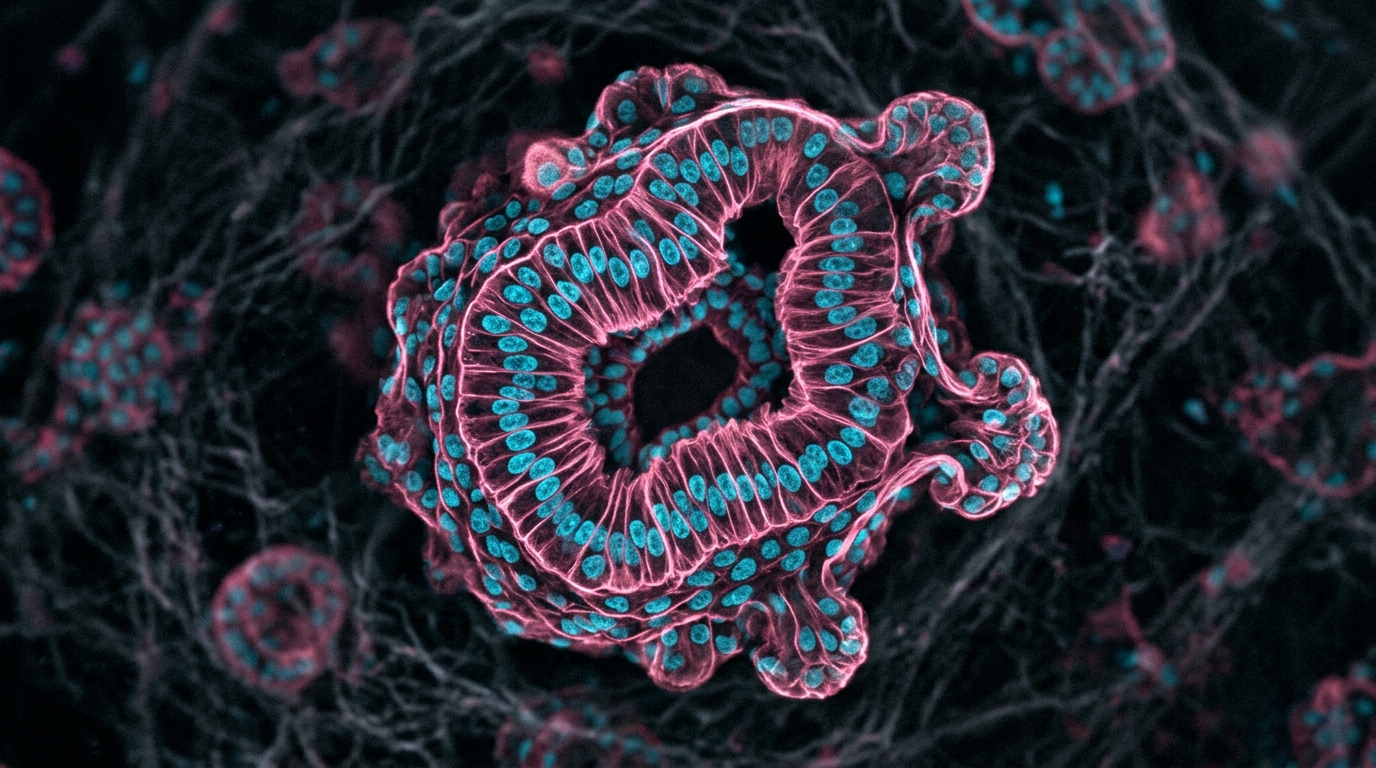
To systematically explore post-translational signaling, the researchers collected surgical specimens from ten liver metastases and six non-neoplastic colon mucosa samples from sixteen colorectal cancer patients at Clarunis in Basel, Switzerland. Clinical records indicated that metastatic patients had a mean age of 64.5 years, ranging between 50 and 81 years, with equal sex distribution and nine having received standard first-line chemotherapy. Normal colon reference tissues were obtained from an unrelated cohort of six surgical patients with a mean age of 74.3 years. From the resected metastases, the team established living organoid cultures that retained proliferative stability across long-term passaging in all models except line P17. Histopathological assessments revealed that the three-dimensional organoids closely mirrored the adenocarcinoma morphology of parental tumors, displaying glandular structures, variable differentiation, hyperchromatic nuclei, and high nucleus-to-cytoplasm ratios. Organoids also retained CDX2 and cytokeratin 20 expression alongside microsatellite stability status, with line P22 alone demonstrating microsatellite instability with MLH1 and PMS2 loss.
Somatic profiling revealed that mutations in APC and TP53 were preserved across seventy-two percent of sequenced organoids, while one-third harbored canonical oncogenic KRAS mutations, including G12D substitutions in P15 and P31 alongside a G13D substitution in P117. Extended genomic surveillance confirmed that all driver mutations remained stable throughout continuous passaging. In parallel, liquid chromatography-tandem mass spectrometry quantified 4,254 proteins and 6,964 phosphosites across tissues and organoids. Correlation of t-statistics confirmed robust cohort-level concordance in proteomic and phosphoproteomic dysregulation between organoids and parental metastases relative to normal mucosa, yielding Spearman correlation coefficients of 0.57 and 0.66, respectively. Pathway enrichment confirmed upregulation of MYC targets, G2/M checkpoints, Wnt signaling, and MTORC1 cascades in organoids, while stromal and immune pathways were enriched primarily in native tissue specimens lacking in epithelial culture models.
Interrogation of the phosphoproteomic landscape through kinase-substrate enrichment analysis identified CSNK2A1, the catalytic alpha subunit of casein kinase II, as one of the most consistently overactivated kinases across metastatic tissues and matching organoids. Unlike cyclin-dependent kinase 1, which demonstrated significant enrichment only before phosphosubstrate values were normalized to total protein abundance, CSNK2A1 maintained top enrichment rankings irrespective of normalization. Furthermore, seventy-seven percent of the thirty most differentially phosphorylated substrates were phosphorylated uniquely by catalytic subunits of casein kinase II rather than collateral enzymes. Kinase activity scores correlated positively with protein levels of regulatory subunit CSNK2B and transcription factor NELFE. Immunoblotting confirmed that metastatic organoids exhibited significantly higher serine and threonine phosphorylation across casein kinase II substrates than the non-malignant NCM460 human colonic epithelial cell line. Densitometric quantification showed that substrate hyperphosphorylation exhibited a strong positive linear correlation with casein kinase II alpha catalytic subunit expression across the organoid cohort, yielding a Pearson correlation coefficient of 0.92 with a p-value of 0.0004.
Evaluating the pharmacological impact of kinase inhibition, the authors tested the clinical-stage inhibitor silmitasertib alongside the cyclin-dependent kinase inhibitor dinaciclib across colorectal cell lines and organoids. Whereas dinaciclib provoked unselective toxicity that severely impaired normal colon organoid viability, silmitasertib demonstrated marked selectivity. At 10 micromolar, silmitasertib induced variable growth inhibition across metastatic organoids while sparing normal colon organoid viability and preserving cell cycle profiles. Western blot analysis confirmed that 10 micromolar silmitasertib significantly decreased casein kinase II substrate phosphorylation, with p-values of 0.001 and 0.004 in unpaired and paired comparisons. The magnitude of dephosphorylation correlated with viability reductions, yielding a Pearson correlation coefficient of 0.89 with a p-value of 0.0013. Flow cytometric analysis demonstrated that silmitasertib triggered significant G2/M cell cycle arrest alongside G1 reduction, with resistant lines displaying enhanced checkpoint engagement.
Despite apoptotic activation, heterogeneous organoid responses highlighted intrinsic adaptive networks that limited silmitasertib monotherapy efficacy. Correlation analysis revealed significant inverse relationships between cell viability reduction and baseline activity scores of multiple upstream kinases, including RAF1, PAK1, PAK2, EGFR, and p38 mitogen-activated protein kinase. Furthermore, baseline enrichment scores for both PI3K-Akt and mTOR signaling correlated negatively with silmitasertib efficacy, with correlation coefficients of minus 0.66 and minus 0.68. Biochemical evaluation showed that silmitasertib caused a compensatory increase in Akt phosphorylation at serine 473 across the organoid cohort, reaching statistical significance with a p-value of 0.04. Although extracellular signal-regulated kinase 1/2 activity remained stable cohort-wide, persistent ERK1/2 phosphorylation was prominent in refractory organoids harboring KRAS mutations that received prior chemotherapy, indicating that residual mitogen-activated protein kinase activity and compensatory Akt activation contribute to silmitasertib resistance.
To overcome these resistance mechanisms, the investigators screened combinatorial regimens pairing silmitasertib with inhibitors of parallel cascades, testing the MEK inhibitor trametinib alongside the mTOR inhibitor everolimus and the pan-class I PI3K inhibitor ZSTK-474. Multi-model evaluation using SynergyFinder 3.0 demonstrated that co-treatment produced enhanced anticancer efficacy relative to single-agent therapies. Under the Bliss independence model, fifty-four out of eighty-one evaluated concentration pairs for silmitasertib and trametinib showed additive interactions, twenty-six pairs exhibited synergistic cooperation, and only one showed antagonism. Conversely, combinations featuring everolimus or ZSTK-474 displayed antagonism across five and nine concentration pairs, respectively. Testing in normal colon organoids revealed that ZSTK-474 provoked severe epithelial toxicity, while everolimus concentrations necessary for synergy exceeded clinically achievable dosage limits. Trametinib, by contrast, caused negligible viability reductions in normal colonic organoids whether administered alone or combined with silmitasertib. These findings established trametinib as the optimal partner to combine with casein kinase II blockade.
Molecular dissection of organoids co-treated with silmitasertib and trametinib revealed comprehensive multi-pathway suppression superior to either monotherapy. Co-treatment produced a statistically significant reduction in casein kinase II substrate phosphorylation compared to silmitasertib alone, with a Benjamini-Hochberg-adjusted p-value of 0.0065, and compared to trametinib alone, with an adjusted p-value of 0.015. Additionally, the combination significantly suppressed mTORC1-dependent S6 phosphorylation alongside reduced RAPTOR expression, while extinguishing ERK1/2 phosphorylation with an adjusted p-value of 0.033 relative to controls and 0.0098 relative to silmitasertib. Independent validation using fluorogenic caspase-3/7 activity assays across sensitive and resistant lines confirmed heightened apoptosis, most notably in line P26, whereas normal colonic organoids displayed no significant changes in caspase activity. The magnitude of pathway suppression was especially pronounced in organoids harboring KRAS or BRAF mutations, underscoring the capacity of MEK inhibition to blunt collateral oncogenic signaling.
Examining downstream transcriptional and stemness circuits, researchers observed that the strongest combination efficacy occurred in organoids displaying high baseline canonical Wnt signaling, yielding a positive Pearson correlation coefficient of 0.74 with a p-value of 0.021. Immunoblotting demonstrated that dual therapy significantly depleted active non-phosphorylated beta-catenin levels, producing a median reduction of minus 0.44 with an adjusted p-value of 0.029, whereas trametinib monotherapy exerted no significant effect. Flow cytometric analysis of cancer stem cell markers revealed that the double-positive CD44 and CD133 population contracted significantly under combination treatment by a median shift of minus 9.17 with an adjusted p-value of 0.033, while the differentiated double-negative subpopulation expanded by a median shift of plus 13.03. Quantitative reverse transcription polymerase chain reaction confirmed that co-treatment attenuated or prevented therapeutic upregulation of stemness target genes AXIN2, LGR5, and OLFM4. In an independent validation cohort of six metastatic organoids from Milan and Basel, the combination reduced viability significantly more than silmitasertib alone, by 26.7 percent, and trametinib alone, by 20.5 percent, with Holm-adjusted p-values of 0.007 and 0.004.
The study authors concluded that these findings highlight the therapeutic viability of targeting casein kinase II addiction while intercepting adaptive resistance driven by mitogen-activated protein kinase and Akt-mTOR pathways. While trametinib directly targets MEK-ERK signaling, its ability to enhance mTORC1 down-regulation may involve disrupting RSK-mediated Raptor phosphorylation, thereby severing a functional bridge between the cascades. The predominantly additive to synergistic interaction aligns with clinical combinations that achieve efficacy without requiring supra-additive synergy. Nevertheless, the authors identified several study limitations, including the modest discovery cohort of ten patient samples and six validation lines. Furthermore, because resected liver metastases lacked matched normal colon mucosa from identical donors, reference profiles were derived from an unrelated patient cohort, introducing potential inter-individual variability. In addition, organoid cultures lack stromal architecture and immune cell components present in native tumors. Consequently, the researchers emphasized that formal dose-optimization protocols and comprehensive evaluation in immunocompetent in vivo animal models remain essential prerequisites before advancing this combination toward clinical trials in metastatic colorectal cancer.
Subject of Research: Casein kinase II and MEK inhibition in metastatic colorectal cancer
Article Title: Combined casein kinase II and MAPK signalling inhibition as a therapeutic strategy for metastatic colorectal cancer
Article References: Marinucci, M., Donà, F., Boot, G. F., Esposito, C., Toccafondi, E., Liberati, D., Benjak, A., Zaidi, L., Lazzari, M., Milardi, G., Guja-Jarosz, K., Cieri, M., Feng, H., Coto-Llerena, M., Droeser, R. A., Soysal, S. D., Kollmar, O., Torzilli, G., Spinelli, A., … Piscuoglio, S. (2026). Combined casein kinase II and MAPK signalling inhibition as a therapeutic strategy for metastatic colorectal cancer. Experimental Hematology & Oncology, 15(1), Article 119. https://doi.org/10.1186/s40164-026-00855-4
Image Credits: AI Generated
DOI: 10.1186/s40164-026-00855-4
Keywords: colorectal cancer, metastatic colorectal cancer, patient-derived organoids, casein kinase II, silmitasertib, trametinib, phosphoproteomics, cancer stem cells, Combined, casein, kinase, MAPK
News Source: Nathaniel Bowman. (November 6, 2026). Dual Kinase Inhibition Combats Therapy Resistance in Metastatic Colorectal Cancer Organoids. Scienmag.