• HOME
  • NEWS
  • EXPLORE
    • CAREER
      • Companies
      • Jobs
    • EVENTS
    • iGEM
      • News
      • Team
    • PHOTOS
    • VIDEO
    • WIKI
  • BLOG
  • COMMUNITY
    • FACEBOOK
    • INSTAGRAM
    • TWITTER
Thursday, October 29, 2026
BIOENGINEER.ORG
No Result
View All Result
  • Login
  • HOME
  • NEWS
  • EXPLORE
    • CAREER
      • Companies
      • Jobs
        • Lecturer
        • PhD Studentship
        • Postdoc
        • Research Assistant
    • EVENTS
    • iGEM
      • News
      • Team
    • PHOTOS
    • VIDEO
    • WIKI
  • BLOG
  • COMMUNITY
    • FACEBOOK
    • INSTAGRAM
    • TWITTER
No Result
View All Result
Bioengineer.org
No Result
View All Result
Home NEWS Science News Health

CSF APOE4 protein levels track tau pathology better than HDL measures in Alzheimer’s

by
October 28, 2026
in Health
Reading Time: 2 mins read
0
CSF APOE4 protein levels track tau pathology better than HDL measures in Alzheimer's

CSF APOE4 protein levels track tau pathology better than HDL measures in Alzheimer's

Share on FacebookShare on TwitterShare on LinkedinShare on RedditShare on Telegram

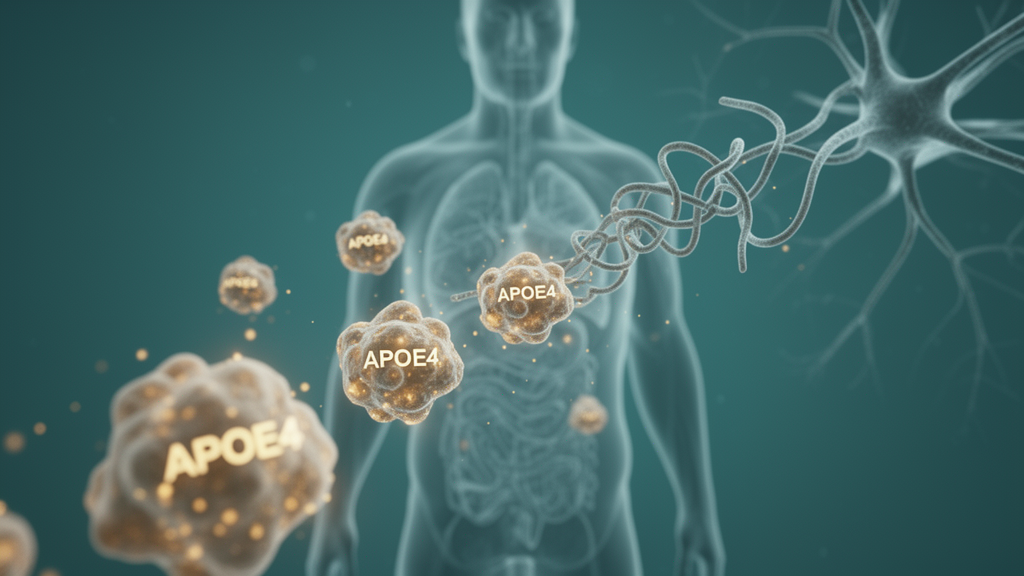
Apolipoprotein E ε4 (APOE4) remains the strongest genetic risk factor for late-onset Alzheimer’s disease, but researchers have long debated whether its harmful effects stem from the lipidation state of HDL particles or from elevated APOE4 protein levels within the central nervous system. A new study using data from the Alzheimer’s Disease Neuroimaging Initiative (ADNI) now points firmly toward the latter, reporting that cerebrospinal fluid APOE4 protein burden, rather than HDL particle concentrations, is what aligns most closely with tau pathology and memory decline.

The research team, led by Hussein N. Yassine and colleagues, analyzed CSF and plasma samples from 144 participants carrying APOE ε3/ε3, ε3/ε4, or ε4/ε4 genotypes. Participants were grouped by cognitive state and by memory progression over four years, with memory loss defined as at least a 10 percent decline on the Rey Auditory Verbal Learning Test (RAVLT) delayed recall between baseline and 48-month follow-up. The investigators measured small and large HDL particle concentrations, total APOE levels, and isoform-specific APOE3 and APOE4 protein levels in both CSF and plasma.

Cross-sectional associations with the core Alzheimer’s biomarkers Aβ1-42, total tau, and p-tau181 were evaluated using covariate-adjusted linear regression, while longitudinal trajectories were examined with linear mixed-effects models over six years. The results showed that CSF small and large HDL levels were higher in cognitively normal individuals and in non-progressors, and that APOE4 carriers exhibited reduced CSF small HDL relative to ε3 homozygotes.

The pivotal finding, however, concerned APOE4 itself. Higher CSF APOE4 protein levels were associated with elevated tau and p-tau181 independently of small or large HDL particle concentrations. In contrast, plasma APOE measures showed minimal and often opposing associations with CSF biomarkers, underscoring that peripheral APOE readings may not reflect what is happening in the brain.

Longitudinally, higher baseline CSF APOE4 proportion relative to APOE3 was associated with greater memory decline over six years, but it did not predict biomarker change. The authors conclude that these findings support a CNS-compartment model in which APOE4 protein burden aligns more closely with tau pathology and cognitive decline than peripheral APOE or HDL particle measures in Alzheimer’s disease.

Subject of Research: The relationship between CSF APOE4 protein burden, HDL particle lipidation, tau pathology and cognitive decline in Alzheimer's disease

Article Title: Beyond lipidation: CSF APOE4 protein burden, not HDL subclass, drives tau associations in APOE4 Alzheimer’s disease

Article References: Tsokolas, Z. E., Asante, I., Tsiknia, A. A., Barbosa-Carvajal, J. P., Burka, L., Sagare, A., Cardona-Gómez, G. P., Mack, W. J., Braskie, M. N., Nedelkov, D., Krauss, R. M., Yassine, H. N., & for the Alzheimer’s Disease Neuroimaging Initiative (2026). Beyond lipidation: CSF APOE4 protein burden, not HDL subclass, drives tau associations in APOE4 Alzheimer’s disease. Alzheimer's Research & Therapy. https://doi.org/10.1186/s13195-026-02191-5

Image Credits: AI Generated

DOI: 10.1186/s13195-026-02191-5

Keywords: APOE4, Alzheimer's disease, cerebrospinal fluid, HDL particles, tau, p-tau181, amyloid beta, ADNI, memory decline, lipidation, biomarkers, central nervous system

News Source: Diana Fleming. (October 27, 2026). CSF APOE4 protein levels track tau pathology better than HDL measures in Alzheimer’s. Scienmag.


Tags: ADNIAlzheimer's diseaseamyloid-betaApoE4biomarkerscentral nervous systemcerebrospinal fluidHDL particleslipidationMemory declinep-tau181tau
Share12Tweet7Share2ShareShareShare1

Related Posts

RNA Methylation Enzyme NSUN2 Keeps Lung Tumors Cold and Blocks Immunotherapy

RNA Methylation Enzyme NSUN2 Keeps Lung Tumors Cold and Blocks Immunotherapy

October 29, 2026
Journal Retracts Study on Antibiotic Medication Errors in Pediatric Patients

Journal Retracts Study on Antibiotic Medication Errors in Pediatric Patients

October 29, 2026

AI Chatbots Show an Accuracy-Practicality Trade-off in Anesthesia Crisis Scenarios

October 29, 2026

Swim Exercise and Scent Leaf Extract Reverse Cardiometabolic Changes in Obese Rats

October 29, 2026

POPULAR NEWS

  • Rumpelstiltskin Protein Guards Genome Boundaries in Fruit Flies

    Rumpelstiltskin Protein Guards Genome Boundaries in Fruit Flies

    29 shares
    Share 12 Tweet 7
  • Carbon Monoxide Clears Slower Than Expected: Oxygen Therapy Half-Life Falters Over Time

    29 shares
    Share 12 Tweet 7
  • Blood markers of neutrophil traps differ across four inflammatory skin diseases

    29 shares
    Share 12 Tweet 7
  • Oyster Gene Marker for Herpesvirus Resistance Offers No Shield Against Bacterial Pathogen

    29 shares
    Share 12 Tweet 7

About

We bring you the latest biotechnology news from best research centers and universities around the world. Check our website.

Follow us

Recent News

RNA Methylation Enzyme NSUN2 Keeps Lung Tumors Cold and Blocks Immunotherapy

How engineers built the world’s longest-span arch bridge

Uganda’s Volcanic Scoria Shows Promise as Lightweight Concrete Aggregate

Subscribe to Blog via Email

Enter your email address to subscribe to this blog and receive notifications of new posts by email.

Join 85 other subscribers
  • Contact Us

Bioengineer.org © Copyright 2023 All Rights Reserved.

Welcome Back!

Login to your account below

Forgotten Password?

Retrieve your password

Please enter your username or email address to reset your password.

Log In
No Result
View All Result
  • Homepages
    • Home Page 1
    • Home Page 2
  • News
  • National
  • Business
  • Health
  • Lifestyle
  • Science

Bioengineer.org © Copyright 2023 All Rights Reserved.